

Reviewed · COMMUNIST-ERA PRAGUE
WWII and Communism History in Prague’s Old Town Private Tour
Prague has two faces, the one that sells postcards and the one where power, fear, and resistance shaped everyday life. This WWII and Communism tour follows those two faces in a smart walking route, guided by a history expert in the language you choose.
I love two things most. First, it connects major Prague landmarks to clear historical turning points, like the Astronomical Clock in Old Town Hall and the fighting around it in May 1945. Second, the guiding style is top-notch, and you may get guides like Sofija or Markéta, praised for making tough history feel personal and easy to track.
One consideration: the experience comes in two lengths. The 2-hour walk is intense and focused, while the 4-hour option is the one that truly fills in life under Communism at the Museum of Communism.
Key highlights you will not forget
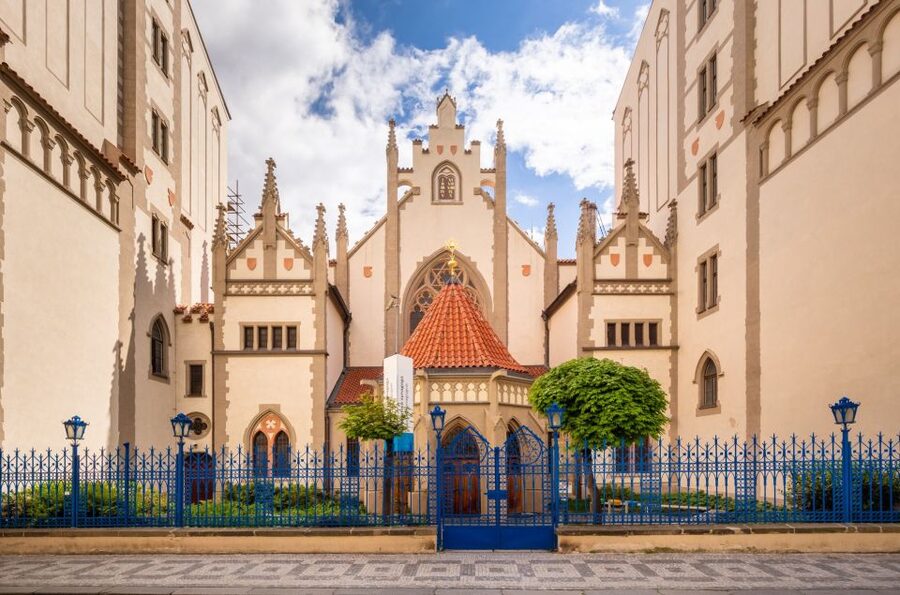
- Josefov first, including the Maisel Synagogue and Spanish Synagogue, tied to the Nazi plan for Jewish removal
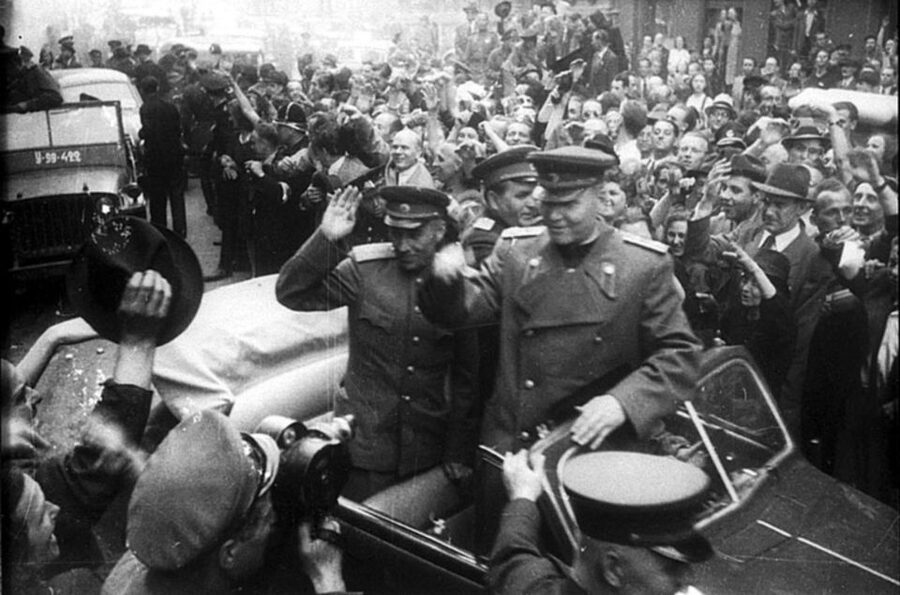
- Old Town Square context, with the Prague Uprising and what damage meant around May 5-9, 1945
- Petschek Palace as a former Gestapo site, plus a resistance memorial about interrogation and torture
- Wenceslas Square for both eras, Nazi mass demonstrations and the 1989 Velvet Revolution marches
- The 4-hour Museum of Communism option covers Cold War years, Prague Spring, Soviet invasion, Jan Palach, and the Velvet Revolution
- Private, language-flexible guiding, so your questions can stay on track instead of getting lost in a crowd
Josefov to Theresienstadt: the wartime story starts in the old Jewish quarter
The tour starts in the Old Town area at the meeting point in front of the World of Franz Kafka, near Nám. Franze Kafky 16/1. Then you head into Josefov, Prague’s historic Jewish quarter, which is still one of the best preserved in Europe. The feeling here is a mix of quiet streets and heavy context, and your guide’s job is to keep you grounded in what happened to people, not just what buildings looked like.
You will visit the Maisel Synagogue and the Spanish Synagogue. Even if you have seen synagogues in other European cities, here you get the wartime framing that makes these places more than architecture. You’ll hear about the horrors of how Czech Jews were transported, including the route that led to Theresienstadt concentration camp. This is not described as a vague tragedy. It is explained as a system of control, deception, and destruction.
One of the most chilling historical threads you learn is Hitler’s plan for a “museum of the extinct race,” a propaganda idea meant to sanitize genocide into a display. It is the kind of detail that can feel surreal until you see how carefully Nazi power used narrative. The benefit for you is that it gives you a lens for everything else on the tour. You do not just watch the city change hands. You understand how regimes used information, fear, and spectacle.
Practical tip: expect this opening to set an emotional tone. If you like history that is factual and direct, you’ll find it easier to stay with the story because your guide keeps connecting sites to specific events like the occupation and what came after.
Other tours of the communist period:
- Prague: Communism History and Nuclear Bunker Guided Tour
★ 4.7 · 2,417 reviews - Prague Communism History and Nuclear Bunker Tour
★ 5.0 · 1,742 reviews - Communism & Nuclear Bunker Tour + 70s Canteen Lunch (own expense)
★ 5.0 · 1,036 reviews
Old Town Square and May 1945: why the Astronomical Clock matters in wartime
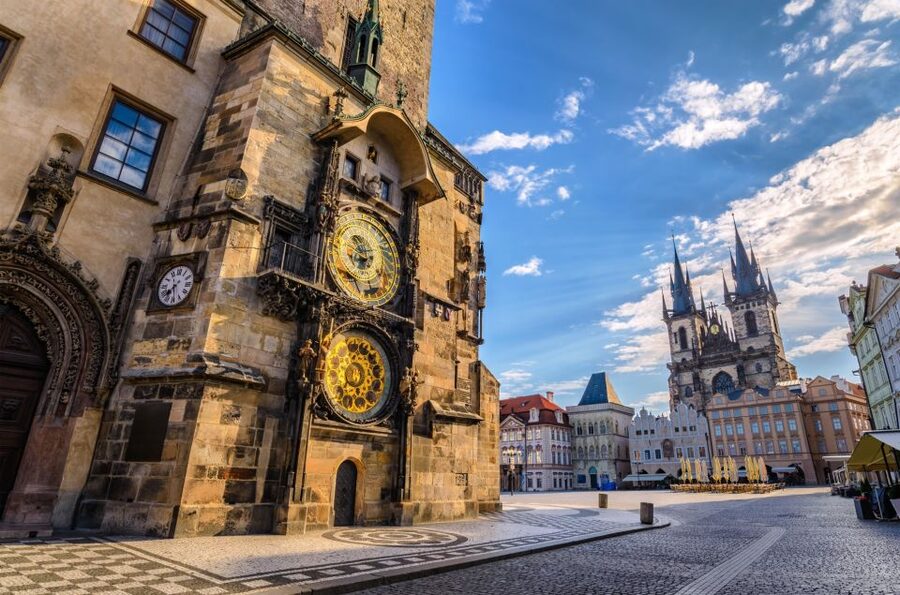
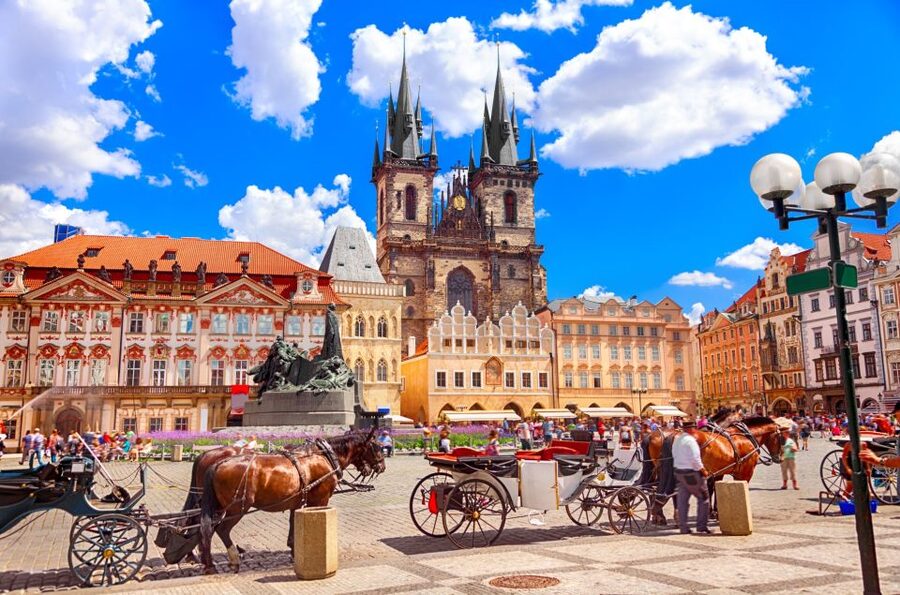
Next you move into the center of Prague’s Old Town power map, where your guide connects the Prague Uprising to the streets and monuments you can still see today. The Old Town Square area becomes a kind of outdoor timeline. You are not just hearing about “fighting happened here.” You are learning how the city was contested and why certain landmarks ended up bearing the scars.
A standout moment is the Astronomical Clock on the facade of the Old Town Hall. In peacetime it is a marvel and a magnet for photos. In wartime, it was caught up in the damage during the bloody battles of May 5 to 9, 1945. That date range matters. It reminds you that liberation was not gentle. It was messy, loud, and close.
Your guide also explains how Prague played an important role in defeating the Nazi regime, then walks you through the uprising details in a way that makes sense chronologically. You’ll connect the dots between occupation events and what “liberation” meant in practice. One detail that sticks is how the involvement of the Red Army in freeing parts of the city was later used by the Czechoslovak Communist Party to build support for Communism. That shift from military liberation to political messaging is a key theme here.
This stop is a good fit if you like your sightseeing with a cause and effect chain. You finish looking at the square feeling that you can read it, not just recognize it.
Possible drawback: if you expect a light, surface-level tour of WWII landmarks, you might find the political framing heavy. But if you want the city’s monuments explained in their real context, this is exactly the right place for it.
Petschek Palace: Gestapo headquarters, resistance courage, and real fear
After Old Town Square, you walk to Petschek Palace, where the stakes get darker. This is the former seat of the Gestapo headquarters. Being able to stand near a building tied to that kind of power makes the history feel uncomfortably real, because the city is still wearing the same street grid.
At the corner of the building, you will find a memorial plaque dedicated to the Czech resistance. Your guide uses that plaque as a pivot point to explain the resistance efforts, including interrogations and tortures carried out by the occupiers. The goal is not shock value. It is clarity: you learn how resistance worked under extreme pressure, and why many actions were about survival as much as sabotage.
What I like about this part is the balance. The story is not only about perpetrators and victims in a general way. It shows the resistance network as people making choices with limited options. It also explains how the occupation shaped daily life and forced tradeoffs.
If you are traveling with someone who worries that “history tours” become lectures, this segment is often a turning point. You can point out the place you are standing, read the plaque, and let the guide connect it to names and events. That makes the story easier to follow in real time.
Good to know: because you are walking from major central sights, you will usually arrive here with tired legs. This is still worthwhile, but pace yourself. If you need a break, ask your guide to slow down for a minute before the darker details.
Wenceslas Square for Nazi demonstrations and the 1989 Velvet Revolution
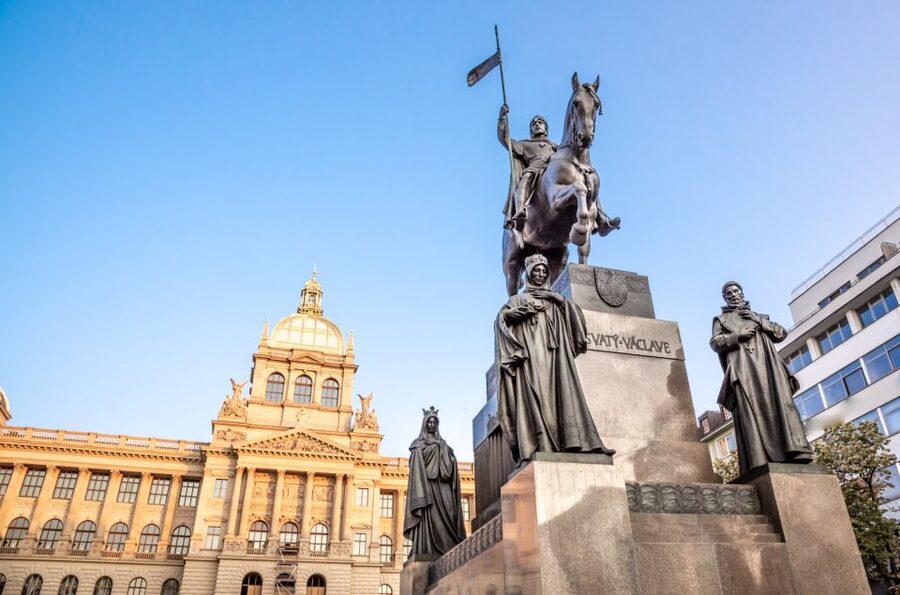
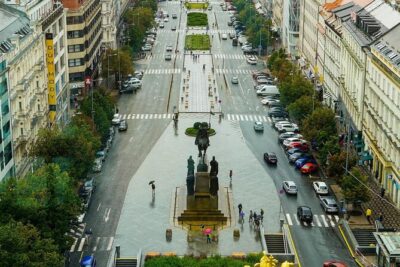
The tour ends in the one location where Prague’s politics are loud, public, and visual: Wenceslas Square. Your guide explains that the Nazis used this space for mass demonstrations. That historical detail changes how you see the square. The broad avenues and monumental feel start to read like a stage designed for power.
Then the story moves forward to the 1989 Velvet Revolution, when mass demonstrations took place here. You get the sequence that links public protests to the collapse of a regime. And you see why this square keeps showing up in Czech memory. It is where the state tries to control the crowd, and it is where crowds prove they can control the state.
This is also where you feel the tour’s big theme: regimes use public space to sell legitimacy, and citizens use the same space to demand change. The shift from occupation-era demonstrations to revolutionary momentum is explained so you can understand how the Velvet Revolution built from earlier tensions rather than appearing out of nowhere.
I especially like that your guide does not treat 1989 like a movie finale. It is framed as the outcome of decades of rule, resistance, pressure, and information control.
If you want great photos, this is your finale. Just keep them grounded. Spend a minute looking at the space before you start snapping, because the guide will have you notice sight lines and crowd scale.
More history in Prague:
- Prague: Oldtown, Medieval Underground & Dungeon History Tour
★ 4.3 · 10,277 reviews - Prague Old Town, Medieval Underground and Dungeon Historical Tour
★ 4.5 · 3,227 reviews - Prague: Historic City Center Bus Tour with Top Sights
★ 4.4 · 2,360 reviews - Prague Historic Pub Tour with Drinks Included
★ 5.0 · 2,084 reviews
The Museum of Communism: what the 4-hour option really adds

The 4-hour option is the one that turns the WWII and occupation story into a full arc of Communist rule. The big upgrade is the Museum of Communism, where you get an insight into life across the four decades of Communist rule in Czechoslovakia.
What you learn is not just “Communism was bad.” You learn how it functioned in everyday life through propaganda, censorship, political trials, and executions. Your guide uses those themes to connect the political story to human consequences.
The museum covers major events you will hear named clearly: the Cold War years, the Prague Spring, the Soviet invasion of 1968, and the suicide of student Jan Palach. Then it connects those episodes to the Velvet Revolution at the end.
This is the part of the tour that helps if your Prague trip includes other Czech history stops and you want a coherent storyline. Without the museum, you still get the Velvet Revolution location and context at Wenceslas Square. With the museum, you understand why the society was ready for change and what mechanisms kept people trapped until they broke.
Who this suits best: if you are the type who likes to ask questions like, How did people cope? How did the state control speech? What happened to dissenters? This option will feel like the missing chapter.
One more benefit: the museum gives you time to slow down. Walking tours can be fast and emotional. Sitting with exhibits helps your brain absorb the political logic behind what you saw outdoors.
Price and logistics, and whether $104 feels fair
At $104 per person for a private tour lasting 2 to 4 hours, this sits in the mid to higher range for Prague history walking. The key question for you is value, and you have a few ways this tour earns it.
First, it is private and led by a history expert guide fluent in your chosen language. That matters because WWII and Communism history is detail heavy. A group tour can turn into a race to catch the main facts. Here, your guide can adjust to what you care about, whether that is Operation Anthropoid, the 1945 Uprising, or the way later Communist messaging reframed Red Army involvement.
Second, the tour is built around high-impact locations: Josefov synagogues, Old Town Square with the Astronomical Clock, Petschek Palace, and Wenceslas Square. You are not paying for generic street walking. You are paying for interpretation of specific places tied to specific events.
Third, you control the length. If you only choose the 2-hour walk, you skip Museum of Communism tickets and keep the cost focused on the outdoor route. If you choose 4 hours, the Museum of Communism ticket is included, and you get that full Communism context.
In other words, the price is easier to justify if you want more than a quick highlight tour. If you love history but hate ambiguity, a private guide with a structured narrative is where the money goes.
Before you go: how to get the most from this private history tour
You will be walking, and it is not a “just wear sneakers” situation. Pick shoes that work for cobblestones and plan to take in hard topics along the way.
A few practical moves will help:
- Bring a short list of questions, like which events your guide should explain more, for example the 1945 Uprising, Operation Anthropoid, or how Salinization fits into the Communist story.
- If you are doing the 2-hour option, you should know the Museum of Communism is not included, so you might want to plan that separately if you are very curious about propaganda and censorship.
- Expect the emotional tone to shift, Josefov and Gestapo-related stops set a serious mood, and Wenceslas Square brings you back to public hope and change.
On languages, the guide can run the tour in English, French, German, Italian, Polish, Russian, Spanish, or Czech. That flexibility is a real benefit. History gets clearer when you can ask follow-ups in your own comfort language instead of guessing what a name or term means.
Meeting point is in front of the World of Franz Kafka at Nám. Franze Kafky 16/1, in Staré Město. If you like to arrive early, use that time to orient yourself around the square so the start feels smooth.
Should you book this WWII and Communism tour?
If you want Prague history that is specific, connected, and grounded in real sites, I think this is a smart booking. The tour’s biggest strength is the way it links WWII occupation, resistance, and the Velvet Revolution to places you can actually stand in front of. You end with the political meaning of Wenceslas Square, not just a list of dates.
Book the 2-hour version if you like a focused route and you want the core story: Josefov’s WWII context, the Prague Uprising sites around Old Town Square, the Gestapo connection at Petschek Palace, and the Velvet Revolution at Wenceslas Square.
Book the 4-hour version if you want the “why” behind Communist control and eventual change, because the Museum of Communism adds the Cold War, Prague Spring, the 1968 invasion, Jan Palach, propaganda, censorship, trials, and executions in one place.
Go for it especially if you value a private guide who can handle tough questions calmly. And if you are lucky enough to get someone like Sofija or Markéta, you will likely walk away feeling you understood Prague’s 20th-century story, not just saw the scenery.
FAQ
What is the duration of this tour?
You can choose either a 2-hour walking tour or an extended option lasting up to 4 hours.
What does the tour include in the 2-hour option?
The 2-hour option includes the private WWII and Communism-themed walking experience through Prague’s Old Town. Tickets to the Museum of Communism are not included in this shorter option.
Is the Museum of Communism included?
Yes, in the 4-hour option the tour includes regular tickets to the Museum of Communism. In the 2-hour option, you will not have Museum of Communism tickets included.
Where do we meet the guide?
Meet your guide in front of the World of Franz Kafka, Nám. Franze Kafky 16/1, 110 00 Staré Město, Czechia.
What languages are available for the guide?
The guide can run the tour in English, French, German, Italian, Polish, Russian, Spanish, and Czech.
Is the tour wheelchair accessible?
Yes, the tour is listed as wheelchair accessible.
Added recently in Prague
- Half-day Private Tour of Prague’s Charming Jewish Quarter★ 5.0 · 4 reviews
- Karlstejn Castle Half Day Tour from Prague★ 3.5 · 4 reviews
- Private Full-Day Tour Karlstejn Castle and Crystal Glassworks from Prague★ 4.5 · 4 reviews
- Prague Castle and Charles Bridge Private Walking Tour★ 5.0 · 4 reviews
- Prague: Sports Cards & Artifacts Museum Tickets★ 4.6 · 4 reviews
- Prague: Target Gun Shooting Experience with Hotel Pickup★ 4.7 · 4 reviews
- Private tour to Cesky Krumlov★ 5.0 · 4 reviews
- Prague Airport Transfers, Praga Aeropuerto Traslados, ESPAŇOL-ENG★ 5.0 · 4 reviews
Communist-Era Prague, compared.
Communism History and Nuclear Bunker Guided Tour
Read our review →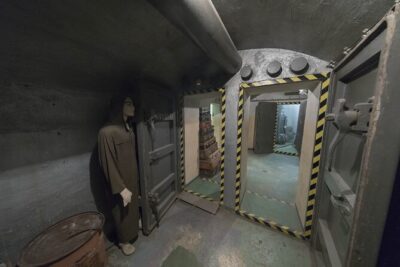
Prague Communism History and Nuclear Bunker Tour
Read our review →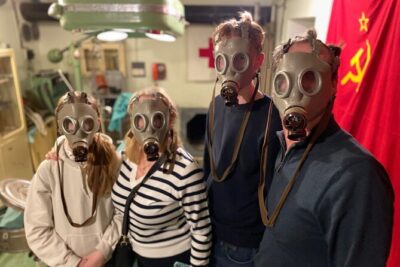
Communism & Nuclear Bunker Tour + 70s Canteen Lunch (own expense)
Read our review →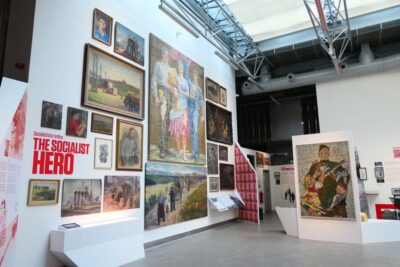
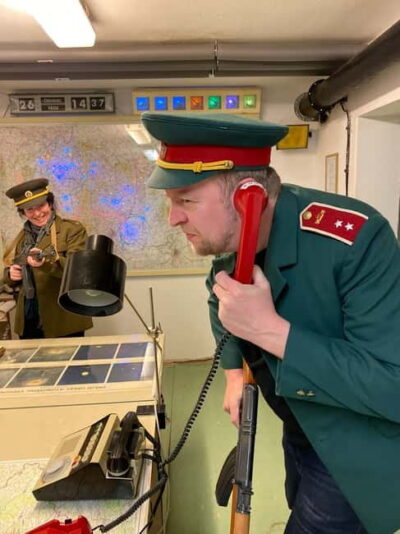
Communism and Bunker Tour with 70s Canteen Lunch
Read our review →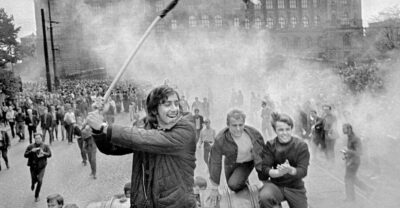
Second World War & Communism (Tip-based 3 hour tour)
Read our review →
Browse the lists this tour appears in