
Reviewed · COMMUNIST-ERA PRAGUE
Prague Private Tour and Museum of Communism with transfer
If you want Prague history with context, this private half-day is a smart way to see how Communist-era power shaped daily life and why the Velvet Revolution happened when it did. I like that it combines hotel pickup with skip-the-line museum entry, so you start strong instead of wasting time. One thing to consider is that there is a moderate amount of walking, so comfortable shoes matter.
You’ll get driven in a clean Mercedes Benz to the Museum of Communism, then guided through recreated rooms and the big political story behind them. After the museum, you continue on foot around key places tied to the late 1980s protests, including Wenceslas Square and Letna Park.
This tour is also private, so you can steer the day with questions and special interests. The tradeoff is the time window is fixed, so you will need to plan your lunch and any extra stops with that in mind.
Quick hit highlights you can feel in 4 hours
- Skip-the-line admission to the Museum of Communism, plus hotel pickup and drop-off
- A local, story-first guide who can connect dates to real lives (you may be paired with guides like Iva, Hanna, or Pavel from the area)
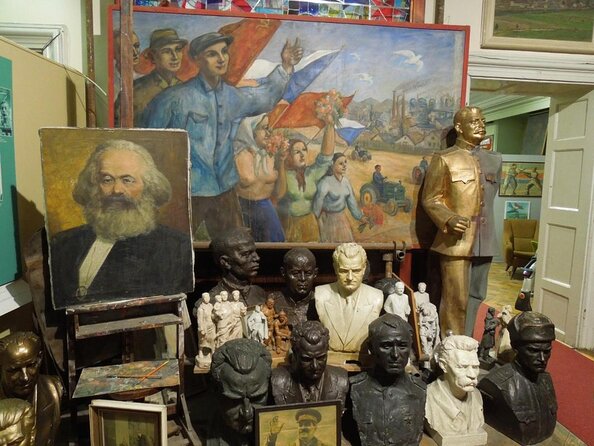
- Recreated settings at the museum, including spaces meant to resemble daily-life and repression scenes
- Velvet Revolution waypoints around Prague, from Albertov to Wenceslas Square to Narodni Trida
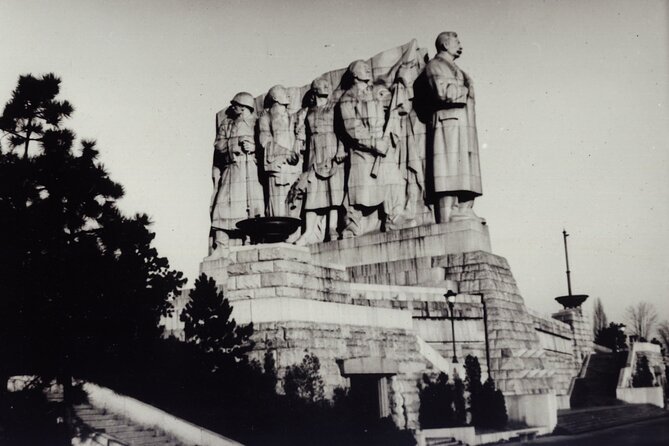
- Letna Park viewpoint with the surviving base where Stalin’s statue once stood
- Private Mercedes Benz transfer with bottled water, so you spend your energy on walking, not navigating
Meeting up at your hotel, then straight to the Museum of Communism
The day starts with a pickup from your hotel lobby, or from another convenient spot you choose in central Prague. A private guide meets you, and you ride in a Mercedes Benz with a driver, with bottled water provided in the car. It’s a simple setup, but it matters in Prague where getting the timing right can be tricky, especially if you’re trying to fit this kind of museum visit into a busy schedule.
The tour runs roughly 4 hours and is offered in English, which is ideal if you want the political background and the human details without translation delays. Also, it operates in all weather conditions, so dress for the day. If rain comes down, you will still be out on the streets for the walking portion.
A helpful detail for your planning: the tour ends back at your hotel or another central drop-off location. That gives you flexibility to continue independently right after the museum and sites, rather than trying to find your way back while tired.
Other tours of the communist period:
- Prague: Communism History and Nuclear Bunker Guided Tour
★ 4.7 · 2,417 reviews - Prague Communism History and Nuclear Bunker Tour
★ 5.0 · 1,742 reviews - Communism & Nuclear Bunker Tour + 70s Canteen Lunch (own expense)
★ 5.0 · 1,036 reviews
Skip-the-line inside the Museum of Communism
The Museum of Communism is the anchor of the tour, and the main value here is straightforward: skip-the-line entry plus a guide who keeps you focused on what matters.
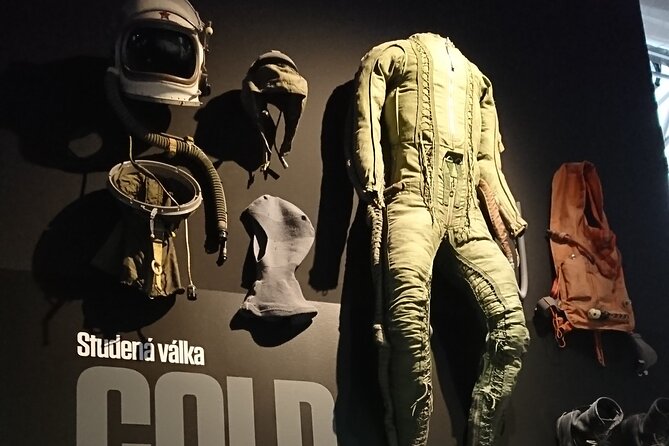
Inside, you’re not just looking at posters and dates. The visit includes recreated spaces that help you picture what institutions and daily routines looked like. Expect rooms designed as stand-ins for places like a communist-era classroom, a factory scene, and an interrogation room. Those are the kinds of setups that make the era feel physical, not abstract.
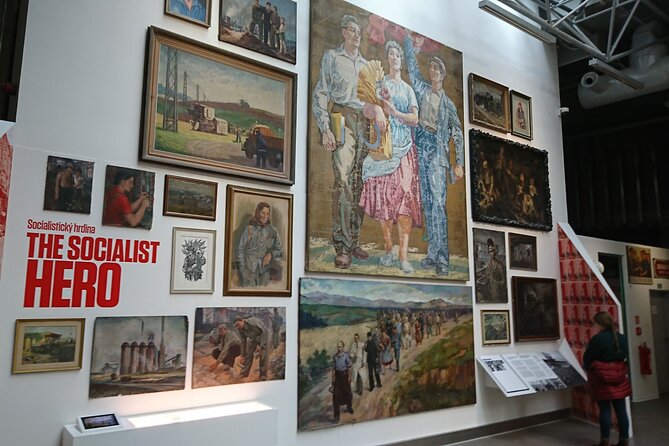
Your guide connects the museum content to the broader political timeline. You’ll see how the totalitarian system operated in Czechoslovakia from the February 1948 putsch until the Velvet Revolution in 1989. The museum also covers how power reached into everyday life: education, media propaganda, arts (including Socialist Realism), and even topics like sports and economics. And it doesn’t shy away from repression, including censorship, courts, and show trials, plus the People’s Militias, the police, and the secret police.
If you’re a history enthusiast, the benefit of a private guide is you can ask the questions that usually get lost in bigger groups. For example, you can spend extra time on the parts you care about, like how censorship worked, how the education system fit the political agenda, or how the secret police operated.
Albertov: where 1989 student protests helped spark change
The first stop is Albertov, tied to the peaceful student demonstrations of the Velvet Revolution in 1989. This is the kind of place that sounds small on a map, but it carries outsized meaning, because it points to how pressure began not only with political leaders, but with everyday people organizing and refusing to stay quiet.
Albertov is also a calm start compared to the more central squares later. You get a short stop here, around 10 minutes, which keeps the pace comfortable before you shift into the more intense symbolism of the city center. Admission is listed as free for this stop.
Even if you don’t know the full Czech timeline yet, this opening helps you see the Velvet Revolution as a movement with momentum that built, rather than as one sudden event.
Wenceslas Square and the National Museum bullet holes
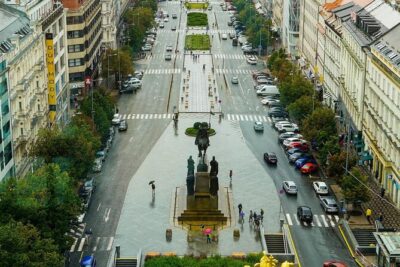
Next comes Vaclavske NamEsti, better known as Wenceslas Square. This is where Prague history shows up in the architecture. You’ll hear how the square became a stage in 1968 during the Prague Spring, including clashes with Soviet armored units. One detail worth your attention is that the bullet holes preserved in the National Museum walls are still visible after renovation, acting like a historical marker you can literally point to.
Then the timeline jumps to 1989. The square hosted a protest rally against police brutality in November 1989, and that energy is tied to the overthrow of Communism. You’ll also get the older context: the square began as a horse market and is lined today with hotels, restaurants, clubs, and shops. There’s also the equestrian statue of St. Wenceslas, erected in 1912, which sits near the National Museum and helps anchor the view across the length of the square.
A neat, specific detail on this stop is the mention of the Jalta Hotel. The tour points out that it was used by STB, the secret police, for eavesdropping on foreign diplomats and businessmen who stayed there. That kind of small, specific fact is exactly what makes a guided day feel different from sightseeing on your own.
This stop is about 30 minutes and is also listed as free.
More museums in Prague:
- Prague: Museum of Fantastic Illusions Entry Ticket
★ 4.3 · 4,337 reviews - IAM Illusion Art Museum Entry Ticket
★ 4.2 · 1,664 reviews - Prague: Museum of Senses Admission Ticket
★ 4.0 · 1,445 reviews - IAM Illusion Art Museum Prague Fast Pass Ticket
★ 5.0 · 957 reviews
Narodni Trida’s Hands reaching out of the wall
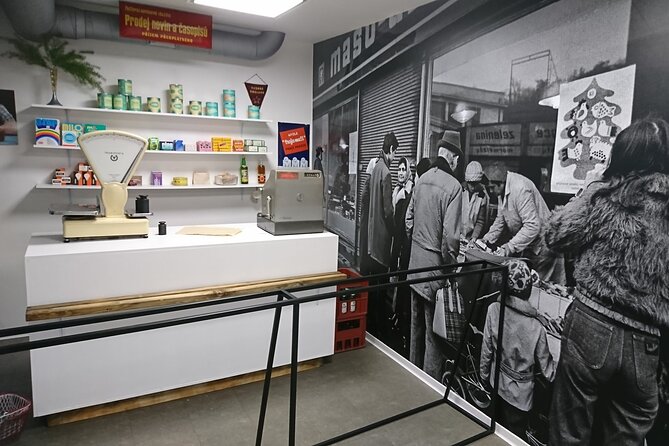
Narodni Trida is the darker turning point of the walking segment. You’ll visit the hands reaching out of the wall, a memorial connected to the worst beating by police during the Velvet Revolution in 1989.
Here’s the context the guide adds: the police blocked side streets and formed a narrow cordon. If someone tried to escape, they had to pass through and received heavy beatings on the way. The memorial gives you a physical reminder that political change often includes real violence and real fear, not just peaceful speeches.
The stop is short, about 20 minutes, and admission is listed as free. The pacing is intentional, because after Wenceslas Square, you already have a lot of emotional information to process. Narodni Trida gives you the emotional weight, then you move back toward understanding the broader story through the museum and the final viewpoint.
Letna Park: the Stalin base, the metronome, and the view
Letna Park is the payoff for the walking day. You’ll head here for a panoramic view of Prague, and the stop is connected to one of the more surprising symbolism stories in the city.
Your guide points out that the area once held a giant statue of Josip Stalin overseeing Czechoslovak underlings. The story goes that after Nikita Chruscev revealed Stalin’s atrocities in his famous speech, the monument was removed. The big twist is that the base survived, and instead of a statue, a giant metronome was installed on it.
Today, that location is a popular viewpoint for young people, including dating and skateboarding. It’s one of those places where you can stand over the layer-cake of history, from dictatorship propaganda to a freer, more playful public space.
This stop takes about 30 minutes and is listed as free.
The walking portion: keep it comfortable and stay in control
This tour includes a moderate amount of walking. That doesn’t mean it’s exhausting, but it does mean you should treat it like a normal half-day city walk. Bring comfortable shoes, and dress for weather because the tour runs outdoors in all conditions.
There’s also an important practical angle: after the museum, you’re on foot visiting communist-history sites connected to the late 1980s story. The planned route mentions places like Wenceslas Square, the National Museum area, and Letna Park. It also notes that after the museum, it’s your choice where to go next. That flexibility is useful if you want a quick lunch break nearby or if you want to spend extra time at one of the memorials mentioned in the route.
Total time is about 4 hours, so you’ll want to plan your day around it. If you’re doing other attractions after, keep your next stop close to central Prague so you’re not spending time commuting.
Why the guide’s personal stories matter so much
The most consistently praised aspect of this experience is the way guides bring the era to life. In the private format, you’re not just receiving facts. You’re hearing lived perspective.
In past tours, guides such as Iva, Hanna, and Pavel have shared firsthand context from people who lived through Communism in Czechoslovakia from roughly 1948 to 1990. That type of storytelling tends to make the museum content click. Instead of memorizing terms like censorship, secret police, or show trials, you start to understand how the system affected schooling, work, art, and daily decisions.
A second detail that comes up strongly is driver support. Drivers like Piotr or Petr have been described as helpful and eager to make the day smoother. In a city full of walking shortcuts and tricky traffic lanes, having someone focused on the transfer logistics makes the whole day feel calmer.
For you, the best move is simple: tell the guide your special interests when you book. The tour notes this can help them tailor the private day. If your focus is Velvet Revolution events, ask to place extra attention on the late 1980s sites. If your focus is the mechanics of repression, spend time on the museum sections covering police, censorship, and courts.
Price and value: when $221.60 per person makes sense
At $221.60 per person for a private tour, this is not a budget activity. The value comes from what’s bundled together.
You’re paying for:
- Private Mercedes Benz transport with a driver
- Hotel pickup and drop-off in central Prague
- A professional guide
- Museum of Communism admission included, plus skip-the-line entry
- Bottled water during the transfer
You’re also saving time. Without this setup, you would need to figure out how to get to the museum efficiently and then handle the walking route across several key memorial areas. This tour removes the friction. That matters when you’re only in Prague for a few days.
It’s also worth it if you care about depth over speed. Museum visits can become rushed if you’re trying to cover them between other tourist stops. A private guide helps you keep pace while still spending enough time on the topics that interest you.
One cost note: food and drinks are not included. So plan a lunch or snack either before you start or near your drop-off afterward. The good part is you can control where you end, which makes it easier to grab something nearby.
Practical tips to make the day smoother
A few small things help you get more out of the experience.
First, wear shoes you can walk in comfortably. The museum is mostly indoor walking too, but the city part is what really benefits from good footwear.
Second, if you have specific interests, list them at booking. The tour explicitly says this alerts the guide so they can prepare for your private route. That can mean more attention to certain museum topics or more time at the sites that connect to what you care about.
Third, plan for a real half-day. The museum is about 1 hour, then the walking sequence includes stops around Albertov, Wenceslas Square, Narodni Trida, and Letna Park. If you’re trying to cram other major attractions right after, keep them close to central Prague.
Finally, bring your curiosity. This kind of tour works best when you allow yourself to ask questions. If a detail catches your interest, ask about it. Private tours turn questions into personalized context fast.
Should you book this Prague Private Tour?
Book this tour if you want a guided, story-led way to understand Prague under Communism and how the Velvet Revolution unfolded across real city spaces. The combination of skip-the-line museum entry, hotel pickup, and a private guide makes it a time-efficient choice, even if you’re not visiting every museum in Prague.
Skip it if you prefer to wander on your own without a set route, or if you dislike guided walking segments. Also, if you’re looking for a light, purely scenic day, this is more serious than that. The memorial stops and the museum content focus on repression and political control, so it’s best for travelers who want clarity, context, and meaning.
If you fit those boxes, this feels like a strong value for what you get. You’re not just seeing a museum. You’re connecting the museum to the streets, and you’re doing it with a guide who can turn history into lived perspective.
FAQ
How long is the Prague Private Tour and Museum of Communism experience?
It runs for approximately 4 hours.
What is included in the Museum of Communism part of the tour?
You get a guided visit to the Museum of Communism, with admission included. The visit covers topics like daily life, politics, education, propaganda, censorship, police including secret police (StB), and repression such as show trials and political labor camps.
Do I get hotel pickup and drop-off?
Yes. Your private guide picks you up at your hotel lobby (or another place you choose in Prague) and the tour ends back at your hotel or another central place.
Is transportation included?
Yes. You travel by private Mercedes Benz vehicle with a driver, and bottled water is provided in the car.
Is the tour private or shared?
It is private. Only your group participates.
What language is the tour offered in?
The tour is offered in English.
How much walking is involved?
There is a moderate amount of walking. Comfortable walking shoes are recommended.
What about food and drinks?
Food and drinks are not included.
Do I get a ticket on my phone?
Yes. A mobile ticket is included.
Can I get a full refund if I cancel?
Yes, free cancellation is available. You can cancel up to 24 hours in advance for a full refund.
Added recently in Prague
- Half-day Private Tour of Prague’s Charming Jewish Quarter★ 5.0 · 4 reviews
- Karlstejn Castle Half Day Tour from Prague★ 3.5 · 4 reviews
- Private Full-Day Tour Karlstejn Castle and Crystal Glassworks from Prague★ 4.5 · 4 reviews
- Prague Castle and Charles Bridge Private Walking Tour★ 5.0 · 4 reviews
- Prague: Sports Cards & Artifacts Museum Tickets★ 4.6 · 4 reviews
- Prague: Target Gun Shooting Experience with Hotel Pickup★ 4.7 · 4 reviews
- Private tour to Cesky Krumlov★ 5.0 · 4 reviews
- Prague Airport Transfers, Praga Aeropuerto Traslados, ESPAŇOL-ENG★ 5.0 · 4 reviews
Communist-Era Prague, compared.
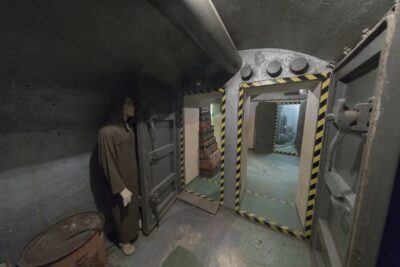
Communism History and Nuclear Bunker Guided Tour
Read our review →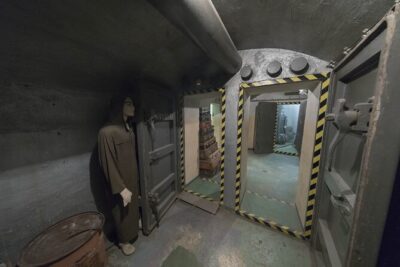
Prague Communism History and Nuclear Bunker Tour
Read our review →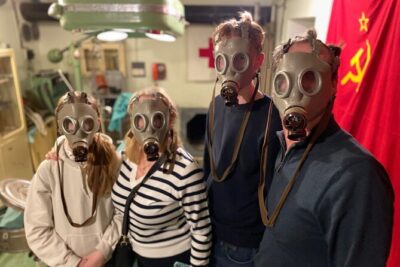
Communism & Nuclear Bunker Tour + 70s Canteen Lunch (own expense)
Read our review →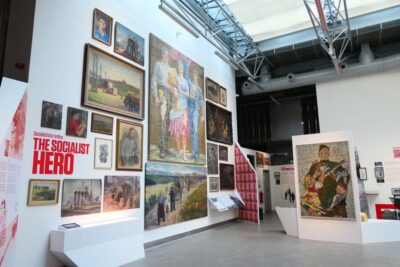
Communism and Bunker Tour with 70s Canteen Lunch
Read our review →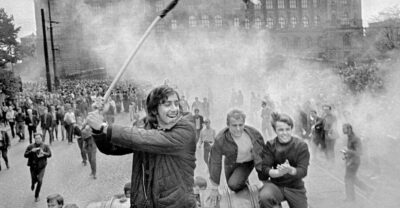
Second World War & Communism (Tip-based 3 hour tour)
Read our review →
Browse the lists this tour appears in