
Reviewed · COMMUNIST-ERA PRAGUE
Prague Communism and World War II Walking Tour
Prague’s 20th century history is heavy, but it also feels oddly close when you walk it street by street. This tour is interesting because it ties the Nazi years, the Soviet takeover, and the road to the Velvet Revolution to the exact places you can still stand and look at today. I like how the route is paced for real orientation, and I like that you hear it through a local guide.
Two things I really like about it are the strong sense of timeline and cause-and-effect, and the way the stories connect big events to daily life under dictatorship. On top of that, guides like Tomas and Martin bring the topics to life with personal angles, not just dates and slogans.
One possible drawback to consider: if your main goal is a very specific WWII focus (for example, tunnels, hideouts, or an in-depth Jewish Quarter angle), this walk may feel more political than you want. It is built around the Nazi and communist story arc.
Key Highlights You Should Care About
- A chronological story that moves from WWII through Soviet control and on to 1989
- Old Town to Wenceslas Square so you get quick orientation without a car or long transfers
- Castle views tied to the surprising detail about Stalin’s statue and the Soviet shadow
- Real names and real turning points like Václav Havel, Operation Anthropoid, and Prague Spring
- Small-group potential (maximum 25, and it can run very small in practice)
- Guides who answer questions and adapt if you want to slow down and talk
How a 20th-Century Prague Walk Gets Under Your Skin
Prague can look like a postcard from the right angle, but this walk forces the city to tell the truth. You start with views and monuments, then you get the political logic behind them, from Nazi occupation to communist rule and the final push toward democracy.
The best tours do two things at once. They teach you what happened, and they help you see the city as a living map. This one leans hard into that, so when you later wander on your own, you remember what you learned and why it mattered.
The tone is serious, but it is not joyless. You will hear human stories, including accounts tied to the Velvet Revolution era. And you will likely pick up a few darker facts that explain why certain places feel tense even decades later.
Other tours of the communist period:
- Prague: Communism History and Nuclear Bunker Guided Tour
★ 4.7 · 2,417 reviews - Prague Communism History and Nuclear Bunker Tour
★ 5.0 · 1,742 reviews - Communism & Nuclear Bunker Tour + 70s Canteen Lunch (own expense)
★ 5.0 · 1,036 reviews
Křižovnické náměstí: Stalin’s Shadow and Castle Views
You begin at Křižovnické náměstí, in the Old Town area near the Old Town Bridge Tower. It is a good starting point because it puts you in the historic core right away, without needing complicated transport.
The first big moment is the panoramic view toward Prague Castle. You are not just looking at a famous skyline. Your guide uses the sightline to set a mood, then connects it to one of the most striking Soviet details mentioned on this tour: that not far from the castle area once stood the largest statue of Joseph Stalin in the world. Even if you cannot picture it today, the idea lands fast. You start seeing how power used public space as propaganda.
From there, you get the early framing for what follows. Expect a walk that establishes the major events you will revisit again later, so the second and third stops do not feel like separate history lessons. This first stretch works best if you are willing to listen for the thread, not just the facts.
Practical tip: this portion is short and outside-focused, so you can usually handle it well even if you are not in top walking shape. Comfortable shoes still matter, because Prague sidewalks add up fast over multiple stops.
New Town Storylines: Democracy, Nazi Occupation, and Operation Anthropoid
After the Old Town orientation, the tour shifts into New Town (Nové Město). This part is where the story sharpens into cause and consequence.
You start with the long arc that led from Habsburg-style rule to independent Czechoslovakia, described here as having one of the strongest economies of its time and, crucially, the last functioning democracy in Eastern and Central Europe after 1933. That contrast matters, because it explains why the later occupation and dictatorship felt so destructive, not inevitable.
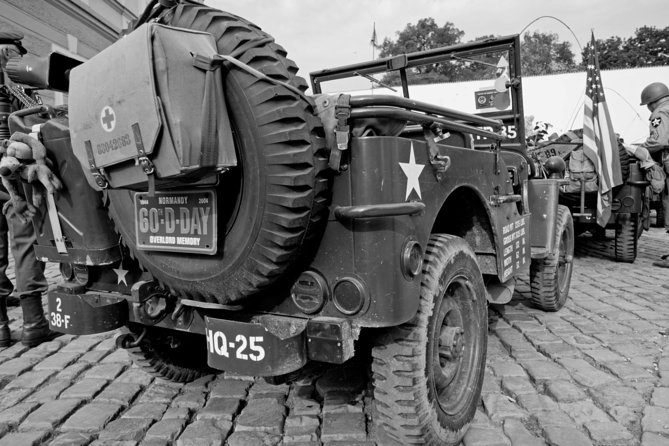
Then the tour moves into WWII realities, including suffering under the Nazi Protectorate of Bohemia and Moravia. You will also hear about Operation Anthropoid, highlighted as the only successful assassination of a senior Nazi leader during World War II. The emphasis is not only on what happened, but why it became such a symbolic story in Czech memory.
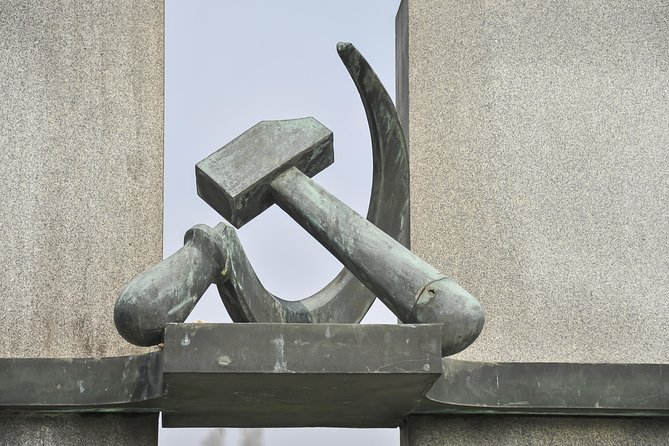
When communist power arrives, the guide brings the same “timeline logic” forward. You learn about methods and strategies used by the communist regime, plus the enduring influence of the USSR after the shift in power. The message is clear: a democratic state got transformed into a dictatorship where human life counted for less.
This stop is one of the best values on the tour if you feel like Prague’s WWII story is usually presented in fragments. Here, it is treated as one connected chain, so the political shifts do not come out of nowhere.
A balanced note: if you are hoping for a tour that focuses on very niche WWII operations or underground details, this segment may feel more big-picture. It is built for understanding the political framework, not for chasing every obscure footnote.
Wenceslas Square: Prague Spring, 1968 Violence, and the Velvet Revolution Road
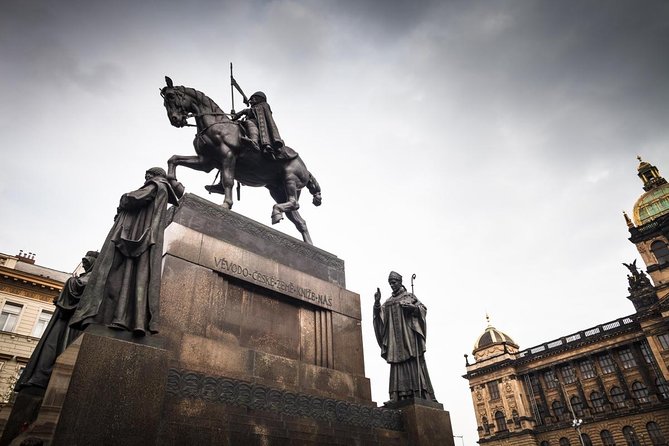
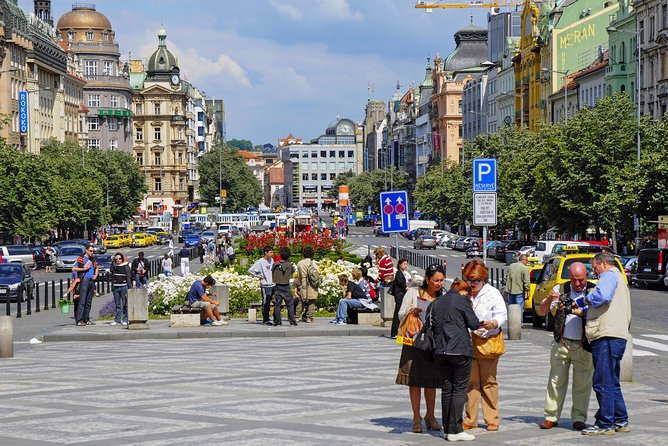
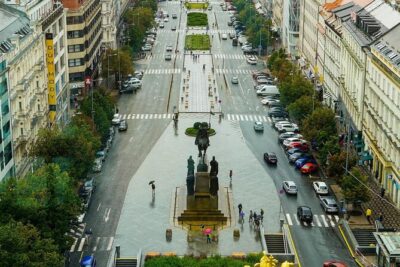
The final stop centers on Wenceslas (Wáclavské) Square, which is a powerful place to end because it ties together modern Prague and the 20th-century trauma that shaped it.
The tour sets up 1968 first, with the euphoria of Prague Spring followed by the reality check: Soviet tanks invading Prague and the violence tied to the National Museum building on Wenceslas Square. This is one of those moments where the city’s layout helps you understand why events became so visible and so confrontational.
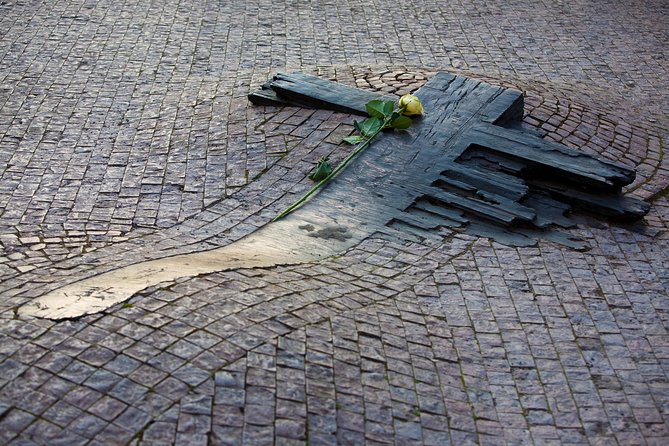
Then comes 1969, when students are honored here for an act described on the tour as burning themselves alive to try to unite the nation against the common enemy. That is heavy material, but the guide uses it to explain why protests did not simply disappear when the tanks arrived.
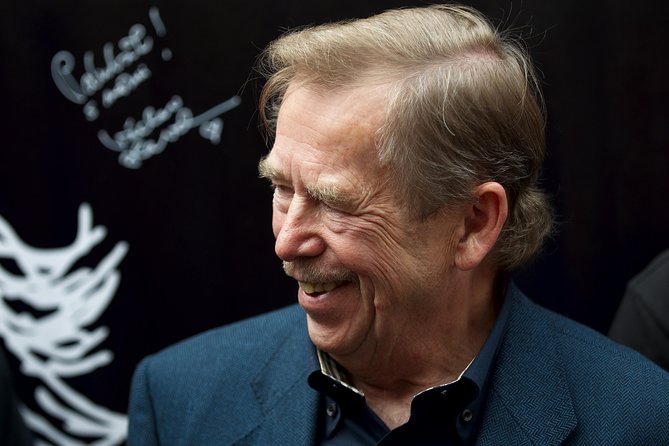
From there, the story moves into the long stretch of the 1970s and 1980s, including how the 1960s events set up later conflict. You hear about Václav Havel, courageous students, brutal police forces, and clashes at Narodní třída. And then the tour brings it home with the Velvet Revolution of 1989, framed as the ultimate victory of democracy after more than 40 years of communism.
What I appreciate about ending here is the way it changes how you see the square. Wenceslas Square is lively, touristy, and broad. After this, it also feels like a stage where the nation repeatedly fought for its future.
Also, the tour does not end only with grim facts. You are likely to hear humorous and obscure stories from early freedom days. It is a reminder that people did not just survive. They also adapted, joked, and tried to live again.
More walks in Prague:
- Prague: 3-Hour Walking Tour of Old Town & Prague Castle
★ 4.7 · 5,696 reviews - Prague: Ghost Walking Tour Where Legends Come To Life
★ 4.4 · 5,253 reviews - Prague: Jewish Quarter Walking Tour with Admission Tickets
★ 4.7 · 3,729 reviews - Prague Guided Walking Tour and Cruise with Authentic Czech Lunch
★ 5.0 · 3,627 reviews
Why the Guide Matters More Than the Meeting Point
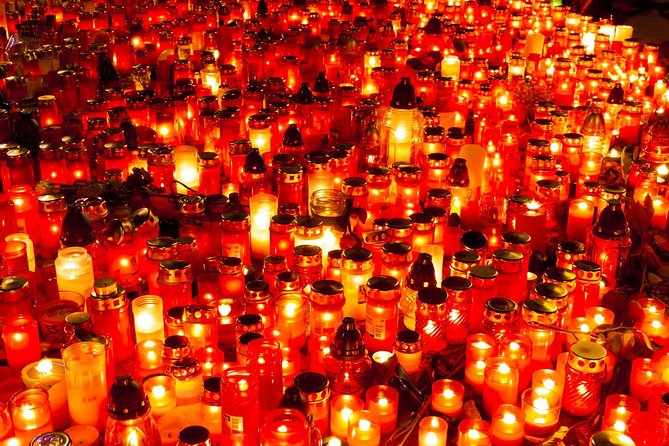
A great walk is not only about what you see. It is about what the guide makes you notice.
This tour is praised heavily for guides who can connect big history to personal perspective. Names that came up include Tomas, Martin, Dominick, Maria, Michal, and Zdenek. The standout pattern is that guides explain with clarity and keep the tone conversational, so you can ask questions and follow the logic.
Some guides have firsthand experience tied to the Velvet Revolution era, which changes the feel instantly. Even when you already know the headline events, hearing how people lived through them makes the story more real.
I also like that the guides tend to help you move beyond learning by memory. They often give practical city guidance at the end, including suggestions for where to eat and drink. One common theme in the feedback is that you might be pointed toward a coffee stop or a beer afterward, which is a nice way to turn a history lesson into a full morning.
Just keep your expectations aligned: the guide can make it vivid, but it still stays a walking orientation tour. If you want museum-level depth at every stop, you will need to pair it with a museum visit later.
Walking Notes, Timing, and How to Get the Most From It
The tour runs about 2 hours and starts at 10:00 am. It is offered in English, and the pace is set to keep the story moving without turning into a speed-walk.
Group size is capped at 25 travelers, and in practice it can end up very small. That matters. Smaller groups mean more questions, more back-and-forth, and fewer moments where you feel like you are just reading a plaque for the guide’s benefit.
The route is in central Prague and you start at Křižovnické náměstí. You finish somewhere in Prague city centre, so you can usually keep exploring on foot right after.
Bring: comfortable shoes. One of the most consistent practical notes is that you do a fair amount of walking for a 2-hour tour. Also consider bringing a small water bottle, since food and drinks are not included.
Tickets are handled as a mobile ticket, and confirmation comes at booking time. That is handy if you want minimal paperwork in your day.
If you are sensitive to intense historical topics, you should know this tour does not dodge the hard parts. Nazi occupation suffering, communist dictatorship, and acts of self-sacrifice are all part of the narrative here. You will not just hear slogans, you will hear what it meant for people.
Price, Value, and Who This Tour Fits Best
At $30.12 per person for about 2 hours, you are paying for two things: a professional guide and an organized, guided interpretation of key 20th-century turning points. Because the stops are mostly outdoor and listed as ticket-free, you are not layering on museum fees mid-walk.
That price looks especially fair if you are trying to make your first Prague visit feel organized fast. The tour gives you orientation, and it also gives you a framework for understanding why Prague looks the way it does today, even when the city feels calm and beautiful.
This is a strong fit for:
- History buffs who want the Nazi-to-communism-to-1989 story connected across real locations
- Travelers who appreciate a chronological structure and clear themes
- Anyone who wants a local voice, especially if you like asking questions
It may be less ideal if:
- You are only interested in one narrow topic within WWII and want deep dive-level specifics on that one slice
- You want a focus that is purely architectural or purely scenic, with politics kept light
Should You Book Prague Communism and World War II?
I think you should book this tour if you want a morning that adds meaning to Prague’s streets. It gives you a clear timeline, strong named events, and a local guide who can explain not just what happened, but how it shaped daily life and public space.
You may want to think twice if you strongly prefer museum-heavy sightseeing or highly specialized WWII operations. This is a walking story with big themes, not a single-topic mission.
If you do book, do one simple thing to make it work: come ready to listen for the connections. When you leave Wenceslas Square, you should feel like Prague has an extra layer. Not just history you read about, but history you can still sense in the city’s layout.
FAQ
How long is the Prague Communism and World War II walking tour?
It runs for about 2 hours.
What time does the tour start?
The start time is 10:00 am.
Is the tour offered in English?
Yes, it is offered in English.
What is included in the price?
The price includes a professional guide.
Where does the tour start?
The tour starts at Křižovnické náměstí, Křižovnické nám., 110 00 Praha 1-Staré Město, Czechia.
What is the cancellation policy?
Cancellation is free. You can cancel up to 24 hours in advance of the experience for a full refund.
Added recently in Prague
- Half-day Private Tour of Prague’s Charming Jewish Quarter★ 5.0 · 4 reviews
- Karlstejn Castle Half Day Tour from Prague★ 3.5 · 4 reviews
- Private Full-Day Tour Karlstejn Castle and Crystal Glassworks from Prague★ 4.5 · 4 reviews
- Prague Castle and Charles Bridge Private Walking Tour★ 5.0 · 4 reviews
- Prague: Sports Cards & Artifacts Museum Tickets★ 4.6 · 4 reviews
- Prague: Target Gun Shooting Experience with Hotel Pickup★ 4.7 · 4 reviews
- Private tour to Cesky Krumlov★ 5.0 · 4 reviews
- Prague Airport Transfers, Praga Aeropuerto Traslados, ESPAŇOL-ENG★ 5.0 · 4 reviews
Communist-Era Prague, compared.
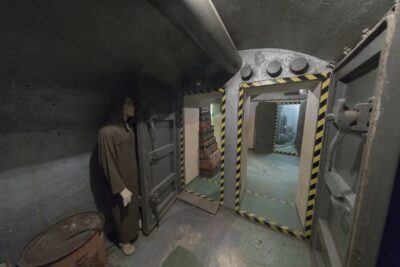
Communism History and Nuclear Bunker Guided Tour
Read our review →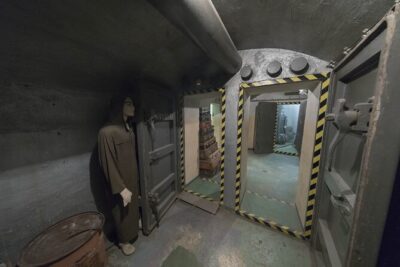
Prague Communism History and Nuclear Bunker Tour
Read our review →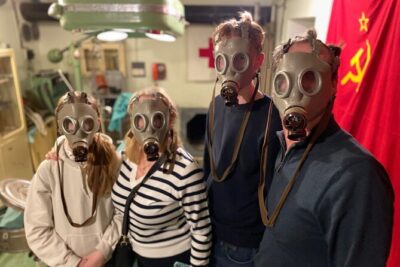
Communism & Nuclear Bunker Tour + 70s Canteen Lunch (own expense)
Read our review →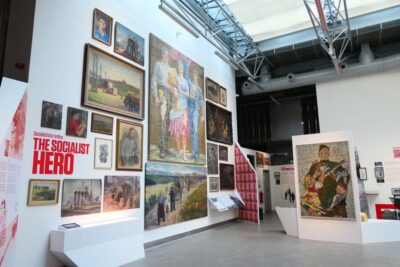
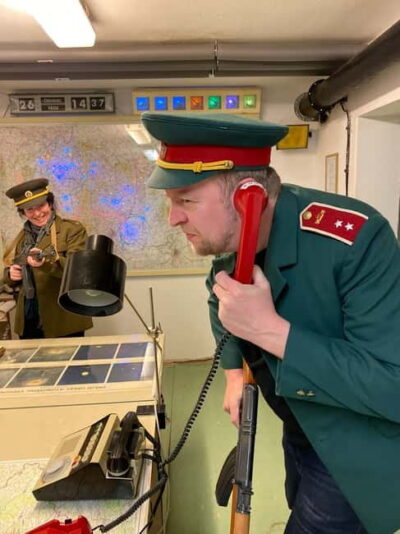
Communism and Bunker Tour with 70s Canteen Lunch
Read our review →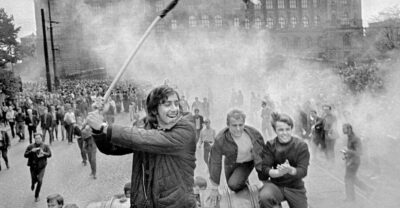
Second World War & Communism (Tip-based 3 hour tour)
Read our review →
Browse the lists this tour appears in