
Reviewed · COMMUNIST-ERA PRAGUE
Second World War & Communism (Tip-based 3 hour tour)
Prague turns street corners into a time machine, and this 3 hour walk strings together WWII, the Cold War, and the fall of Communism in one logical flow. It is a great fit if you like history that feels personal, not just dates and flags.
What I like most is the mix of sites, you get both the human story (Czech Jewish fate, resistance choices) and the political timeline (Prague Uprising, Warsaw Pact in 1968, Velvet Revolution). I also like that you get free entry to the Museum of Anthropoid Operation, so the final chapter is not just talked about.
One thing to consider is the walking. The tour needs moderate fitness and it is not a good match if you have mobility problems. Also, in one reported case the group size felt much larger than expected, so if you prefer space, ask what the maximum group size will be for your date.
Key points you will enjoy
- WWII to Communism to 1968 to 1989, told as one continuous story across central Prague
- Pinkas Synagogue, focused on the fate of Czech Jewish communities and who could leave
- Prague Uprising locations, with context for how the war’s end shaped the next era
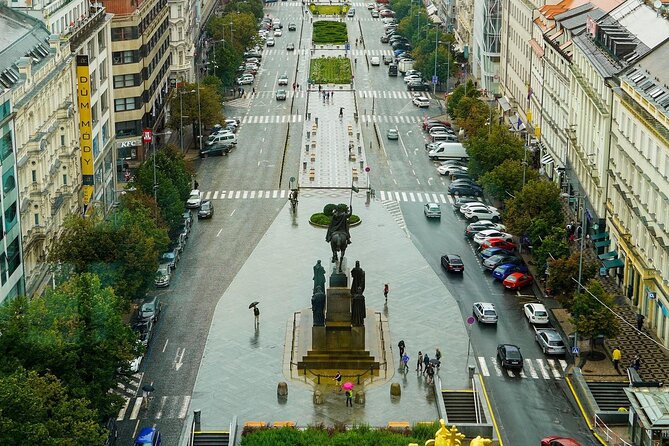
- Wenceslas Square moments, including the 1968 Warsaw Pact invasion and Jan Palach’s self-immolation spot
- Art and propaganda era clues, with stops tied to Kafka and cultural life under Communism
- Museum of Anthropoid Operation and the crypt hideout, a strong final beat for resistance history
A WWII to Cold War timeline you can actually walk
This tour works because it does not treat Prague’s 20th century like separate museum exhibits. You move from WWII resistance themes into the Prague Uprising, then straight to the Cold War mood that set up Communist rule. Finally, you end with the Velvet Revolution and the people behind it, plus the resistance story of Operation Anthropoid.
If you care about the “how did we get here” part of history, you will like the pacing. The guide keeps the narrative linear as you walk, so it feels like you are following a single thread instead of hopping between random plaques. And since it is in English, you can focus on the story rather than trying to translate the setting in your head.
The big value for me is that the route is anchored in real places, not just sweeping background. Memorials, squares, cathedrals, and recognizable landmarks all become proof points for the era’s choices, fears, and hope.
Other tours of the communist period:
- Prague: Communism History and Nuclear Bunker Guided Tour
★ 4.7 · 2,417 reviews - Prague Communism History and Nuclear Bunker Tour
★ 5.0 · 1,742 reviews - Communism & Nuclear Bunker Tour + 70s Canteen Lunch (own expense)
★ 5.0 · 1,036 reviews
Starting in Klárov: resistance memorials with real weight
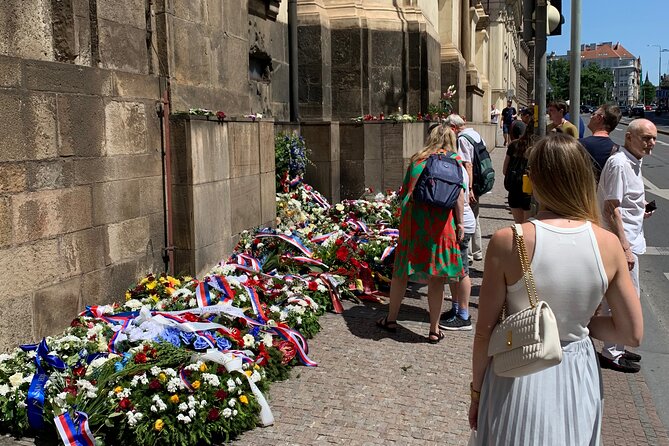
You begin at Klárov, where two memorials frame the tour’s tone from the start. The Memorial to the Second Resistance points you toward Czechoslovakia’s layered WWII reality, not just the simple idea of occupation and liberation.
Then you see the Winged Lion Memorial, another anchor that helps explain how the country’s early 20th century story leads into WWII. The tour also connects Czechoslovakia’s independence story to why this part of Europe mattered so much to Nazi planning later.
This opening matters because it sets up a key theme you keep hearing throughout: history is made by decisions. Soldiers, civilians, and leaders were not just reacting to events, they were choosing what to do with the narrow space they had.
You will likely feel the mood shift quickly once the guide gets into why Hitler occupied Czechoslovakia early and what happened to Czechoslovak soldiers during WWII. It gives you a base layer before the tour starts naming specific communities and episodes.
Pinkas Synagogue: the fate of Czech Jewish communities in plain terms
Next comes Pinkas Synagogue, and this is one of the emotional core stops. The focus here is the fate of Czech Jewish people during WWII, including how many managed to emigrate and what happened to those who could not.
This stop is powerful because it makes “the Holocaust” specific to Czech history. Instead of treating it like something that happened elsewhere, the guide connects the story to the people who lived here and the choices that determined survival odds.
Time is tight here, around 15 minutes, so you will want to listen closely and not try to read everything at once. If you are the type who likes to absorb slowly, you might feel like you want more time on your own afterward.
Still, as an introduction within a 3 hour walking tour, it gives you the essential context you need before you hear about resistance and political change.
Old Town Square and the Prague Uprising: how war’s end shaped the next system
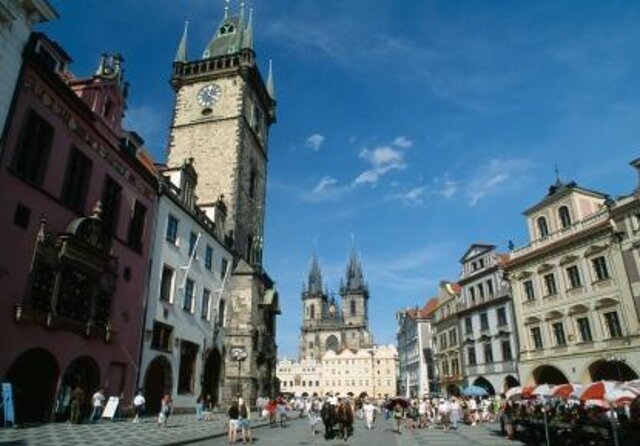
At Staroměstské náměstí, you are near the Old Town Hall, and the guide turns the story toward the Prague Uprising. This is where the tour starts linking WWII events to the politics that followed.
The key idea you should take from this stop is cause and effect. The end of WWII did not land everyone in the same place, morally or politically. The guide explains how those final wartime moments created conditions for Communism to rise in Czechoslovakia.
I like this stop because it helps you understand why “liberation” can mean different things depending on who is winning and who is controlling institutions. It is not just a dramatic chapter, it becomes a stepping stone to the next part of the story.
A few other Prague options
- Prague: 3-Hour Walking Tour of Old Town & Prague Castle
★ 4.7 · 5,696 reviews - Prague: 3-Hour Old Town and Prague Castle Tour in German
★ 4.8 · 5,671 reviews - 3-hour Complete Prague Bike Tour
★ 5.0 · 3,674 reviews - Prague 3-hour Afternoon Walking Tour including Prague Castle
★ 5.0 · 1,899 reviews
Wenceslas Square: 1968, Warsaw Pact pressure, and Jan Palach
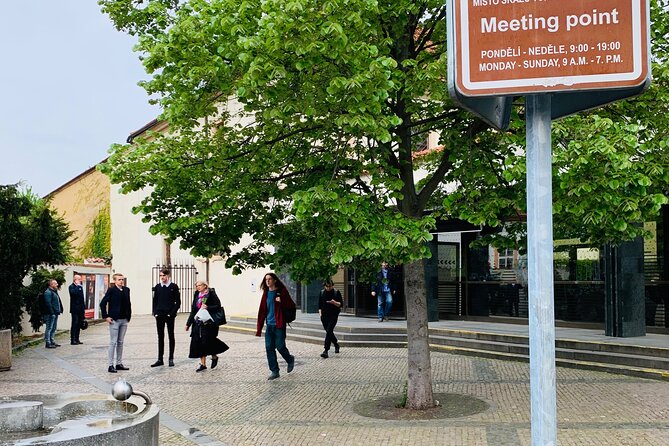
From Old Town, you move into the atmosphere of Wenceslas Square. This is not a quiet history stop. It is a big-city stage for big political events.
Here the tour addresses what happened after Communism started in Czechoslovakia and why Warsaw Pact armies invaded in 1968. You also learn where the place of Jan Palach’s self-immolation was, which is one of those moments that makes the politics personal.
This part is valuable because the guide ties social tension to specific events. You get the sense that Communist-era control was not only about armies and borders. It was also about daily life, public courage, and how people responded when they felt backed into a corner.
If you want a quick way to understand why dissidents mattered later, this is one of your best stops.
OC Quadrio: Kafka’s rotating head and art under Communism
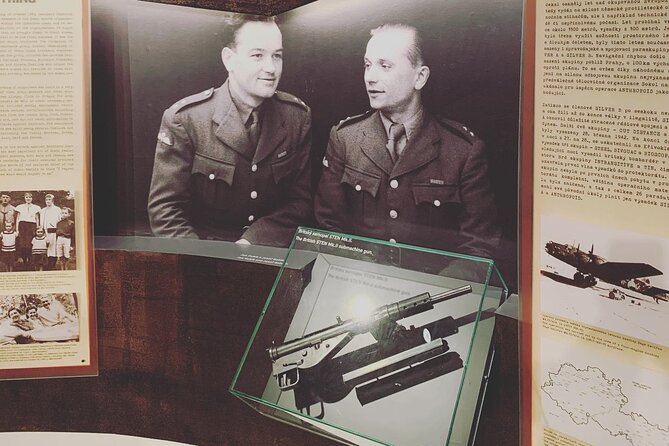
Next is OC Quadrio, and you will see the Rotating Head of Kafka. On paper that might sound like a quirky photo stop, but in context it becomes a clue to how art and literature moved through the Communist period.
The guide talks about art during Communism, and the point is not that art was “free” or “forbidden” in a simple way. It was shaped by politics, and cultural life often had to find clever ways to survive and still reach people.
This is also a good break from heavy memorial topics. Around 15 minutes here keeps the pace moving while still keeping the theme tight.
If you like the intersection between politics and culture, you will leave this stop thinking differently about Prague’s famous literary legacy.
Narodni třída hands reaching out: the Velvet Revolution
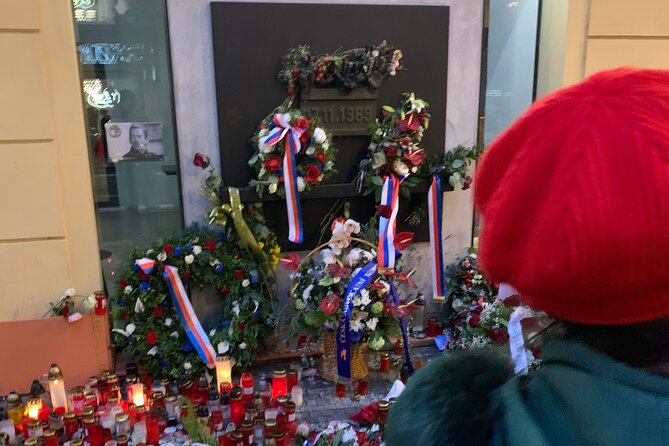
Then you get the emotional pivot. At Narodni třída, you see the Hands reaching out of the wall, and the guide shifts from the Communist system’s pressure to the Velvet Revolution and the fall of Communism.
This is one of those places where a sculpture does the job of a paragraph. The guide uses it as a visual metaphor for people reaching for change.
If you have ever wondered what “non-violent revolution” actually feels like in human terms, this stop helps. The story goes from suffering and constraint to action and release, without skipping the hard middle.
The total time here is around 15 minutes, so you will want to stay mentally present. The tour moves on quickly to keep the narrative momentum.
National Theater and Vaclav Havel: the face of the post-Communist shift
At the National Theater, the guide introduces Vaclav Havel, the first president of Czechoslovakia after the fall of Communism, and explains his role during the Velvet Revolution.
This stop is useful because it turns a political transformation into a named person and a set of choices. Havel’s involvement is a bridge between earlier resistance themes and the later rebuilding era.
Even if you do not know much about him now, you will leave with a basic map: what he represented, and why people trusted figures like him during a time when institutions were still shaky.
Also, the National Theater area gives you a sense of scale. Prague’s history is not only in small memorial plaques. It is in public spaces tied to national identity.
Dancing House and the Valentine’s Day bombing: a different angle on violence
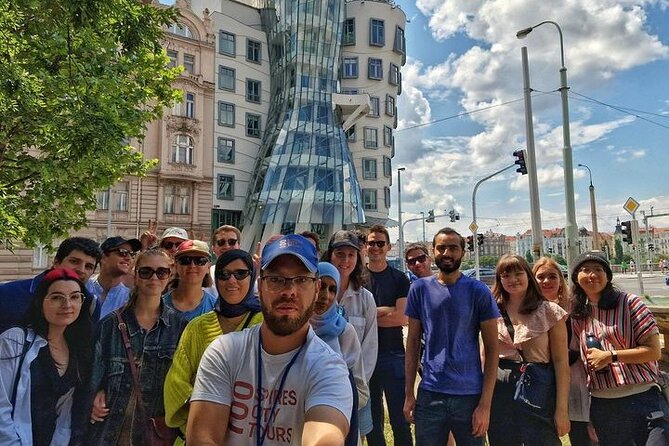
You stop at the Dancing House, and the guide shares the story of the Valentine’s Day bombing. This is a change in tone, because it is not just about occupation and internal politics. It is about how the war spilled into civilians and public life.
The Dancing House is quick, around 10 minutes, but it makes a point: WWII history in Prague is not only about one kind of tragedy. It includes air raids, fear, and the aftermath shaping how the city remembered the war.
This also helps your brain transition into the final resistance chapter, because the tour is building emotional variety, not just repeating the same theme.
St Cyril and St Methodius Cathedral, Operation Anthropoid, and the crypt hideout
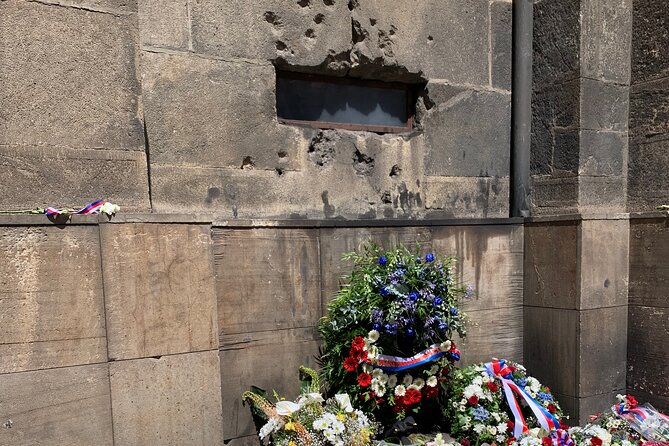
The tour ends at St Cyril and St Methodius Cathedral. This is the final historical beat: the most important achievement of Czechoslovak resistance during WWII, Operation Anthropoid.
You also get included entry to the Museum of Anthropoid Operation. That museum access gives you a chance to see artifacts and context for the operation, instead of relying only on street-level narration.
Then the tour finishes in the crypt, which the guide describes as a hideout for soldiers from the Anthropoid operation. The crypt is about a 1 minute walk from the Dancing House or Charles Square, so it is easy to orient yourself afterward.
One practical note: animals are not allowed inside the war memorial you visit at the end. Service animals are allowed, but if you travel with a pet, plan to keep them outside for that final segment.
This ending usually lands well because you have spent the previous stops understanding the larger political and human context. By the time you reach Anthropoid, it feels like the tour has finally answered the question of what resistance looked like when it mattered most.
Guides, storytelling style, and what to expect from the pacing
A standout theme in the experience is the guide’s storytelling. You might find guides such as Kamil who explain events clearly and in a step-by-step way. You might also run into Vaclav with a suspenseful, narrative style that keeps the 3 hours moving quickly.
Other named guides you may see include Katerina and Kuba, with strong emphasis on lived experience and how people endured Communist life day to day. The consistent thread is that the guide does not throw facts at you. They build a story arc as you walk.
You are moving through central Prague, so your job is simple: listen for the cause and effect the guide is pointing out. If you miss one transition, it is easy to get lost in the timeline. A quick tip: mentally repeat the big themes as you go, WWII, then uprising, then Communist rise, then 1968 and 1989. It keeps the order straight.
Price and value for a tip-based 3 hour tour
The price shown is $3.60 per person, and the tour is described as tip-based. In practice, you should assume the low listed amount is not the full cost of the experience. Your tip is the real deal.
This is where value shows up. A few people ended up paying more than they expected because the guide delivery felt worth it. That makes sense here because the tour includes meaningful included entry to the Museum of Anthropoid Operation, and the route covers multiple major WWII to Cold War themes in a short time.
So, if you want a bargain-history hit and you are comfortable with the tip-based model, this can be a smart choice. If you hate tipping culture and prefer a fixed-price product, you might want to look for something else.
Also, it is a 3 hour tour with free entry at the stops, so you are not paying separate attraction fees along the way. The included museum piece helps justify the time.
Who this tour suits best, and who should reconsider
This tour is ideal if you:
- love WWII and Cold War history that stays human, not abstract
- want context beyond Prague Castle and the typical Old Town highlights
- like walking through the city while learning the political story of the last 100 years
- want a guide to connect major events across different decades
You might reconsider if you:
- have mobility issues, since the tour is not recommended for travelers with mobility problems
- need a long sit-down experience, since it is timed and mostly on your feet
- prefer very small groups, because it can sometimes run with a larger group size than you might hope
If you are traveling with teens or an older history-minded parent, it also makes sense. The story is intense, but the guide keeps it structured, so it is easier to follow than a self-guided route with scattered information.
Should you book this WWII and Communism walk?
I think you should book if you want the fastest way to understand Prague’s 20th century story in one connected walk. The combination of WWII resistance, Czech Jewish history, the Prague Uprising, the 1968 invasion context, and the Velvet Revolution gives you a solid framework you can keep using when you explore on your own afterward.
Book it if you are comfortable walking about 5K and you are ready for emotionally serious material, especially around WWII and the Holocaust. If mobility is a concern, plan another option.
And if you care about story quality, keep an eye on the guide name. You might get someone like Kamil or Vaclav who brings a clear, suspense-building narrative style, or Katerina and Kuba who focus on how Communist life felt on the ground.
Added recently in Prague
- Half-day Private Tour of Prague’s Charming Jewish Quarter★ 5.0 · 4 reviews
- Karlstejn Castle Half Day Tour from Prague★ 3.5 · 4 reviews
- Private Full-Day Tour Karlstejn Castle and Crystal Glassworks from Prague★ 4.5 · 4 reviews
- Prague Castle and Charles Bridge Private Walking Tour★ 5.0 · 4 reviews
- Prague: Sports Cards & Artifacts Museum Tickets★ 4.6 · 4 reviews
- Prague: Target Gun Shooting Experience with Hotel Pickup★ 4.7 · 4 reviews
- Private tour to Cesky Krumlov★ 5.0 · 4 reviews
- Prague Airport Transfers, Praga Aeropuerto Traslados, ESPAŇOL-ENG★ 5.0 · 4 reviews
Communist-Era Prague, compared.
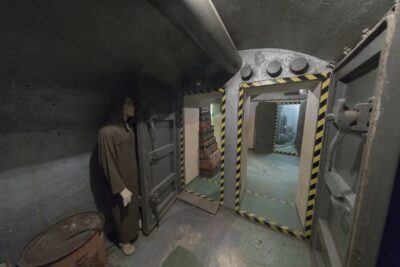
Communism History and Nuclear Bunker Guided Tour
Read our review →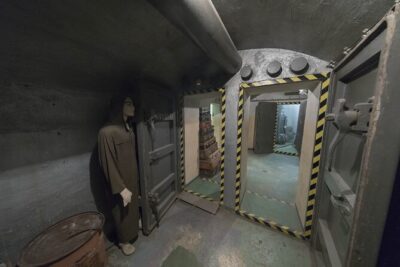
Prague Communism History and Nuclear Bunker Tour
Read our review →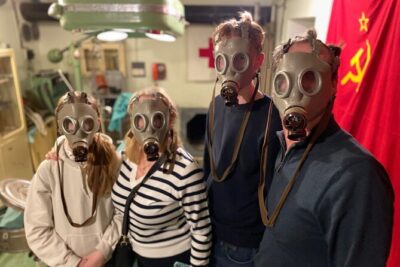
Communism & Nuclear Bunker Tour + 70s Canteen Lunch (own expense)
Read our review →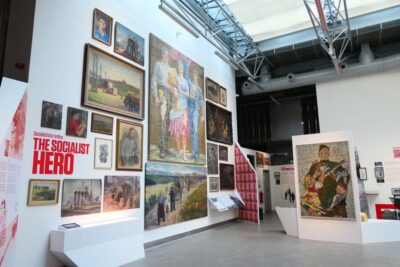
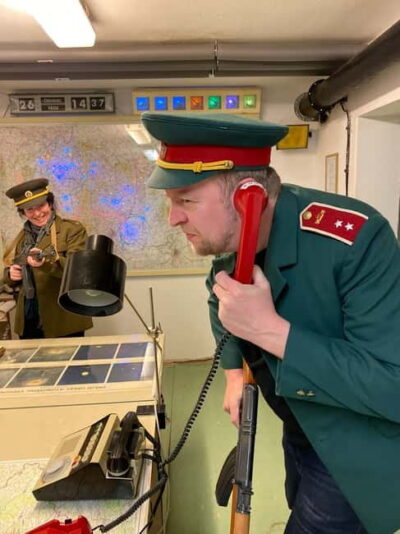
Communism and Bunker Tour with 70s Canteen Lunch
Read our review →

Browse the lists this tour appears in