
Czechia
Terezin Concentration Camp – A town of rich and painful history
6 hours (approx.)
Terezin is interesting because it shows how one walled place kept getting repurposed by different armies and regimes, and you feel those changes in the ground you’re walking on. I like that this is a private tour with a guide who can slow down for questions, not a rushed group shuffle. I also like the focus on understanding Terezin as a transit camp and how daily life worked inside the ghetto system.
One consideration: this is emotionally heavy. Even if you handle history well, you will likely want to pace yourself, and the tour depends on good weather, since the day can be adjusted or refunded if conditions are poor.
Key points to know before you go
- Private group up to 3 means you get time for questions, including tough ones.
- Hotel pickup and drop-off keeps you from fighting schedules and transit on a long, serious day.
- Tatiana and Victor add a calm structure to a difficult topic, with time to answer questions patiently.
- Gestapo prison, crematorium, and Magdeburg Barracks are the core stops that explain how the system worked.
- Transit camp context helps you understand Terezin’s role without mixing it up with extermination camps.
- Moderate walking and weather dependence matter more here than on a normal sightseeing outing.
Why Terezin is more than a stop on a WWII checklist
If you know WWII history, you probably associate Terezin with the Jewish ghetto. That’s accurate. But the place is also a reminder that the Nazis were methodical. They did not only imprison people, they engineered a process: confinement, sorting, and then deportation to death camps further east.
This matters because it changes what you pay attention to while you’re there. You’re not just looking at ruins and exhibits. You’re trying to understand how a fortress-town became a tool of persecution. That layered story, fortress then prison then ghetto then police prison, makes the experience feel specific, not generic.
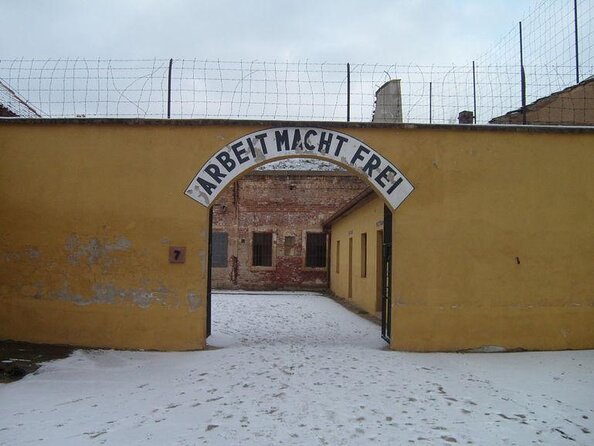
Terezin was named after Maria Theresa, and it started life as a fortress built for older military ideas. Over time, it became obsolete as a fortress, then moved through other uses, including a garrison town and later a prison during World War I. After the Nazi occupation, the Main fortress was converted into the so-called special Jewish ghetto, while the Small Fortress served as a cruel prison for the Reich’s secret police, the Gestapo.
That contrast is one of the most valuable parts of the day. You learn that the Nazi system was not one uniform machine. It had different functions in the same walled area, and those functions left different marks on the people caught inside.
Other visits to the Terezín Memorial:
- From Prague: Terezin Concentration Camp Guided Tour w/ Audio
★ 4.6 · 2,248 reviews - Terezin Concentration Camp Day Tour from Prague
★ 4.0 · 1,007 reviews - From Prague: Terezín and Ghetto Museum Guided Tour
★ 4.3 · 571 reviews
Getting oriented on the drive out of Prague
Your day starts at 9:00 am with pickup at the registration desk of your hotel. The tour runs about six hours, including the time to travel and visit the key sites in Terezin. Because it is private, you are not just getting a ride. You’re getting a guided handhold from the moment you leave.
On the way out, your guide can use the drive to set context. That’s not “filler.” It’s practical. When you arrive at a place like Terezin, you want to understand what you’re walking into: why there were two fortresses, why “ghetto” here meant something different from what people imagine, and why transit was so central.
It also helps emotionally. A serious site hits harder when it’s sudden. A little framing first helps you absorb what you see without feeling lost in it.
The Main Fortress story: how a fortress became a ghetto
Once you get into Terezin’s main area, the history becomes physical. The Main Fortress was turned into a special Jewish ghetto. This is where your understanding of “ghetto” needs adjustment. In Terezin, the ghetto was not only about segregation. It was part of a deportation system.
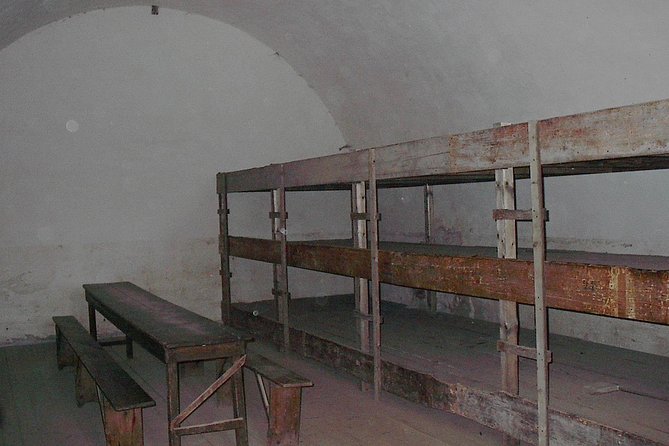
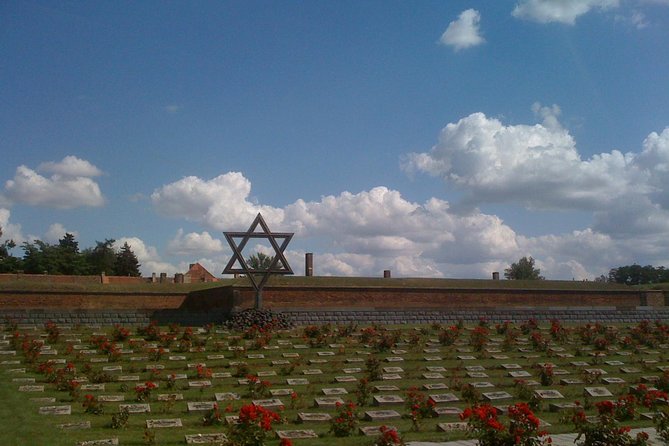
During the war, around 155,000 people were held in Terezin under desperate conditions while awaiting transport onward. Many people died in Terezin itself, including children. Learning this number and the reality behind it changes your attention when you look at barracks and prison premises. You begin to connect structures to consequences.
One of the strengths of a guide-led visit is that it keeps this factual. You are not just hearing that people suffered, you’re learning the specific role Terezin played. You leave understanding that it was not an extermination camp like Auschwitz, but a transit camp where deportations were sent further east.
That distinction is important. It doesn’t soften what happened here. It explains what the Nazis were doing and how they did it.
Gestapo prison stop: the Small Fortress and the machinery of fear
Terezin also contains the Small Fortress, and this is where the story takes a darker turn. The Small Fortress was a prison for the Reich’s secret police, the Gestapo. If the Main Fortress explains the ghetto function, the Gestapo prison helps you see how terror worked at close range.
In practical terms, this stop gives you a different kind of insight. Instead of the ghetto system being framed mostly as waiting, overcrowding, and deportation logistics, the Gestapo prison focuses on the police side of oppression: interrogation and control. Even without inventing details, the atmosphere of a former secret police prison changes how you interpret everything else on the visit.
This is also the kind of site where patient Q and A is useful. You will probably have questions. The people and the purpose behind certain spaces can be hard to grasp, and a calm guide helps you keep the facts straight while still respecting the subject.
Your guide, Tatiana, is specifically praised for handling questions patiently and explaining complex history in a way that makes the place feel understandable without turning it into a lecture you can’t process. That balance is the difference between seeing a site and truly learning from it.
More history in Prague:
- Prague: Oldtown, Medieval Underground & Dungeon History Tour
★ 4.3 · 10,277 reviews - Prague Old Town, Medieval Underground and Dungeon Historical Tour
★ 4.5 · 3,227 reviews - Prague: Communism History and Nuclear Bunker Guided Tour
★ 4.7 · 2,417 reviews - Prague: Historic City Center Bus Tour with Top Sights
★ 4.4 · 2,360 reviews
Crematorium grounds: why transit still meant death
One of the hardest stops on this kind of tour is the crematorium. In Terezin, the crematorium is part of the story of how the camp system functioned, even though Terezin was not an extermination camp.
Think of it this way: “transit” does not mean “safe waiting.” People arrived already vulnerable, and conditions were desperate. When you stand in the vicinity of the crematorium, the history stops being abstract. The war timetable becomes part of a grim reality.
This is where you learn why the term transit is complicated. The Nazi deportation process did not happen in a tidy, humane way. People were trapped in Terezin while awaiting transport, and some died there. The crematorium helps you connect those deaths to the broader system.
A good guide keeps the focus on meaning, not shock. You should come away knowing what this site represents, why it matters historically, and how it fits into the larger role of Terezin as a processing stop.
Magdeburg Barracks and other premises: seeing daily life under the system
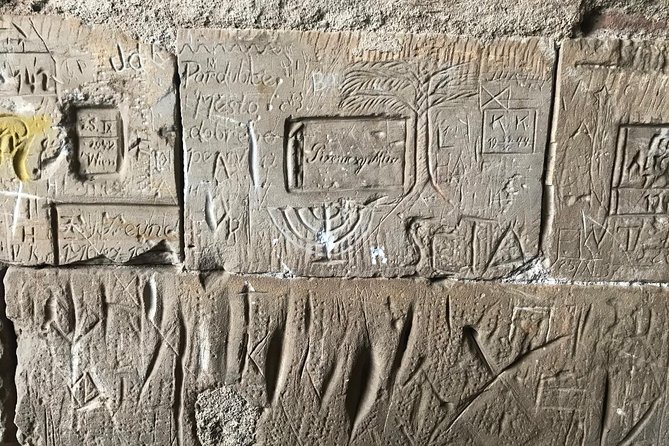
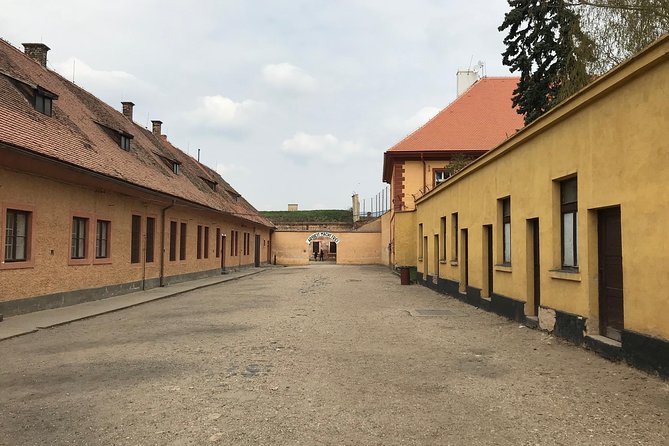
The day also includes Magdeburg Barracks and other premises that help you visualize day-to-day life within the ghetto framework.
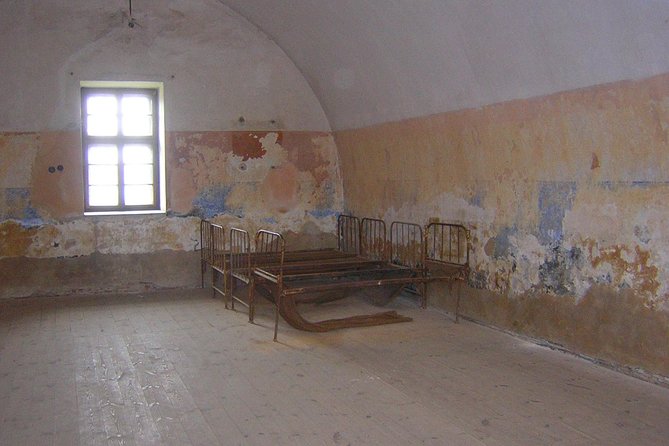
Barracks can be tricky. If your visit is only visual, you might turn it into a generic “prison looks like this” experience. But with guided explanations, it becomes more grounded. You start to understand how people lived within limits, how the system squeezed routines into spaces, and how the ghetto’s purpose shaped what was happening around you.
Magdeburg Barracks is a key stop because it is one of the most significant locations connected to the story of confinement. In a place like Terezin, learning how confinement was organized is part of the learning goal, not a side detail.
The best part of having a guide here is the way the story connects. You see a building or an area, then the guide links it back to the larger structure: fortress to ghetto, ghetto to deportation, and the role of police repression alongside ordinary camp life.
How long is enough for a place this heavy?
The tour runs about six hours. That is the right length for a focused visit. It’s long enough to cover the main sites that explain the system, and short enough that you do not end up mentally overloaded for the whole day.
Still, plan your body and your time. The tour is described as requiring moderate physical fitness. That likely means walking and time spent outdoors or moving between premises. You do not need to be an athlete, but you do need to be comfortable enough to walk and stand at sites.
Also, give yourself an emotional buffer. This is not a casual half-day. If you’re traveling with kids, the tour can still work, but it needs a careful approach. Tatiana’s experience working with a family that included a 13-year-old and a 6-year-old shows that questions and pacing can matter a lot. The guide can explain history clearly, but you should still expect the tone to stay somber.
Price and value: what you pay for a private day
The price is $236.59 per group, up to 3 people. That’s a common pricing structure for Prague area private tours. Here’s how I would judge the value.
You are paying for three things at once:
- A guide who can interpret the site and answer questions during a sensitive topic.
- Private transportation rather than public transit stress.
- Hotel pickup and drop-off, which saves time and reduces friction.
If you split the cost among up to three people, it becomes more reasonable than solo private tours. And since the content is heavily explanation-based, the guide component is not just a luxury. It’s core value.
If you hate traveling with strangers, or if you want real conversation instead of hearing a headset narration at your own pace, this format makes sense. If you are perfectly comfortable self-guiding and reading lots of material at your own pace, a private guide might feel less necessary. But for Terezin, where context matters, I think a guided structure is a big part of why this works.
Guide and driver teamwork: why it affects the day
The tour is offered by Prague Tours by Tatiana, and two names come up strongly from real on-the-day experience: Tatiana as the guide, and Victor as the driver.
The practical win is timing and smooth logistics. Pickup should be on time, and you want that when you have a specific start time of 9:00 am. The drive also matters because it sets the tone. A calm, organized start helps you arrive mentally ready to learn.
From the way the experience is described, Tatiana combines friendliness with seriousness. That may sound like a strange pairing, but it’s exactly what you need. You don’t want fake cheer. You do want someone who can keep the room calm while still explaining difficult history clearly.
And when you have questions, her patience seems to be a real asset. That’s not a small thing. At Terezin, it is easy to feel like you missed something. A guide who answers thoughtfully helps you walk away with a clearer picture.
Packing your expectations for Terezin
Before you go, I suggest you mentally tag the experience as a history education day, not a sightseeing day. Yes, you are outside walking between premises. But the main thing you’re doing is interpreting how a specific Nazi system operated and how it affected people held there.
Because the tour can be canceled due to poor weather, it’s wise to have some flexibility in your Prague schedule. It is also helpful to remember that confirmation happens at booking and the tour is private for your group only. That structure makes it easier to keep the day focused.
If you’re interested in Holocaust history, World War II context, and the practical details of daily life within the ghetto and prison system, this tour is built for that. If you are looking for light, fast pacing, you may find it heavy.
Should you book this Terezin private tour?
I think you should book it if you want a small private group experience with hotel pickup, a guide who can explain the difficult context clearly, and a route that hits the major themes through the Gestapo prison, the crematorium, and Magdeburg Barracks.
I would skip it if you want a casual, entertainment-style outing, or if you know you cannot handle emotionally intense historical sites even with good explanation. This place demands respect, and the day reflects that.
If you do book, go with one mindset: you are here to learn how the system worked, not just to look. With Tatiana and Victor handling the pace and logistics, you give yourself the best chance to come away with clarity.
FAQ
What location is the tour based in?
The tour is in Prague, Czech Republic.
When does the tour start?
It starts at 9:00 am.
How long is the Terezin visit?
The duration is about 6 hours.
Is the tour offered in English?
Yes, it is offered in English.
Is this a private tour?
Yes. It is a private tour/activity, and only your group participates.
How many people are included per group?
The group is up to 3 people.
Does the tour include hotel pickup and drop-off?
Yes. Pickup and drop-off at your hotel are included, and pickup is arranged based on prior agreement.
What key sites are included in the visit?
The tour includes significant sites such as the Gestapo prison, the crematorium, the Magdeburg Barracks, and other premises.
Is the tour accessible for service animals and who can participate?
Service animals are allowed. The tour is described as suitable for people with moderate physical fitness.
What happens if the weather is bad?
The experience requires good weather. If it is canceled due to poor weather, you will be offered a different date or a full refund.
Is there a cancellation option for a full refund?
Yes. You can cancel up to 24 hours in advance for a full refund. Changes or cancellations within 24 hours of the start time are not refunded.
Added recently in Prague
- Half-day Private Tour of Prague’s Charming Jewish Quarter★ 5.0 · 4 reviews
- Karlstejn Castle Half Day Tour from Prague★ 3.5 · 4 reviews
- Private Full-Day Tour Karlstejn Castle and Crystal Glassworks from Prague★ 4.5 · 4 reviews
- Prague Castle and Charles Bridge Private Walking Tour★ 5.0 · 4 reviews
- Prague: Sports Cards & Artifacts Museum Tickets★ 4.6 · 4 reviews
- Prague: Target Gun Shooting Experience with Hotel Pickup★ 4.7 · 4 reviews
- Private tour to Cesky Krumlov★ 5.0 · 4 reviews
- Prague: Celebrity Chef’s Terrace Dining Experience★ 5.0 · 4 reviews