
Czechia
Small-Group World War 2 & Operation Anthropoid Tour in Prague
3 hours (approx.)
Prague has a way of looking calm, even when the past is brutal. This small-group WWII tour makes the city stop and explain itself, with real locations tied to the Nazi occupation and the daring plot around Operation Anthropoid, Reinhard Heydrich, and the 1942 assassination. I love the tight 3-hour loop through key sites, and I also like that you spend time at places you would easily walk past without context.
One heads-up: this is heavy, real-world WWII history with executions and reprisals, so it is not recommended for small children. You’ll do a fair bit of walking and standing, but the route is designed to fit neatly into a busy Prague day and finish with a meaningful church and crypt visit.
Key highlights you’ll feel on this walk
- Operation Anthropoid, explained where it mattered
- Prague’s occupation seen through real buildings, not vague stories
- Short stops that fit busy itineraries, about 3 hours total
- Heydrich’s hunt, Gestapo pressure, and resistance safehouses in sequence
- A powerful ending at St. Cyril and Methodius and the Heroes of the Heydrich Terror crypt
- English-speaking small group (max 30) with a guide who sets the pace
WWII Prague, with Operation Anthropoid as the main thread
What I find most compelling here is the storyline. You are not just collecting random WWII facts. You’re following a chain: the lead-up to Nazi control, the tightening of daily life, the Czech resistance planning, the 1942 assassination of Heydrich, and the occupation’s brutal response, plus the final push of the 1945 uprising.
This kind of tour works well in Prague because the city still has the bones of the story. Streets, facades, and landmarks stay put, so the guide can point out how the resistance moved through the city and how the Nazis used key institutions to control it. You get the why, not just the what.
If your guide is someone like Daniel, Allen, Dan, Richard, Pablo, Martin, Robin, or Dana (names that show up in past groups), you’re likely to get strong storytelling and careful handling of the emotional parts. The tone tends to be respectful, even when the subject is grim.
Other tours covering Operation Anthropoid and Lidice:
- Prague: WWII Guided Tour & The Crypt of Operation Anthropoid
★ 4.7 · 1,030 reviews - WWII in Prague Tour & The Crypt of Operation Anthropoid
★ 5.0 · 817 reviews - Prague: World War 2 and Operation Anthropoid Walking Tour
★ 4.8 · 193 reviews
Price and time value for a 3-hour walking history
At $33.88 per person for about 3 hours, this is priced like a focused specialty tour, not an all-day production. For me, the value is in the structure: many stops are short, so you cover a lot of ground without turning your day into a marathon. You also get included visits to St. Cyril and Methodius and the Heroes of the Heydrich Terror memorial area at the end.
It also helps that this is a small group experience, capped at 30 travelers, and the tour uses a mobile ticket. You’ll typically be near public transportation, and the meeting point is in central Prague, so you’re not burning half your time getting there.
The main trade-off is that some stops are “look and listen” moments. If you want constant, hands-on sights at every corner, you might wish for more time at certain locations. Still, the tour is built to keep the narrative moving.
From Týnská 627/7 to the Old Town Hall, where the occupation story starts
You begin at Týnská 627/7 (Staré Město) at 1:30 pm. The early minutes matter because your guide sets the context for what you will see next. You’ll start outside, then move through central areas where the Nazi occupation reshaped politics and everyday life.
One of the first stops is U Budovce, a place used to explain how World War II was seeded. You hear about the Treaty of Versailles, the reshuffling of borders after World War I, the creation of new nations including Czechoslovakia and Poland, then the economic stress of runaway inflation and the Great Depression. The guide ties that pressure to the rise of nationalism and Hitler’s growing popularity, so the occupation later makes more sense.
Then you continue to the Stone Bell House area, where the story shifts to the Sudeten Deutsche Party, the Munich Agreement, and the formation of the Protectorate of Bohemia and Moravia. This is one of those moments where the city geography and political history lock together. You start seeing how occupation was not just a sudden event, but a sequence of decisions and pressure.
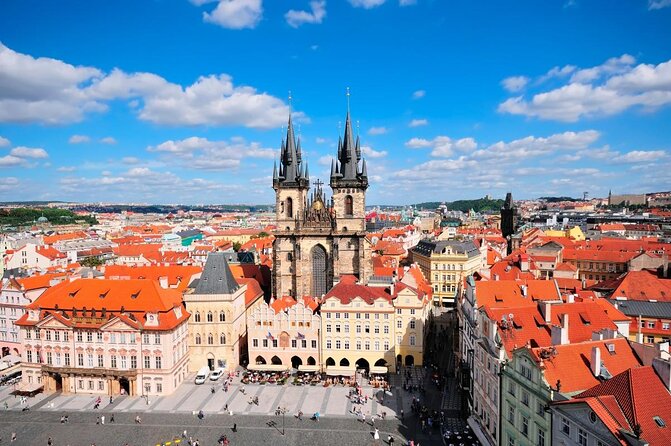
From there, you get a view of a major Gothic church in the Old Town, a main church presence since the 14th century. It’s a reminder that the war story sits inside a living city. The contrast helps you feel how normal life can keep going while regimes tighten around it.
Finally, you reach Staroměstská radnice (Old Town Hall). Here the focus is the Prague Uprising of 1945 and the wing of the Old Town Hall that was destroyed during that fighting. Your guide also explains what daily life felt like under occupation, so the uprising is not just a date. It becomes a response to years of pressure.
Celetná Street to Wenceslas Square, student executions and reprisals you cannot forget
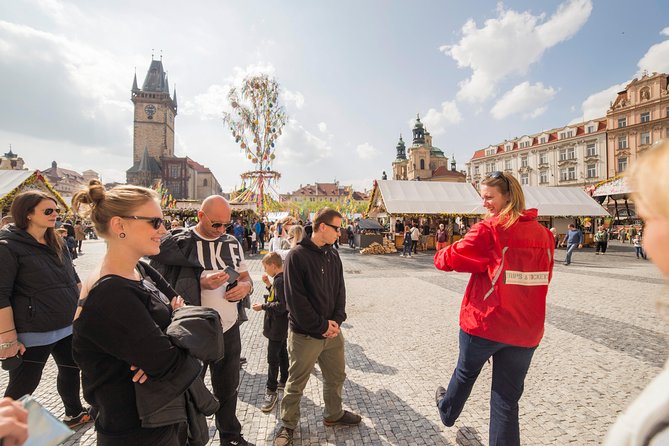
Next comes Celetná Street, where your guide covers the 17th of November 1939 execution of Czech students and the closure of Czech universities. You also learn about Konstantin von Neurath, a key figure connected to the period when the Czech lands became part of the Third Reich. Then the tour marks a sharp turning point with Reinhard Heydrich’s appointment on September 27, 1941, a date that your guide treats as a shift in the occupation’s tone and intensity.
If you’ve been moving around Prague sightseeing all morning, this is where the tour slows you down emotionally. The facts hit harder when you hear them standing in the middle of the city that students would have known.
From there, the walk moves to Wenceslas Square, a place many visitors associate with modern Prague. Here, your guide tells the story of Lidice, where on June 10, 1942, men were executed and women were sent to concentration camps. The village was erased. You’ll learn that the name Lidice became shorthand for Nazi reprisals, which makes the story feel less like a chapter and more like a warning.
A useful thing about this tour is that it doesn’t treat tragedy as a blur. It places each event into a timeline, so you can connect the assassination to the retaliations that followed, and then to the eventual end of occupation.
Something different for an afternoon in Prague:
- Prague: 50-Minute Sightseeing Evening Cruise
★ 4.2 · 33,780 reviews - Prague: Medieval Dinner with Unlimited Drinks
★ 4.4 · 19,847 reviews - Prague: Skip-the-line Castle Ticket and Optional AudioGuide
★ 4.3 · 11,121 reviews - Prague: Castle Tour with Local Guide and Entry Ticket
★ 4.6 · 10,422 reviews
Safehouses, the Baťa display, and the Gestapo footprint of Petschek Palace
The tour does an excellent job of showing how resistance work needed both secrecy and planning. At Melantrichova, you learn about events that preceded the assassination and about the exiled Czechoslovak government in London. You hear terms like Operation Benjamin, and also Silver A and Silver B, which help explain the intelligence and planning side of resistance efforts.
Then you see the building connected with the apartment of Josef and Marie Svatoš, a name tied to resistance hiding. This stop is short, but it is powerful because it connects people to places. Resistance wasn’t abstract. It was apartments, stairwells, and moments when neighbors did or did not look away.
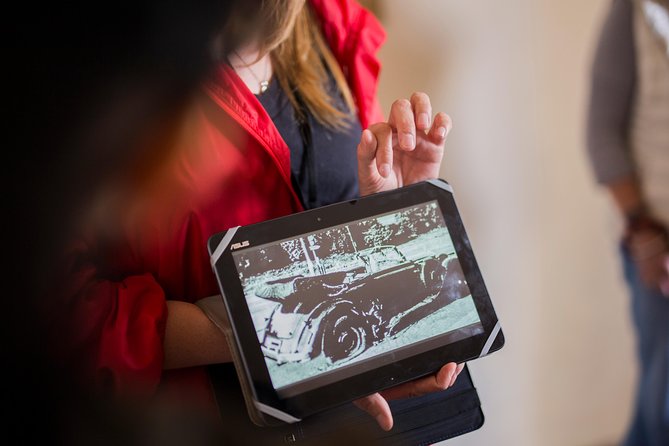
A few more steps bring you to Bata, a spot used to exhibit objects found at the assassination scene. This is a smart stop for understanding how the Nazis controlled information and staged intimidation. They weren’t only hunting people. They were also managing what the public would see and fear.
You also pass Esplanade Hotel Prague, described as a favorite hotel of the Nazis during the occupation. Even if you only glance at the exterior, it helps you understand how officials and occupiers lived in the same city you’re standing in.
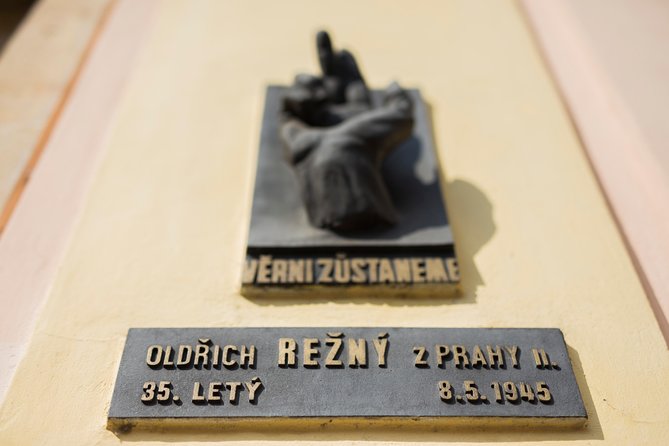
The story then lands at Petschek Palace, presented as a Gestapo headquarters where Czechoslovaks were interrogated, tortured, and killed in large numbers. Your guide connects this to the search after Heydrich’s assassination, including the turning point involving Karel Čurda entering the building and betraying his comrades on June 16, 1942.
If you come into Prague with only the famous headline about Heydrich, this part gives you the machinery behind it. It explains how betrayal, interrogation, and terror worked as a system.
From Prague’s wartime bombing to two failed operations and the 1945 endgame
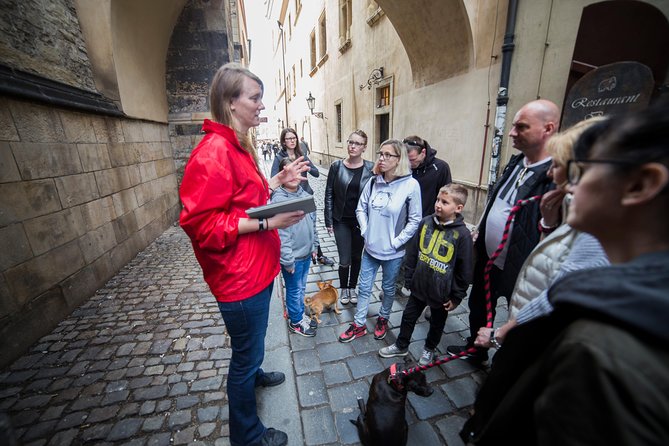
Not all the stops are directly tied to the assassination plot. That variation can be good, because it shows the wider pressure on Prague during the war years.
At Vodičkova, your guide discusses covert operations that did not succeed, including Tina a Bioscop. Then at Karlovo náměstí, you learn about the bombing of Prague in 1945. Even without the scale of some other European cities, the war still leaves marks. The guide helps you see how those events fit into the final months of occupation.
There’s also a quieter “map in your head” benefit to this layout. By the time you reach the later stops, you can mentally trace where resistance networks could plausibly move, where Nazis centralized power, and where major events likely reverberated through the city.
One more practical note: some locations in this tour are more about explanation than scenery. Expect to stand, listen, and absorb. If you’re someone who needs constant visible action, pace yourself, take breaks when offered, and use the guide to fill in the missing visual story.
St Cyril and Methodius, then the Heydrich Terror crypt
The finale is what you remember after dinner.
First you visit St Cyril and Methodius Church, with the guide leading. Your tour frames this church as a place that carries heavy meaning connected to the Nazi response after Heydrich’s assassination. The guide’s timing here matters. You’ve just learned what happened, then you step into a space tied to the consequence.
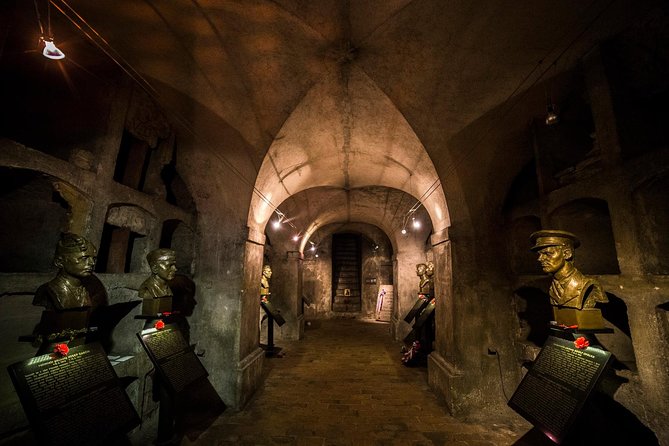
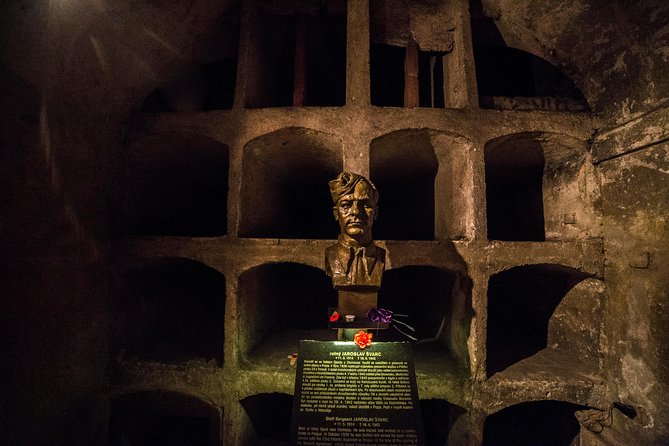
Next is the National Memorial to the Heroes of the Heydrich Terror, including the crypt. This is where your tour becomes physically and emotionally still. Your guide explains that this is where Czech paratroopers paid the ultimate price.
It’s also a strong reminder that Operation Anthropoid was not a movie moment. It was people making extreme choices under extreme pressure. The crypt setting turns the timeline into something you can feel, not just recite.
After this, the tour ends in central Prague at the Orthodox Cathedral of Saints Cyril and Methodius area (Resslova 9a).
Who should book this Prague WWII tour?
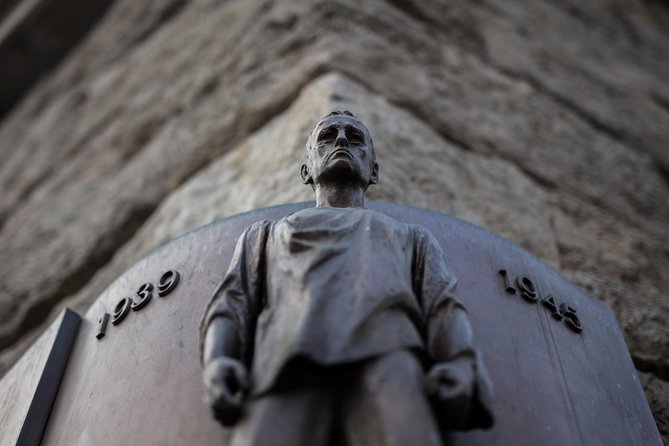
You should book if you want a story-led walking route through Prague’s occupation-era locations, and you care about the sequence behind Operation Anthropoid, Reinhard Heydrich, and the subsequent resistance and reprisals. This is also a great fit if you like asking questions and letting the guide do the navigation so you don’t lose time figuring out where history happened.
You should think twice if you’re bringing very young children. The tour explicitly focuses on WWII facts connected to occupation, executions, and Nazi terror, which can be too intense. The tour also notes that children up to 6 years old are free, but they still must be accompanied by an adult.
You’ll also want moderate physical fitness. You are walking through central Prague and standing for many of the brief stops. Most people can handle it, but if you expect a mostly seated experience, adjust your expectations.
Quick FAQ
FAQ
How long is the Small-Group World War 2 and Operation Anthropoid tour in Prague?
It runs for about 3 hours.
Where do I meet the guide?
You meet at Týnská 627/7, Staré Město, Prague 1, 110 00.
Where does the tour end?
The tour ends in central Prague at Orthodox Cathedral of Saints Cyril and Methodius, Resslova 9a, Prague 2-Nové Město.
What’s included in the price?
The tour includes a local guide and a guided visit to St Cyril and Methodius Church.
Is food or drinks included?
No. Food and drinks are not included.
Is this tour suitable for kids?
It is not recommended for small children because the content covers WWII occupation and related events. Children up to 6 are free, but they must be accompanied by an adult.
What language is the tour offered in?
The tour is offered in English.
How big is the group?
The group size is limited to a maximum of 30 travelers.
Should you book it?
Yes, if you want Prague WWII in a way that feels grounded in real locations and real consequences. This tour is built for people who like a clear timeline, and it ends with an especially strong church and crypt visit tied to the Heydrich terror aftermath.
If you prefer light, scenic walking with minimal emotional weight, you may want a different Prague tour. But if you are ready for the dark chapter, and you want it explained where it happened, this is excellent value for a 3-hour commitment.
Added recently in Prague
- Half-day Private Tour of Prague’s Charming Jewish Quarter★ 5.0 · 4 reviews
- Karlstejn Castle Half Day Tour from Prague★ 3.5 · 4 reviews
- Private Full-Day Tour Karlstejn Castle and Crystal Glassworks from Prague★ 4.5 · 4 reviews
- Prague Castle and Charles Bridge Private Walking Tour★ 5.0 · 4 reviews
- Prague: Sports Cards & Artifacts Museum Tickets★ 4.6 · 4 reviews
- Prague: Target Gun Shooting Experience with Hotel Pickup★ 4.7 · 4 reviews
- Private tour to Cesky Krumlov★ 5.0 · 4 reviews
- Prague Airport Transfers, Praga Aeropuerto Traslados, ESPAŇOL-ENG★ 5.0 · 4 reviews