
Reviewed · COMMUNIST-ERA PRAGUE
Private Prague Cold War Walking Tour
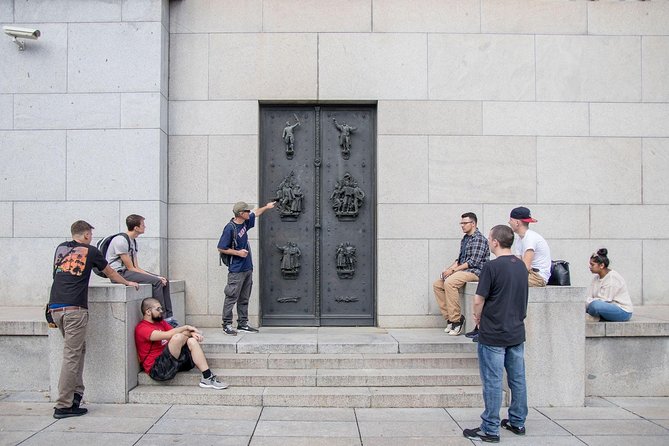
Prague’s Cold War story is often told in books, but this private walking tour puts it on the street, in concrete, and on stone plaques. I love that you get undivided attention from a historian guide while you see the big communist-era landmarks up close, not just from a distance. I also like that the route connects Soviet power to everyday life, from bomb-shelter architecture to protest graffiti. One consideration: you’ll face a steep climb on Vitkov Hill (about 20 minutes). If that’s an issue for you, the tour can skip Vitkov and focus on other Cold War sites.
This is a smart pick when you want context, not trivia. And if your group is flexible, you can choose a morning or afternoon departure, which helps if you’re matching the tour to museum time or other plans in Prague.
Key highlights worth planning around
- Private group focus: only your group joins you, up to 10 people
- Historian guide: expect political and social context tied to the buildings you see
- Vitkov Hill sites: Hall of the Red Army plus the former mausoleum of Klement Gottwald
- Cold War symbols in plain sight: the John Lennon Wall and the atmosphere around Wenceslas Square
- Tanks, protests, and turning points: the 1968 Prague Spring crackdown and the 1989 Velvet Revolution story
- Practical walking route: mostly flat city-center walking, plus one real hill climb
Why Prague’s Cold War landmarks hit harder with a private guide
Prague can feel like it was built for slow wandering. This tour uses that advantage. You still walk through the city, but the guide frames what you’re seeing with the time period it came from: communist rule in Czechoslovakia from 1948 to 1989.
The private format matters because the history is not simple. Soviet-era Prague wasn’t only about monuments and parades. It was also about fear, controlled speech, and the pressure of living inside a state shaped by the Warsaw Pact. With a private guide, you can ask real questions, get clear answers, and connect what you see to the political timeline without guessing.
I especially like that different guides in this program have a knack for making the places feel human. In past tours, guides such as Alzbeta and Vadim were praised for skillfully tying the buildings to historical details, and in Vadim’s case, for engaging with questions rather than delivering a one-way lecture. That interaction can make the difference between remembering facts and actually understanding what life felt like.
Other tours of the communist period:
- Prague: Communism History and Nuclear Bunker Guided Tour
★ 4.7 · 2,417 reviews - Prague Communism History and Nuclear Bunker Tour
★ 5.0 · 1,742 reviews - Communism & Nuclear Bunker Tour + 70s Canteen Lunch (own expense)
★ 5.0 · 1,036 reviews
Meeting point and the exact timing that keeps it stress-free
You’ll meet in central Prague at Náměstí Republiky 1077/2, Nové Město (Prague 1). If you’re not using hotel pickup, the default is Kostel Svaty Josef, and you should arrive about 15 minutes before the start time.
The experience runs for about 3 hours, and it’s offered in English. The tour also uses a mobile ticket, which is handy if you like keeping everything on your phone instead of juggling paper.
In terms of pace, this isn’t a marathon. It’s a steady walking experience with short stop times, then focused moments at the main sites. You do need moderate physical fitness because of the Vitkov Hill climb, which becomes the tour’s main physical challenge.
Stop 1: Karlin-Zhizhkov pedestrian tunnel and the odd comfort of locked doors
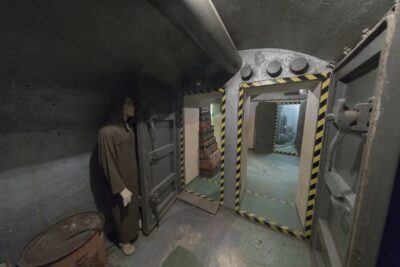
You start with the Pedestrian Tunnel Karlin-Zhizhkov, a quiet, enclosed passage where the Cold War theme becomes physical. The standout here is what you notice once you’re inside: locked doors that lead to nuclear bomb-shelter corridors built during the Cold War and still maintained.
This is one of those stops where the history feels less like a story and more like infrastructure. You’re not just looking at a monument that was built later to symbolize power. You’re seeing remnants of preparedness, the kind that only makes sense if fear is part of daily planning.
Practical detail: this stop is about 10 minutes, and admission is free. That makes it a good opener. It sets the tone early without wasting time.
Stop 2: Vitkov Hill, the Hall of the Red Army, and Klement Gottwald’s former mausoleum
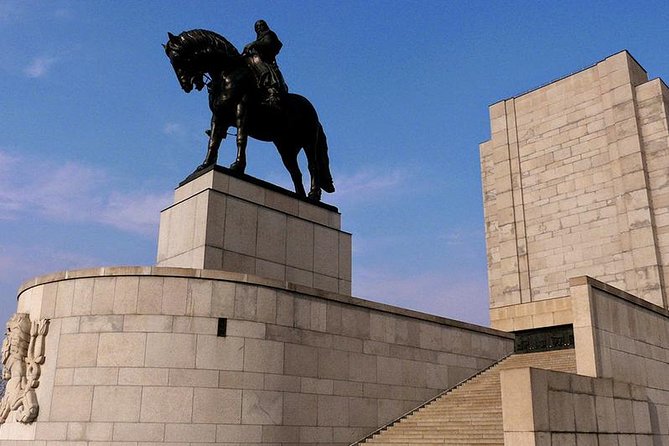
Vitkov Hill is the core of the tour. If you only remember one place, make it this. The tour climbs to the National Monument at Vitkov, where you’ll see more than one layer of meaning.
First, the site includes the Hall of the Soviet Soldier (often discussed alongside the Hall of the Red Army theme). It’s decorated in ways meant to honor Soviet soldiers killed during World War II in Eastern Europe. In plain terms: this is propaganda made architectural. The room itself is designed to shape how visitors interpret sacrifice and Soviet presence.
Then comes the most striking Cold War artifact on the route: the former mausoleum of Klement Gottwald, the Czechoslovak President from 1948 to 1953. You’ll also see parts related to the control of the body’s preservation, including a laboratory and temperature-control center where staff tried to maintain what was displayed.
This is heavy subject matter, but it’s also where you get real clarity about how the regime used symbols. A mausoleum is not just about mourning. It’s about continuity, authority, and a message that the state wants you to internalize.
Time and costs:
- The Vitkov area visit is about 30 minutes
- Admission here is not included, so you’ll want to plan for that extra cost if you decide to enter areas that require tickets
And yes, this is where the walking gets harder. The tour includes a steep climb of about 20 minutes up Vitkov Hill. If mobility is limited, tell the operator ahead of time. They can adjust the route by leaving out Vitkov Hill and keeping the tour focused on other Cold War-related sites.
One more reason people remember this hill: on clear days, the views can be spectacular. The horizon gives you an easy sense of scale for Prague, which helps you picture how power and surveillance can shape a city’s layout.
More walks in Prague:
- Prague: 3-Hour Walking Tour of Old Town & Prague Castle
★ 4.7 · 5,696 reviews - Prague: Ghost Walking Tour Where Legends Come To Life
★ 4.4 · 5,253 reviews - Prague: Jewish Quarter Walking Tour with Admission Tickets
★ 4.7 · 3,729 reviews - Prague Guided Walking Tour and Cruise with Authentic Czech Lunch
★ 5.0 · 3,627 reviews
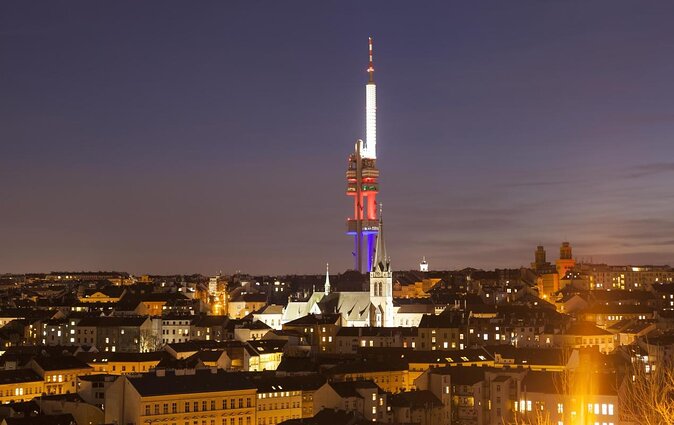
Stop 3: Zizkov Television Tower, a quick photo moment with real historical flavor
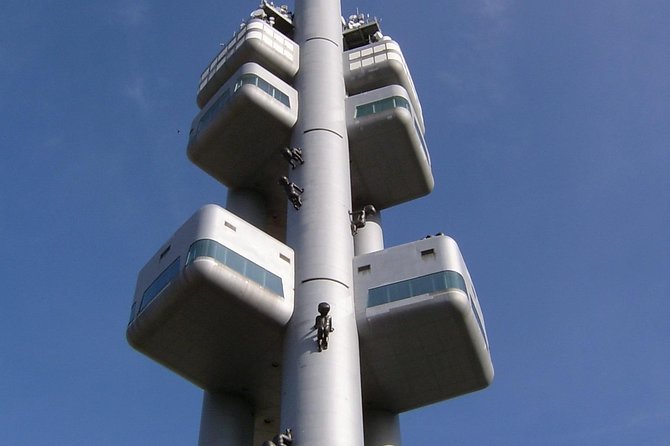
Next you’ll head toward the Prague TV tower (Žižkov Television Tower). This stop is brief, around 5 minutes, and admission is free.
Why stop here on a Cold War tour? Because the tower’s Brutalist look signals another era’s approach to design and ideology, and the setting helps you read the city as something evolving, not frozen in 1980s nostalgia. You’ll also get what’s described as one of the best views of the tower from the walking route.
If you like architecture and “reading” cities visually, this is a nice palate cleanser after the heavy indoor stops. If you’re not into it, you’ll still get the point quickly and keep moving.
Stop 4: Wenceslas Square, where the Velvet Revolution turned streets into history
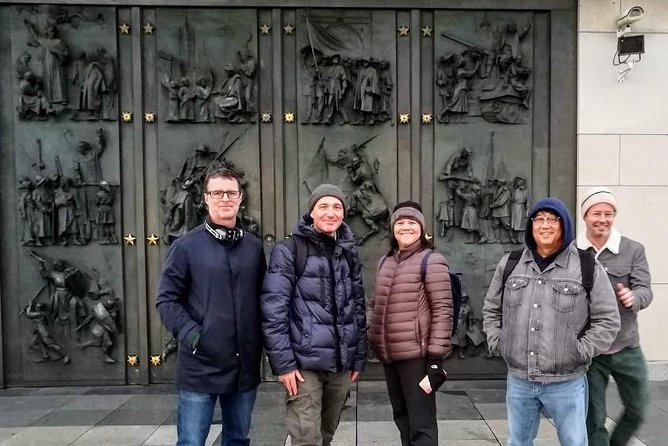
Wenceslas Square is one of the most important public spaces in Prague for late-20th-century politics. Your guide will help you walk the square with the right timeline in mind.
The guide frames how the square moved from older histories (it was founded in the 14th century) into later moments of occupation power and state control. Then the story sharpens into two major events:
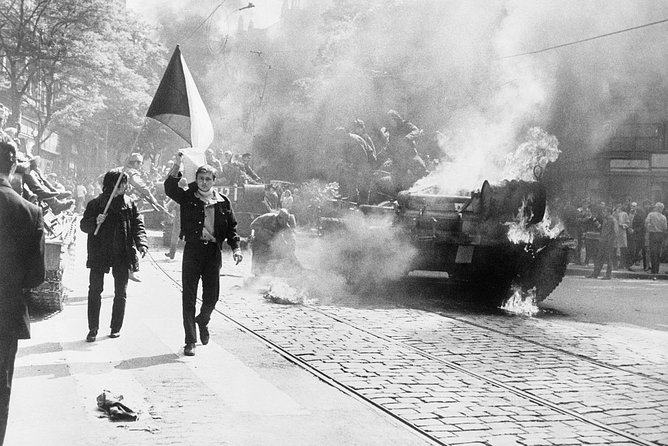
- The Prague Spring of 1968, when freedom of speech and an independent press were allowed to blossom, and then the crackdown when Warsaw Pact tanks converged on the square
- The 1989 Velvet Revolution, when protests and gatherings helped end communist rule
You’ll also see the monuments to protestors and the physical reminders of the demonstrations. The value here is the way you connect people and public space. This is not history as a museum label. It’s history tied to a place where crowds actually stood and shouted and demanded change.
Time and costs:
- About 20 minutes
- Admission is free
Stop 5: The upside-down statue, political irony you can’t unsee
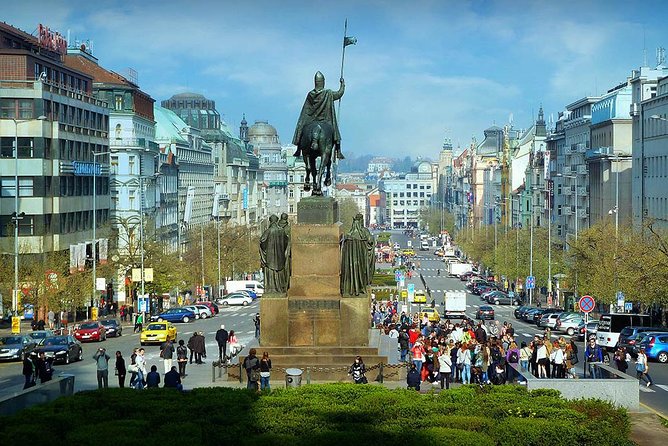
Before the tour wraps, you’ll stop for the upside-down statue of King Wenceslas riding a dead horse. This is a small stop, about 5 minutes, and it’s free.
It’s also one of the best examples of how Czech political art uses humor and irony to make a point. The statue’s role in the story is about interpretation, what it suggests about power, direction, and the shifting political climate around Central Europe.
This last stop works well because it turns the tour’s themes into something memorable, even if you only catch the idea for a few minutes.
How the tour connects big events to everyday Cold War life
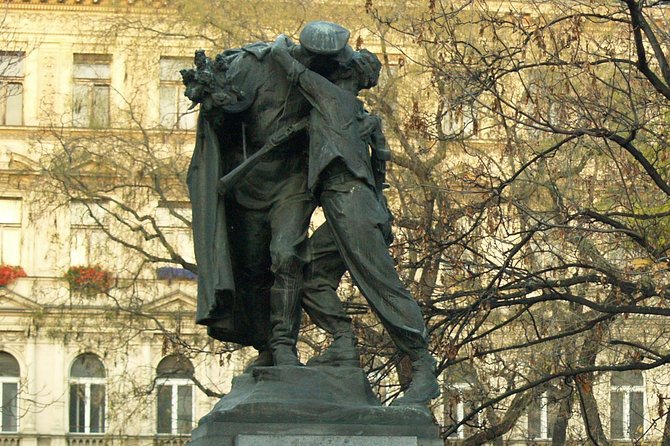
A Cold War tour can go two ways. It can either stay on top of dates, or it can explain how the system shaped daily choices. This one does the second part better than most.
You’ll hear about the Soviet-controlled state and how it affected life in Prague from 1948 to 1989, with specific landmarks acting like anchors. The nuclear shelter corridors show fear and preparedness. Vitkov gives you propaganda and preservation symbolism. Wenceslas Square gives you the public confrontation between state power and protest.
And there’s another emotional thread running through the route: the tension between control and the urge to speak freely. That’s why the tour includes major protest-related sites, like the next section.
John Lennon Wall and Letna Hill: Western freedom meets hard limits
Two locations tie directly to the idea of people pushing back.
At the John Lennon Wall, the guide points out the ongoing conversation of graffiti messages tied to Western-style freedom and hope. It’s presented as a key scene of protest graffiti during the Cold War. You’re not just seeing street art. You’re seeing a visual record of longing for change.
Then the route includes Letna Hill, where one of the world’s largest statues of Josef Stalin once stood looking over the city. Even if you’re not standing exactly where the statue was, it helps you understand how authority tried to dominate views and mood. Stalin as an image in the landscape is an obvious metaphor, and the guide makes it clearer.
These stops help your understanding move from what the regime displayed to what people wanted instead. That contrast is the reason the tour stays engaging, even when it gets intense.
Price and value: $390.37 per group, and when it makes sense
The listed price is $390.37 per group, for a private walking tour of up to 10 people, lasting about 3 hours.
This pricing works best if you’re traveling with others who want the same pace and the same kind of history. For example:
- With 4 people, you’re around $97.50 per person
- With 6 people, you’re around $65.10 per person
- With 10 people, you’re around $39.04 per person
If you’re a solo traveler, you do pay a premium compared with standard group tours, but you gain something you can’t easily buy elsewhere: the ability to ask questions and have the guide shape the tour around your group.
Also, keep one cost reality in mind: admission at Vitkov is not included. The tour does include many free stops, but this is the one place where you should expect to pay entry.
On value, I’d put it like this: if you care about the Cold War beyond surface facts, private guides like Alzbeta and Vadim have been praised for making political themes clear and connecting them to what you see. That kind of explanation is hard to replicate solo at street level.
Included items you should actually use on the day
The tour includes:
- A historian guide
- Tram tickets
It also uses a mobile ticket, which helps you stay organized.
What’s not included:
- Food and drinks
- Hotel pickup and drop-off (pickup is offered, but hotel pickup is listed as not included, unless arranged)
Because the tour uses trams at least for some transfers (tram tickets are provided), I suggest you keep your phone charged and plan for a low-fuss day in terms of transport. Your guide can help you connect the dots across stops without you having to fight Prague’s transit system.
Who should book this private Prague Cold War walking tour?
I’d book it if:
- You want a 3-hour, structured route through communist-era Prague without rushing
- You’re the type who reads monuments and wants to understand what they meant at the time
- Your group includes students, history lovers, or anyone who benefits from dialogue rather than one-way lectures
It’s also a good match for families who can manage moderate walking, as long as the group can handle the Vitkov climb. If not, tell the operator before the tour, because they can adjust by skipping Vitkov Hill while keeping other Cold War stops in the mix.
If you’re only looking for casual sightseeing, you might find the subject matter intense. But if you want Prague to make sense as more than a pretty postcard, this tour gives you that extra layer fast.
Should you book it, or choose another Prague walking tour?
Book it if you want Prague’s Cold War story told in the streets, with a private historian guide who can explain why each place matters. The stops are well chosen: nuclear shelter remnants, Vitkov’s Soviet soldier themes and Gottwald’s former mausoleum, then protest landmarks like the John Lennon Wall and Wenceslas Square.
Skip it only if the Vitkov Hill climb would be a real problem for your group, since that’s the main physical hurdle. Otherwise, this is one of the better ways to understand how communist power worked in Prague, and how people pushed back.
If you do book, come with one small mindset shift: don’t just look at buildings. Try to imagine what it would feel like to live under the system that built them. Your guide will do the heavy lifting to make that mental picture click.
FAQ
How long is the Private Prague Cold War Walking Tour?
The tour lasts about 3 hours.
Is this tour private, and what is the group size limit?
Yes, it is private, and only your group participates. The group limit is up to 10 people.
Where do we meet, and is pickup included?
Meet at Náměstí Republiky 1077/2, Nové Město. If hotel pickup is not arranged, meet 15 minutes before the start time at the default meeting point: Kostel Svaty Josef, Náměstí Republiky 1077/2, 110 00 Praha 1. Pickup is offered, but hotel pickup and drop-off are listed as not included.
What is included in the price, and what costs extra?
Included are a historian guide and tram tickets. Not included are food and drinks, and admission is not included for the National Monument at Vitkov.
Does the tour involve a steep climb?
Yes. It includes a steep climb of about 20 minutes up Vitkov Hill. If you have mobility issues, let the operator know so Vitkov Hill can be left out and other Cold War sites can be emphasized.
What language is the tour in?
The tour is offered in English.
Can I cancel and get a full refund?
Yes. You can cancel up to 24 hours in advance for a full refund. If you cancel less than 24 hours before the start time, the amount paid is not refunded.
Added recently in Prague
- Half-day Private Tour of Prague’s Charming Jewish Quarter★ 5.0 · 4 reviews
- Karlstejn Castle Half Day Tour from Prague★ 3.5 · 4 reviews
- Private Full-Day Tour Karlstejn Castle and Crystal Glassworks from Prague★ 4.5 · 4 reviews
- Prague Castle and Charles Bridge Private Walking Tour★ 5.0 · 4 reviews
- Prague: Sports Cards & Artifacts Museum Tickets★ 4.6 · 4 reviews
- Prague: Target Gun Shooting Experience with Hotel Pickup★ 4.7 · 4 reviews
- Private tour to Cesky Krumlov★ 5.0 · 4 reviews
- Prague Airport Transfers, Praga Aeropuerto Traslados, ESPAŇOL-ENG★ 5.0 · 4 reviews
Communist-Era Prague, compared.
Communism History and Nuclear Bunker Guided Tour
Read our review →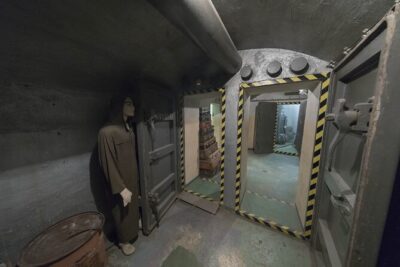
Prague Communism History and Nuclear Bunker Tour
Read our review →
Communism & Nuclear Bunker Tour + 70s Canteen Lunch (own expense)
Read our review →
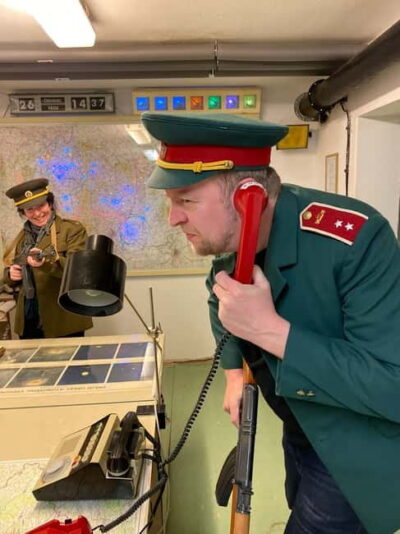
Communism and Bunker Tour with 70s Canteen Lunch
Read our review →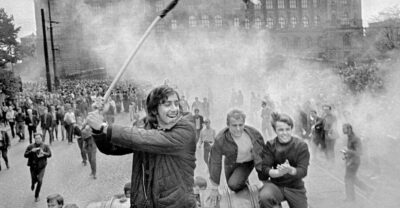
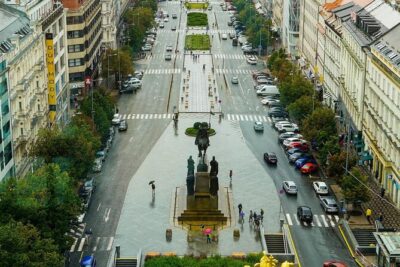
Second World War & Communism (Tip-based 3 hour tour)
Read our review →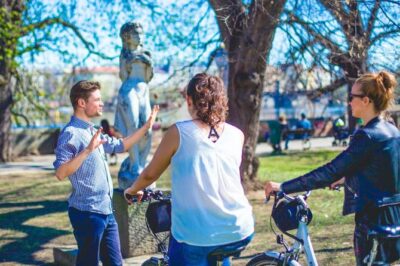
Browse the lists this tour appears in