
Reviewed · COMMUNIST-ERA PRAGUE
Communism and its fall Prague private tour
Prague has a gift for turning big ideas into street corners. This private walk through the sites tied to communism, the Velvet Revolution, and the aftermath is a fast way to understand how Czech history lived in real places, not just in textbooks. I especially liked having a guide with firsthand experience, and I love how the route connects major landmarks to specific moments like the November 1989 demonstrations. Jana Neubergova makes it personal, not performative.
What you’ll also value is the way the tour keeps your feet moving but your brain engaged. You hit meaningful stops like Wenceslas Square and Narodni Street, then slow down at key points to explain what changed, and why it mattered. One practical consideration: it is mostly walking and you do need moderate physical fitness, plus several stops do not include admission tickets.
Key Highlights You Should Know Before You Go
- Meet your guide, Jana Neubergova, a fully licensed local who shared personal connections to the Velvet Revolution and Václav Havel’s circle.
- Narodni Street is treated as the “start line,” with context that helps you picture what people were fighting for in 1989.
- Lucerna Arcade is more than a pretty corridor, it’s tied to Václav Havel’s family and Prague social life.
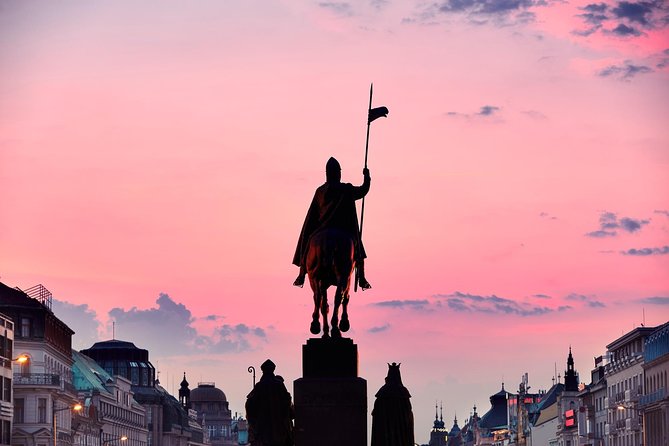
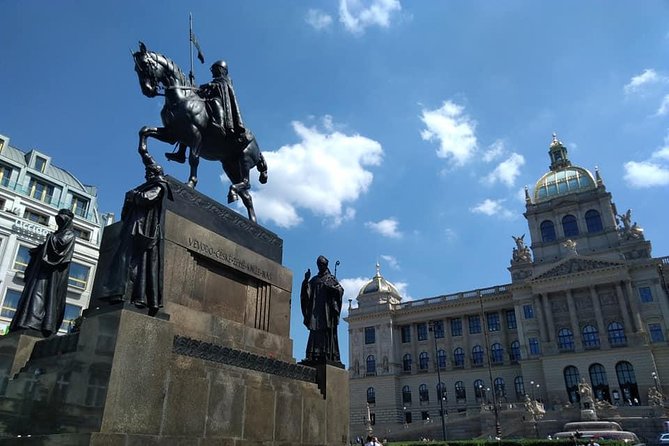
- Wenceslas Monument at Wenceslas Square gives you the big, public-facing side of dissent and demonstrations.
- Memorial to the Victims of Communism by Olbram Zoubek is free to visit, which is a nice bonus.
- Pickup from Prague hotels on foot means no car logistics, you start easy and walk from there.
A Two-Hour Prague Walk Through Communism’s Final Chapter
This is the kind of tour that makes Prague feel like one continuous story. You start with a conceptual anchor, then move into places you can still recognize today, even if you’re only here for a short visit. In about 2 hours, you get the “what happened” and the “how it felt” without getting lost in dates.
The best part is the human scale. Jana Neubergova is not just reciting history. She shared personal memories tied to the November 1989 demonstrations and the larger shift away from communism. That changes the tone right away, because you’re not only looking at sites, you’re hearing why people risked so much to stand there.
The route is also efficient. You cover major Prague landmarks at a walking pace that stays realistic, and you’re back out exploring on your own with a much clearer mental map.
Other tours of the communist period:
- Prague: Communism History and Nuclear Bunker Guided Tour
★ 4.7 · 2,417 reviews - Prague Communism History and Nuclear Bunker Tour
★ 5.0 · 1,742 reviews - Communism & Nuclear Bunker Tour + 70s Canteen Lunch (own expense)
★ 5.0 · 1,036 reviews
Getting Started: The Meeting Point and the Idea of Czech Intellectuals
The tour begins at a “meeting point of Czech intellectuals.” Even if you’ve never used that phrase before, the concept makes sense as soon as you hear how the guide frames the story. In Prague, intellectual life has often been tied directly to politics, speech, and resistance. You’ll feel that theme from the first minutes.
This is also where you’ll get the pacing and expectations. The tour is private, so you do not have to fight for space or listen through a crowd. If you’re the type who likes asking questions, a private format is a big win.
Practical note: pickup is offered on foot from Prague hotels, and the tour runs daily between 9:00 AM and 6:00 PM. So you can choose a time that fits your day, rather than squeezing it into a random gap.
Stop 1 at the National Theatre: Where Culture and Power Intersect
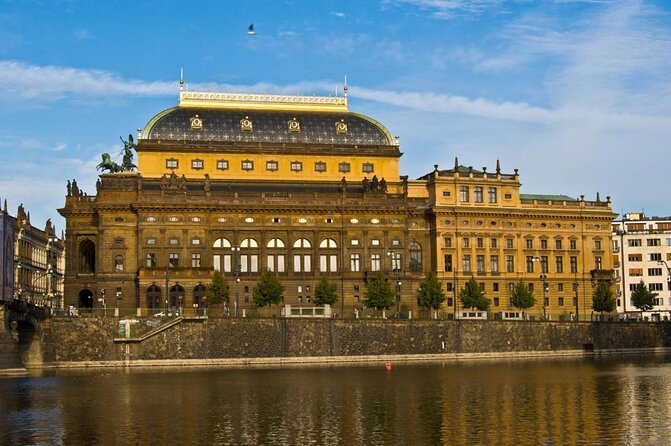
Your first major landmark is the National Theatre. It’s easy to look at it as architecture, or a famous performance venue, and move on. But the guide uses it as a starting point for why Czech cultural identity mattered under political pressure.
The National Theatre played an important role in Czech history, and you’ll get that explained in plain terms. The idea here is simple: culture is not separate from politics. When public expression gets restricted, culture becomes a louder form of communication.
Drawback to plan for: the National Theatre stop is listed with admission not included. That doesn’t mean the visit is pointless, but it does mean you should be ready to cover any ticket costs if you choose to go inside.
Stop 2 on Narodni Street: The Velvet Revolution Starts Here
Narodni Street is the emotional center of the tour. This is where the Velvet Revolution started, and the guide treats it like more than a historical marker. You’ll learn how this street connects to the movement’s momentum and the crowd energy that built during 1989.
What I liked most about this stop is the way it gives you location-based understanding. When you later walk around the area on your own, you’ll remember what the guide said about people gathering, speaking up, and pushing back.
Timing is also good here. You get about 15 minutes, which is enough to look around, absorb context, and ask questions without turning the tour into a museum crawl.
Admission note: admission ticket is not included at this stop. In many ways, that’s fine because the street itself does most of the work.
A few other Prague options
- Prague Old Town: Private Tour
★ 5.0 · 1,223 reviews - Prague Airport Private Arrival Transfer
★ 4.5 · 991 reviews - Prague Airport Private Departure Transfer
★ 4.5 · 780 reviews - Discover Prague Private Tour – 3 hours
★ 5.0 · 705 reviews
Stop 3 at Lucerna Arcade: A Social Hub With a Havel Connection
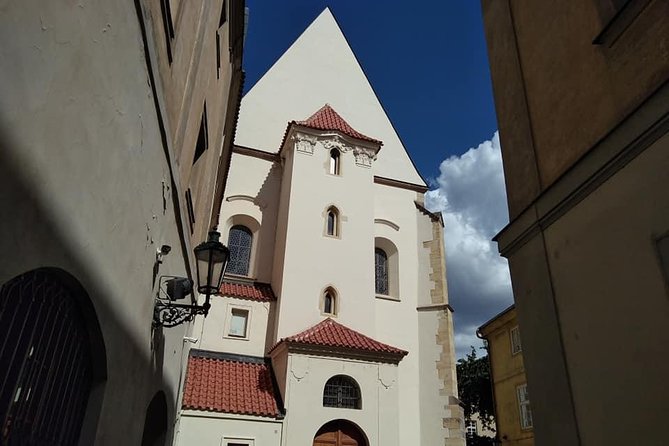
Next up is Lucerna Arcade. This stop works because it connects the dots between everyday Prague and political change. The guide explains that Lucerna Arcade is an important culture and social centre founded by Václav Havel’s family.
That detail matters. Havel is often described in grand terms, but the tour brings him down to earth by showing how social spaces and public culture can be part of the political ecosystem. You’re not only learning about high-level power shifts. You’re learning how Prague’s meeting places fed ideas and community.
You’ll have about 10 minutes here. That is enough time to orient yourself in the space and understand why it’s more than a quick photo stop.
Admission note: admission ticket is not included. If you want to go deeper than the exterior and general areas, you might need to arrange any entry fees separately.
Stop 4 at Wenceslas Monument: Demonstrations, Memory, and the Public Square
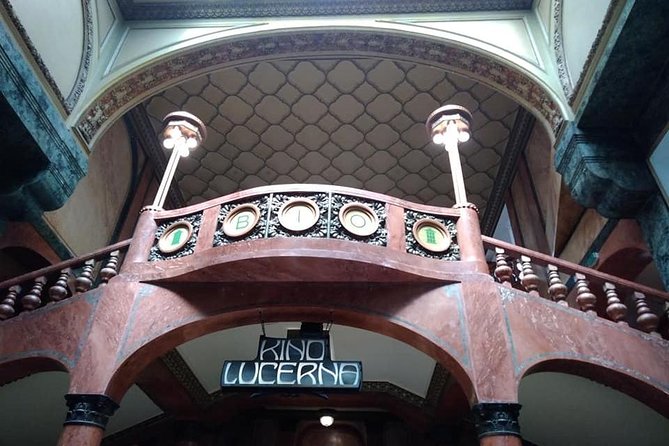
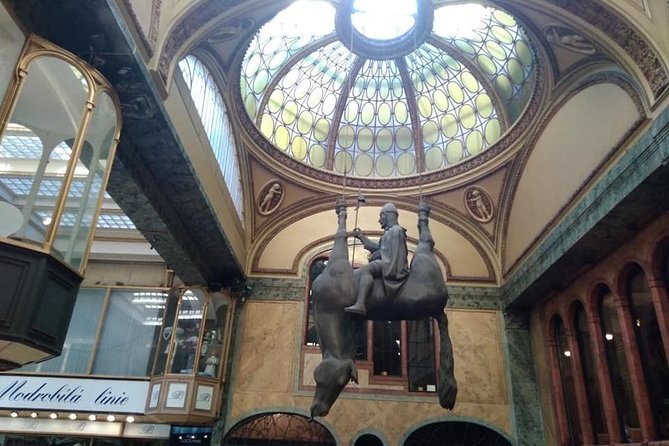
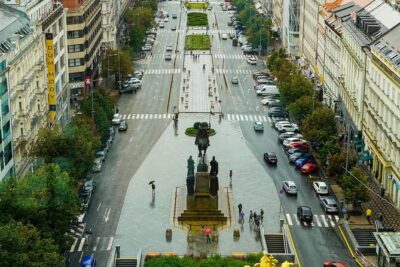
Then you move to Wenceslas Monument at Wenceslas Square, which the tour describes as the heart of Prague and a place where demonstrations are held. This is where the story goes public.
The guide uses the monument and the square’s role in gatherings to explain why public space matters in political change. When crowds show up in visible places, it signals more than dissatisfaction. It signals legitimacy, unity, and a willingness to change the system.
You get about 20 minutes here, which is a longer stop for a reason. Use that time well. Look around before you tune in fully. Read the space, notice where people gather, and let the guide connect the dots to the demonstrations of the era.
Admission note: admission ticket is not included. The square itself is the main attraction, so you can still get a lot out of the stop even if you skip any interior options.
Stop 5 Memorial to the Victims of Communism: What You Take Home
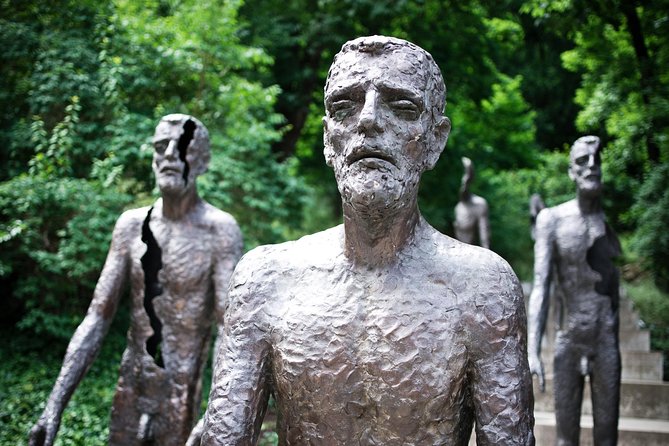
The final stop is the Memorial to the Victims of Communism, created by sculptor Olbram Zoubek. This is the most reflective part of the route.
The memorial is listed with free admission, which is a meaningful practical bonus. But more importantly, it offers a shift from “what led to change” to “what the system cost.” That balance is crucial. Without it, communism stories can become only about triumph or only about anger. Here, you’re encouraged to hold onto the human consequences.
You’ll have about 15 minutes. I recommend using that time slowly. Don’t rush through it like it’s just another stop. Let it land before you walk back into normal city noise.
What Makes Jana’s Private Guide Style So Effective
The reason this tour tends to earn top marks is the guide. Jana Neubergova brings a mix of clarity and personal perspective that you cannot fake.
From what she shares, she has personal memories tied to the November 1989 demonstrations. She’s also connected to Václav Havel’s world shortly after the revolution, and she worked for him. That matters because it changes how the tour answers questions like:
- Why did people speak up when they did?
- What did daily life feel like under the old system?
- How did momentum build from street protests into political transformation?
Her English is described as excellent and her approach is friendly and approachable. You can ask questions and not feel like you’re interrupting a script. That makes a huge difference on history tours, where a rigid lecture style can make a place feel cold.
Also, this is a private tour, meaning only your group participates. In practice, that translates to less waiting, less queue energy, and more time actually talking about what you care about. If you want a tour that feels like a conversation with a local who lived through key moments, this fits.
Price and Value: Is $85 Per Person a Good Deal?
At $85 per person for about 2 hours, this is priced like a true private guide experience in a major European city. The value comes from a few things that add up:
- A professional, fully licensed guide with specific personal connections to the story
- A route that targets meaningful locations tied to communism’s rise and fall
- A free map of Prague, which helps you keep the mental map going after the tour
- Pickup from Prague hotels on foot, so you avoid private transportation logistics
The main reason you might not feel great about the price is if you expected everything to be heavily museum-based. Several stops have admission not included, so part of your out-of-pocket costs might depend on whether you choose to enter any sites.
But if your goal is understanding how the Czech story connects street to politics, the time is well spent. You are buying focus, context, and a guided interpretation that makes the walk feel purposeful rather than like sightseeing with a random fact sheet.
Who This Tour Is Best For (And Who Should Skip It)
This tour is ideal if you love history but don’t want a slow, overly academic pace. It works especially well if you’re curious about the Velvet Revolution, Wenceslas Square activism, and how public spaces shape political change.
You’ll also like it if you want a guide who can connect big events to the real feel of a specific moment. Jana’s firsthand perspective makes the story more vivid than typical tours that rely only on secondhand accounts.
It might not be the best fit if you want long stops or a lot of indoor museum time. This is a walking route with short, targeted visits. Also, if your physical stamina is limited, plan on the moderate fitness requirement and the time spent outdoors.
Practical Tips So You Enjoy It More
Keep it simple and you’ll get more out of the tour:
- Wear comfortable shoes. It’s a city walk, and you’ll be moving between sites.
- Bring a light layer. Prague weather can change fast, and outdoor stops like Wenceslas Square need comfort.
- Have your questions ready. This is private, so use the chance to ask how things felt during November 1989.
- If you care about interior access, decide ahead of time whether you want to pay for any admission tickets at stops where they are not included.
Should You Book This Communism and Its Fall Prague Tour?
If you want a Prague history tour that’s focused, human, and efficient, I think this one is a strong yes. You’re paying for a licensed guide, a curated route through key sites, and especially for Jana Neubergova’s personal connections to the Velvet Revolution and the broader post-revolution world around Václav Havel.
I’d skip it only if you hate walking, need lots of indoor time, or you’re hoping admission at multiple stops is included. Otherwise, this tour is a great way to understand Prague beyond the postcard view. You’ll walk away with a clearer sense of why certain corners matter, and you’ll spot the city’s political memory with new eyes.
FAQ
How long is the Communism and its fall Prague private tour?
It lasts about 2 hours.
What is the price per person?
The price is $85.00 per person.
Is the tour in English?
Yes, it is offered in English.
Do you get hotel pickup?
On foot pickup from all Prague hotels is offered.
Is private transportation included?
No, private transportation is not included.
Are admission tickets included for the stops?
Admission tickets are not included for National Theatre, Narodni Street, Lucerna Arcade, and Wenceslas Monument. The Memorial to the Victims of Communism is free.
What is the meeting point like?
The tour starts at a meeting point of Czech intellectuals.
Is this a group tour?
It is private. Only your group will participate.
Is the memorial stop free?
Yes, admission to the Memorial to the Victims of Communism is free.
What is the cancellation policy?
You can cancel for a full refund up to 24 hours before the experience starts. If you cancel within 24 hours of the start time, the amount paid will not be refunded.
Added recently in Prague
- Inside Jewish Prague: A Journey Through Time★ 4.7 · 3 reviews
- Gourmet Brunch with Chef: Unlimited Drinks & Stunning River Views★ 5.0 · 3 reviews
- Private walking tour and Boat cruise Best of Prague★ 5.0 · 3 reviews
- Prague: Mozart, Dvořák, Czech Folk Tour with a Guitarist★ 5.0 · 3 reviews
- Prague Tour in Spanish★ 5.0 · 3 reviews
- Prague to Karlovy Vary Private Transfer★ 4.5 · 3 reviews
- Learn Traditional Czech Cooking from Authentic Family Recipes★ 5.0 · 3 reviews
- Full Day Private Tour Through Prague★ 5.0 · 3 reviews
Communist-Era Prague, compared.
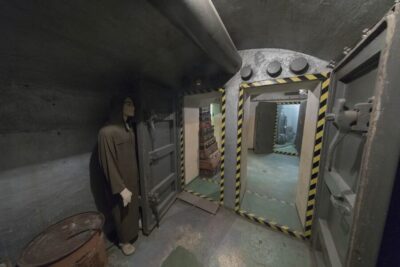
Communism History and Nuclear Bunker Guided Tour
Read our review →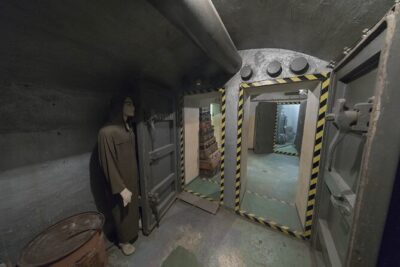
Prague Communism History and Nuclear Bunker Tour
Read our review →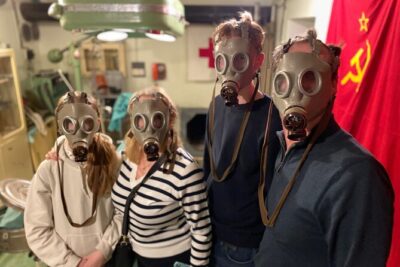
Communism & Nuclear Bunker Tour + 70s Canteen Lunch (own expense)
Read our review →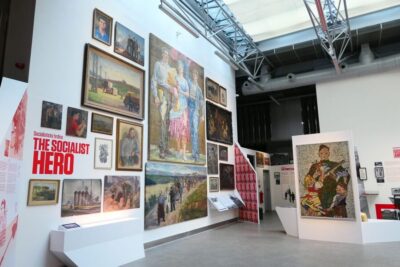
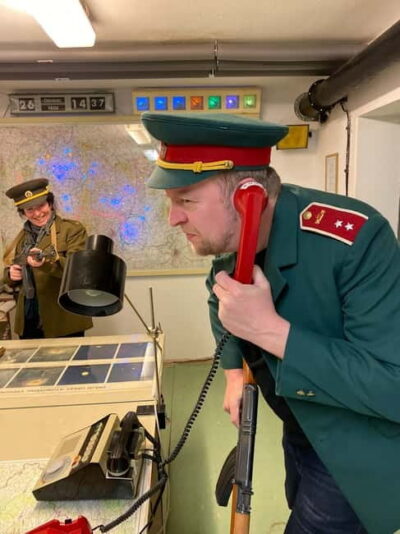
Communism and Bunker Tour with 70s Canteen Lunch
Read our review →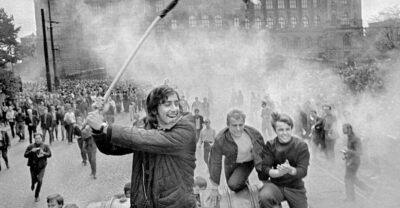
Second World War & Communism (Tip-based 3 hour tour)
Read our review →
Browse the lists this tour appears in