
Reviewed · ART NOUVEAU & CUBISM
Prague: Private Prague Art Nouveau and Cubism Tour
Prague’s Art Nouveau and Cubism are best understood as one conversation, not two separate styles. This private 1-day tour ties them together in a clear storyline, starting at the reconstructed Prague Central Train Station (1909) and moving through the city’s 20th-century turning points.
I particularly love how the guide links design choices to the bigger shift in taste after the 19th century, and I also like the way the tour ends in the Vyšehrad area, where the Cubist forms feel daring and lived-in. Guides such as Max and Eva are praised for making the architecture easy to read, even when it is complex.
The one drawback to plan for: the day can feel long if you only want the biggest landmarks. If you prefer short, punchy stops, focus on the sections that interest you most, and be ready for a few paced walking segments.
Key things to know before you go
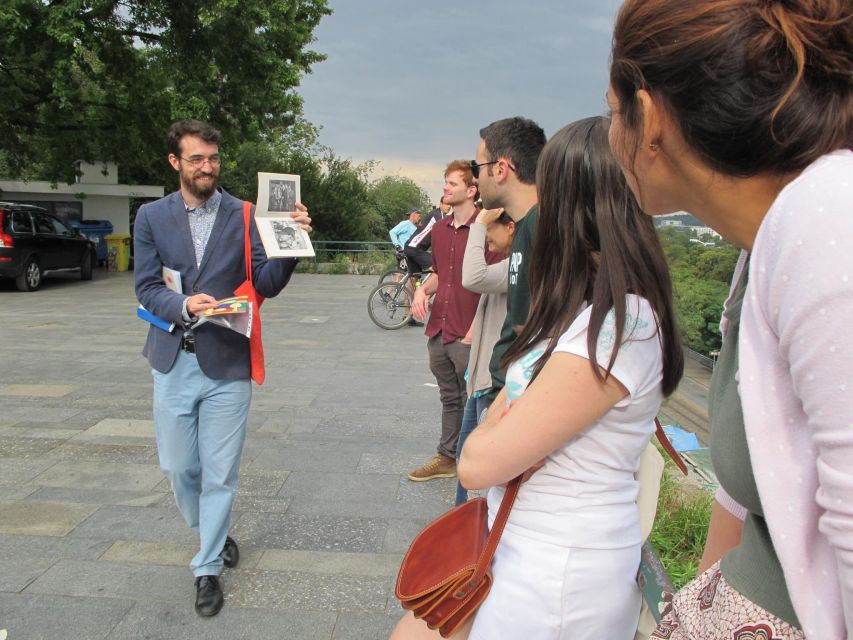
- Start point at Central Station with a short guided intro on Platform 1, using the modern history of the city as your first clue
- Art Nouveau explained in context, including how it grew out of 19th-century styles and why it felt revolutionary
- Cubism presented as a reaction, a revolt against Art Nouveau, then tempered by the changes around World War I
- You mix walk time and public transport, including included tram tickets that help you skip the long detours
- Named architecture plus practical side streets, so you learn what to notice, not just what to photograph
- A private group format, with English or German guiding and room for questions
Art Nouveau meets Cubism in one day, in a way that makes sense
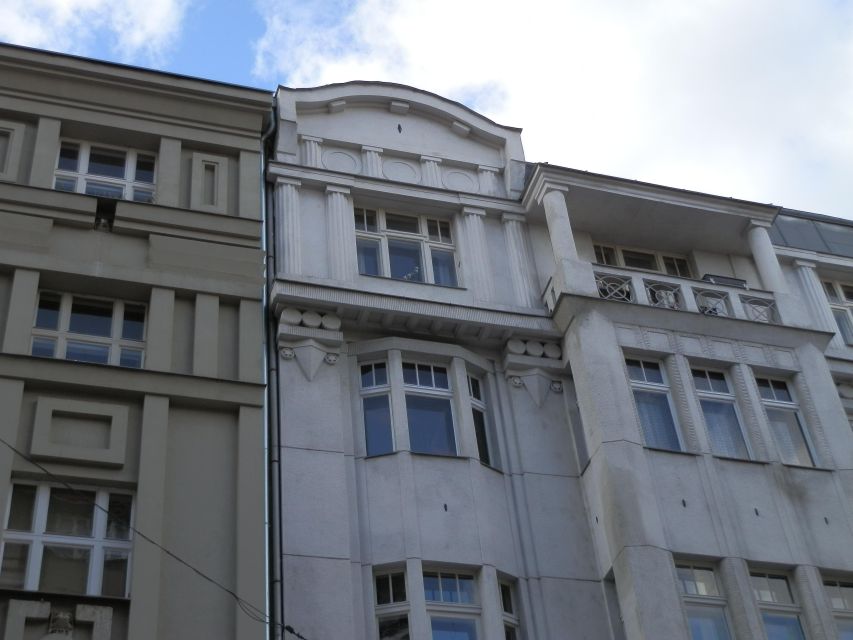
Prague can look like a greatest-hits museum if you only follow the busiest streets. This tour avoids that trap by treating architecture like language. You’re not just looking at pretty façades, you’re learning how people of a specific era wanted to live, work, and build.
The tour’s best trick is that it refuses to separate Art Nouveau from Cubism. It frames Art Nouveau as a break from what came before, then shows Cubism as a push back against that style. From there, you get why both movements had a hard time surviving the shocks and redesigns brought by World War I. You’ll finish with a clearer sense of how modern tastes formed right here, and why Prague kept old layers while adding new ones.
I also like that the guide talks about preservation, not just construction. The story includes how later modern architects helped cement the legacy of Prague’s older architecture and protect what survived. That matters, because once you understand the city’s design logic, you start spotting what has been intentionally maintained.
More Art Nouveau and Cubist Prague:
- Prague: Mucha Museum Entry Ticket
★ 4.2 · 117 reviews - Prague Art Nouveau and Cubism Walking Tour
★ 5.0 · 77 reviews - Private Prague Art Nouveau and Cubism Walking Tour
★ 5.0 · 30 reviews
Meeting at Central Station, Platform 1, and the 1909 “new start”
The tour begins at Prague’s Central Train Station, on Platform No. 1, with the guide carrying a red folder. You also get a short guided introduction (about 15 minutes) right at the station, which sets the tone: Prague’s story is always changing, and today’s “old city” was built through modern upgrades too.
One practical bonus of starting at the station area is that it makes the day feel organized. Even if you arrive early, you can get oriented fast. And if you’re staying a bit farther out, this start point is a smooth entry to the walk.
Also, because the guide is working from English or German, you can ask questions and get answers right away. That small thing can change how much you get out of architecture, especially when it’s not your usual travel hobby.
From New Town streets to the Jubilee Synagogue
After the initial station intro, you head on foot through the New Town area, mixing short walks with brief pauses. You spend time learning what Art Nouveau looked like when it was still a new idea, and how it grew out of 19th-century design habits.
One stop that anchors the early portion is the Jubilee Synagogue. The tour gives you a quick window to look, not rush. Even if you are not going inside for a long visit, you can still use the viewing moment to train your eye: ornament, proportion, and the way buildings communicate their identity.
Between the named stops, you hit several short pauses at less-visited architectural details. These are the moments where the guide earns their fee. Prague is full of layers, so if you only skim what’s obvious, you miss the city’s real texture: corners, entrances, window rhythms, and decorative logic that you usually walk past without noticing.
The overall pacing here is friendly for people who like to move and think at the same time. You are not stuck standing still for an hour.
Municipal House and the House of the Black Madonna: learning to read decoration
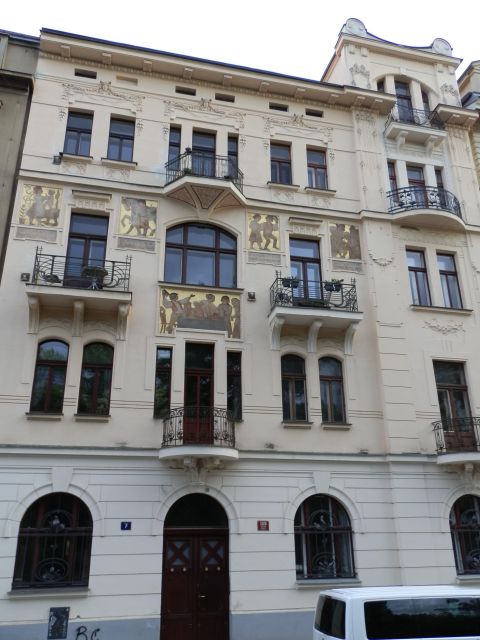
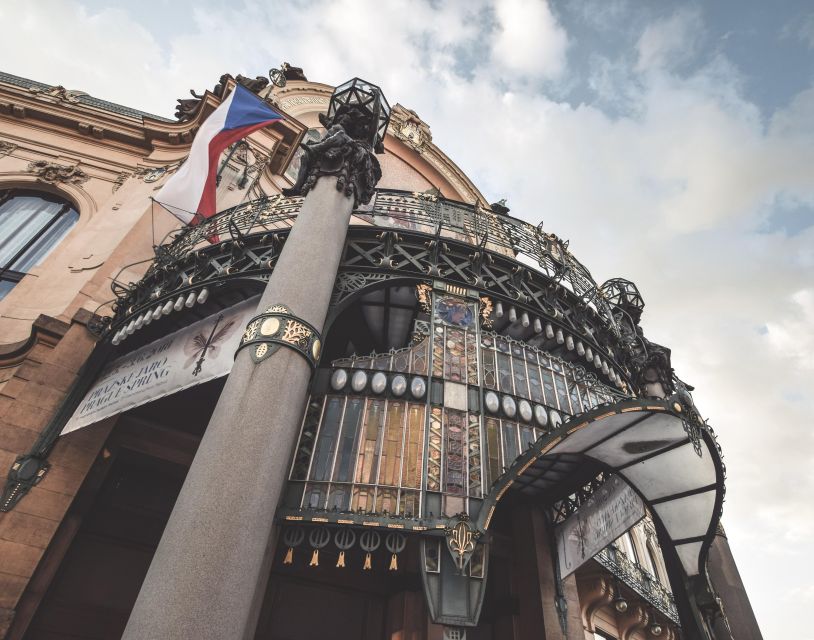
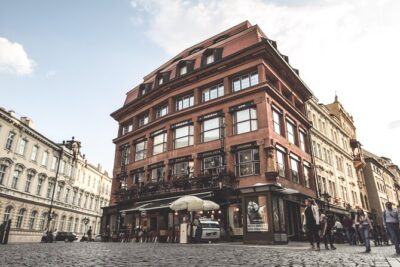
Two of the key downtown anchors are the Municipal House and the House of the Black Madonna. The tour uses these stops as teaching points. You get a sense of how Art Nouveau helped people shift toward a more modern aesthetic, where decoration was not just added to buildings, it shaped how the entire structure feels.
At the Municipal House, you’ll want to slow your pace. The tour’s narrative encourages you to look at relationships, not single details. Watch how ornament interacts with lines, and how the building communicates style without needing to shout.
Then you move on to the House of the Black Madonna, also with a longer viewing stretch. This stop is useful because it shows how Prague’s architectural identity becomes personal. The guide explains how design choices connect to the broader 20th-century mood, and why those choices mattered to locals who were living through changes you only read about in history books.
If you’ve been to Prague before, these stops can still feel fresh because the tour asks you to notice what you usually ignore. Instead of collecting landmarks, you start building a map of style.
A few other Prague options
- Prague Old Town: Private Tour
★ 5.0 · 1,223 reviews - Prague Airport Private Arrival Transfer
★ 4.5 · 991 reviews - Prague Airport Private Departure Transfer
★ 4.5 · 780 reviews - Discover Prague Private Tour – 3 hours
★ 5.0 · 705 reviews
Wenceslas Square and the rhythm of transit
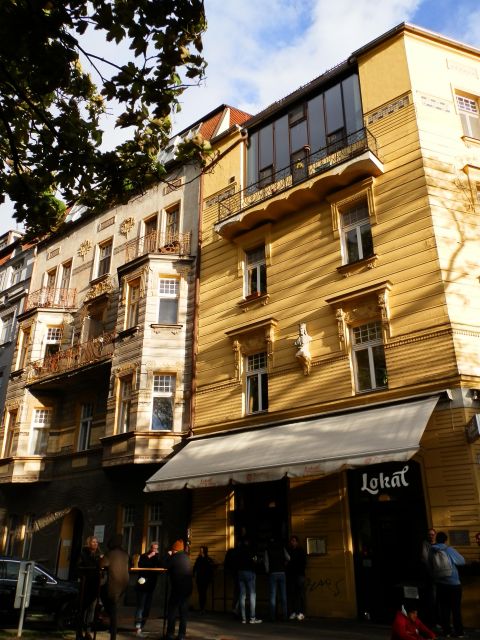
Wenceslas Square gets a focused chunk of time. This isn’t just a photo stop. The guide uses the setting to help you understand how modern streets and public identity fit into the same storyline as Art Nouveau and Cubism.
Then comes the part that makes the day practical: you take public transportation for short rides. The tour includes tram tickets, and you end with a nearby tram stop that lets you return to the downtown area easily. For me, that matters because it turns a long architectural day into something you can actually manage without sprinting across town.
A small word of caution: the tour is structured to keep you moving with the story. If you prefer to sit, snack, and absorb slowly, you may find the middle to later sections a bit more active. One past participant felt the last part might be better shortened, so if you know you’re sensitive to “too much walking,” keep your energy for the architecture in the more remote area near Vyšehrad.
Vyšehrad area Cubism: where the angles feel alive
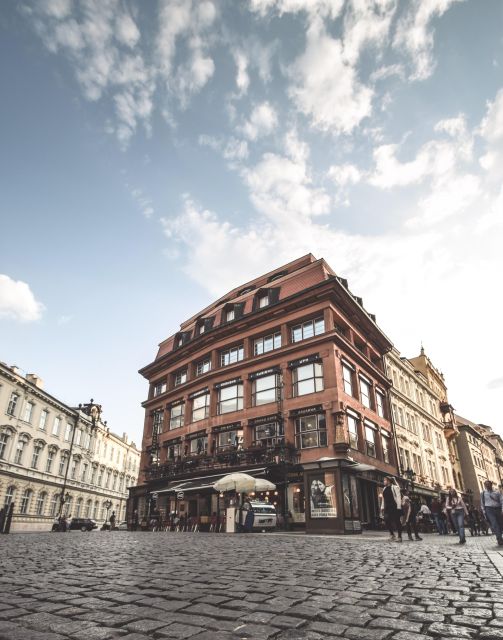
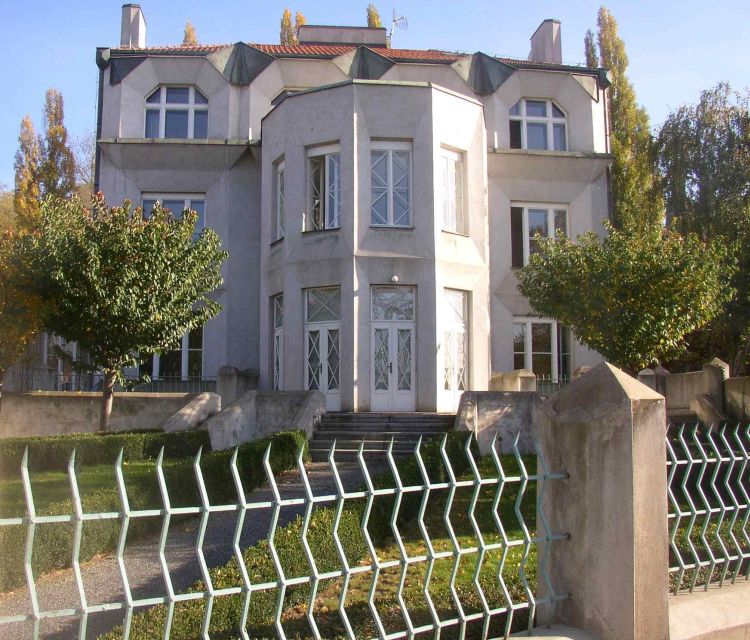
The later part of the tour shifts away from the center and toward the area under Vyšehrad fortress. This is where you start seeing Cubism in a way that feels less like a concept and more like everyday built form. You get a short ride by public transportation, then you walk among the architecture.
Three named stops drive this section:
- Three Cubist Houses
- Kovařovicova vila
- Cubist house Vyšehrad č. p. 98
The guide’s narrative here is the payoff. It explains how Cubism started as a revolt against the popular Art Nouveau style, then why it did not survive unchanged through later disruptions like World War I. In other words, you don’t just get a pattern of jagged lines. You get a sense of how political and social pressure can alter what designers are allowed to build, and what people are ready to accept.
This is also the segment where I think a private group format shines. If you want to ask a question like, What makes this Cubist rather than just geometric?, you’ll get a direct answer while you’re standing in front of the building.
The pacing in this area is built for attention. You spend short focused periods at each place, which keeps you from getting visually overloaded. And because you’re not trapped in the main tourist circuit, the atmosphere feels more like you’re meeting the city where it actually lives.
What to notice so the style sticks after the tour
The guide’s story works best when you pair it with your own “what am I seeing?” checklist. Here’s what you’ll likely be training your eyes to catch as you move through Art Nouveau and Cubism.
1) Art Nouveau: motion and organic curves
Look for flowing lines, ornament that feels connected to the building, and decoration that supports the structure rather than sitting on top.
2) The 19th-century connection
You’ll hear how Art Nouveau grew out of earlier styles. That means you’ll start spotting what changed and what stayed. It’s not magic. It’s evolution.
3) Cubism: structure becomes the message
In Cubist architecture, the building shape often reads like it has been re-cut. Planar surfaces, sharp angles, and a sense of fractured viewpoints are part of the visual logic.
4) World War I as a design turning point
The narrative brings up why both styles struggled with major historical changes. When you understand that, the buildings feel like decisions made under pressure, not static art objects.
5) Prague’s preservation thread
The tour also points out how later architects and their works helped preserve earlier architectural identity. You start noticing which details survived intact, and which got adapted rather than erased.
If you do these five things, you’ll walk away with a “style literacy” you can reuse the next day. Prague becomes easier to read.
Price, comfort, and who this is for
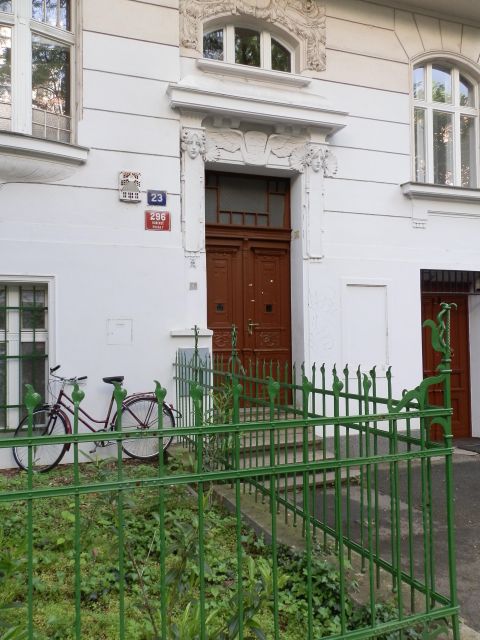
The price is $84 per person for a 1-day private tour. The value comes from two big things you can feel during the day: you get a guided narrative that ties the styles together, and the tour includes public transportation tickets, including tram rides for the parts that would otherwise take too much time on foot.
You’re also paying for private group flexibility. Even if it’s not a long tour, it’s the kind of day where a guided explanation changes what you see. One past guide pairing, Max in German and Eva in English, was highlighted for clear storytelling and solid answers to questions. That matches what you want when architecture is the subject.
Comfort-wise, wear comfortable shoes. The route includes multiple on-foot segments plus short transit rides. It’s not a sit-and-stroll museum script.
Who should go:
- You’ve visited Prague once already, and you want something more focused than the usual highlights
- You like design and want to learn how a place got its look
- You appreciate history explained through buildings, not just dates
Who might skip:
- If you want only the most famous sights and zero walking, the structure may feel too active
- If you’re traveling with children under 12, this one is not designed for that age range
Should you book the Prague Art Nouveau and Cubism tour?
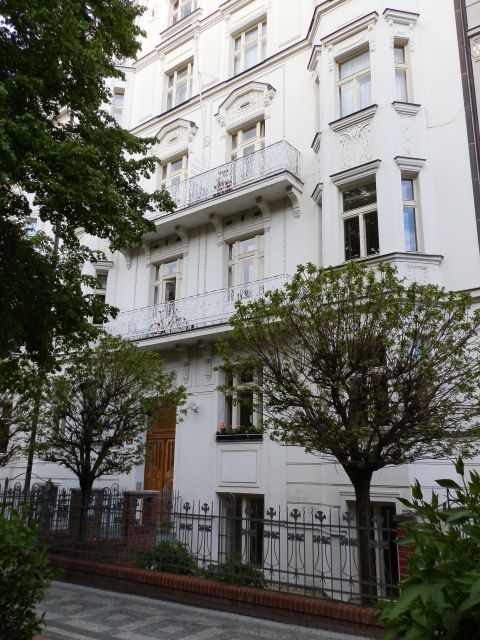
Yes, book it if you want Prague with an actual point of view. The tour is built for people who enjoy learning, but not in a classroom way. You walk through the New Town, you get downtown anchors like the Municipal House and the House of the Black Madonna, then you finish with Cubism in the Vyšehrad area where the architecture is more daring and less tour-bus predictable.
The main reason to hesitate is simple: the day moves. If you dislike long blocks of walking and short explanations between stops, you might want a lighter option. But if you can handle a focused, guided day and you want to understand how Art Nouveau and Cubism connect, this private tour is a very solid value for your time.
FAQ
How long is this tour?
This experience is listed as a 1-day tour, with specific starting times based on availability.
Is it a private group tour?
Yes, it is a private group tour.
What languages are available for the live guide?
The live guide offers the tour in English and German.
Where do I meet the guide?
Meet at Prague Central Train Station, in the middle of Platform No. 1. The guide is carrying a red folder.
Are public transportation tickets included?
Yes. Tickets for public transportation are included, including tram rides.
Is the tour wheelchair accessible?
Yes, it is wheelchair accessible.
What should I bring and is it suitable for kids?
Bring comfortable shoes. It is not suitable for children under 12 years.
Is it easy to cancel if my plans change?
You can cancel up to 24 hours in advance for a full refund.
Added recently in Prague
- Half-day Private Tour of Prague’s Charming Jewish Quarter★ 5.0 · 4 reviews
- Karlstejn Castle Half Day Tour from Prague★ 3.5 · 4 reviews
- Prague Castle and Charles Bridge Private Walking Tour★ 5.0 · 4 reviews
- Private Full-Day Tour Karlstejn Castle and Crystal Glassworks from Prague★ 4.5 · 4 reviews
- Prague: Sports Cards & Artifacts Museum Tickets★ 4.6 · 4 reviews
- Prague: Target Gun Shooting Experience with Hotel Pickup★ 4.7 · 4 reviews
- Private tour to Cesky Krumlov★ 5.0 · 4 reviews
- Prague Airport Transfers, Praga Aeropuerto Traslados, ESPAŇOL-ENG★ 5.0 · 4 reviews
Art Nouveau & Cubism, compared.
Private Prague Art Nouveau and Cubism Walking Tour
Read our review →
Private Prague Art Nouveau and Cubism Walking Tour
Read our review →Browse the lists this tour appears in