
Czechia
Private Former Concentration Camp Terezin Tour from Prague
6 hours (approx.)
Terezín is one of those places where you need a steady hand and a calm plan, not a rushed checklist. This private tour from Prague gives you that structure, with round trip comfort and an expert who helps you slow down at the right moments. I love the private guide setup, and I love that you get to move at your own pace inside the sites rather than being herded. One consideration: the subject matter is heavy and very emotional, so plan your day accordingly and give yourself time to process on the ride back.
A big plus for practical travelers is the included entrance and ticket line skip across multiple stops, plus mobile tickets. The tour runs about 6 hours, starting at 9:00 am with pickup at the Prague Marriott Hotel, so it’s ideal if you want one focused half-day without the stress of self-coordinating transport and timing.
Key things that make this Terezin tour work well
- Private pacing with your own group only, so you can pause, ask questions, and absorb without noise
- Skip-the-line entry and included admissions at several key venues
- Comfortable round trip transport from central Prague to Terezín and back
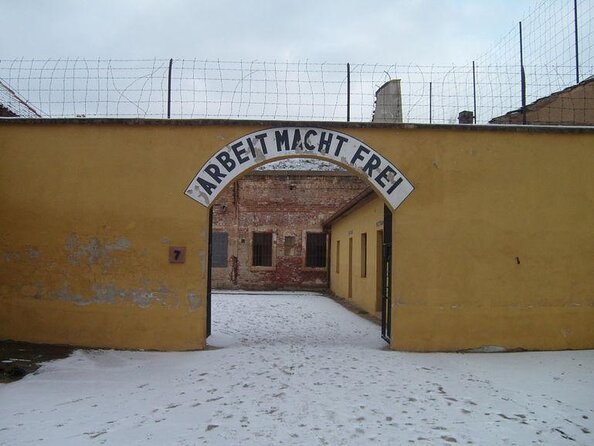
- Stops that cover the full story, from the Small Fortress to the ghetto museums to the Jewish Cemetery crematorium
- Short but meaningful cemetery time, including the National Cemetery created after liberation in 1945
- English-speaking guide option, with guests specifically praising guides like Miss Eva and drivers like Jindra
Private Terezin tour from Prague: what you are really paying for
This is not just transport to a memorial site. You are buying three things that matter in a place like Terezín: context, pacing, and respect.
First, context. The complex includes prisons, a ghetto, museums, a prayer room, barracks, and the crematorium and cemetery area. Without guidance, it is easy to confuse buildings or miss why certain spaces were used. A strong guide helps you connect the dots between the Small Fortress, when it became a jail, and how the town was later used as a collective and pass-through camp during World War II.
Second, pacing. This tour is designed so you can linger when something lands emotionally and move along when the schedule needs you to. That matters because many stops are not “one photo and done.” Even within the scheduled visit times, you can slow down if you feel you need it.
Third, respect. One of the best reviews I’ve read about this kind of private approach is that a quieter, expert-led visit feels more appropriate than a big group rushing for photos. In other words, the guide helps you lower the volume on yourself, so you can actually take in what happened here.
Now, about the price. At $356.42 per person for a private 6-hour tour, it can look pricey next to self-guided options. But you are paying for a guide who can explain what you are seeing, skip several ticket lines through included admission, and handle round trip transportation. If you split the cost among 2 to 4 people, it often becomes easier to justify, especially when you factor in time saved in planning.
Other visits to the Terezín Memorial:
- From Prague: Terezin Concentration Camp Guided Tour w/ Audio
★ 4.6 · 2,248 reviews - Terezin Concentration Camp Day Tour from Prague
★ 4.0 · 1,007 reviews - From Prague: Terezín and Ghetto Museum Guided Tour
★ 4.3 · 571 reviews
The 9:00 am start, hotel pickup, and how the day flows
The tour starts at 9:00 am, with pickup from the Prague Marriott Hotel in Prague 1, or from your own hotel or Airbnb if you share the exact address. That is a real convenience if you are trying to avoid the “where do we meet, which bus, how long is the transfer” stress.
You get back to the same meeting point at the end. That means you do not end the day stranded out in Terezín or needing a taxi hunt after a heavy experience. For many people, that simple closure is underrated.
Dress code is smart casual. Think comfortable shoes first, and plan for standing and walking around memorial buildings. This is a half-day tour, but it can feel longer emotionally, especially on the crematorium and cemetery stops.
Stop 1: Mala Pevnost (Small Fortress), the jail that replaced a fortress
The Small Fortress is where Terezín’s story starts to become painfully clear. The building was originally planned as a strong, impregnable fortress in the late 18th century, with walls and a flood-trench system. But it never defended anyone the way it was intended. Instead, Terezín turned into a place designed to hold people.
A guide helps you understand the timeline because it jumps across eras. The fortress became a prison as early as the mid-19th century. One famous prisoner here was Gavrilo Princip, later tied to the Sarajevo assassination that helped trigger World War I. He was brought here in 1914.
Then the World War II shift. In 1940, the Small Fortress became a prison for the Prague Gestapo, with a focus on political prisoners. Just a year later, the whole town was turned into a collective and pass-through camp for Jews.
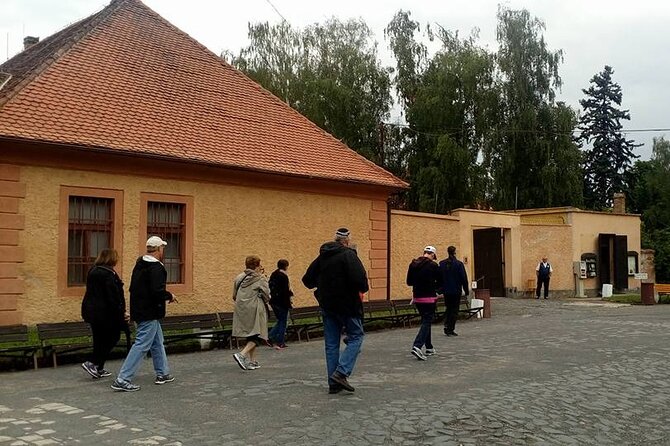
In a visit like this, the benefit of a private guide is not just facts. It’s interpretation. The guide can help you notice how the physical layout supports control and confinement. You also get about 1 hour here with included admission, which is enough time to slow down without feeling trapped in the schedule.
What to watch for: this stop can be mentally intense. If you know you get anxious in enclosed spaces, pace yourself. Use the guide to decide what to focus on first.
Stop 2: Terezín Memorial National Cemetery, short time with long meaning
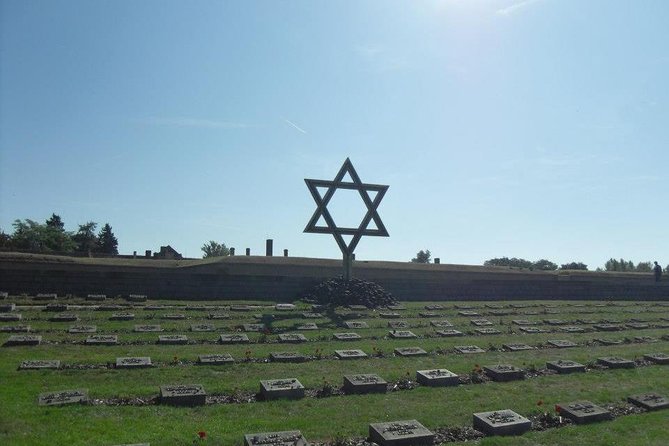
The National Cemetery stop is brief, about 15 minutes, and it’s admission-free. But it lands hard.
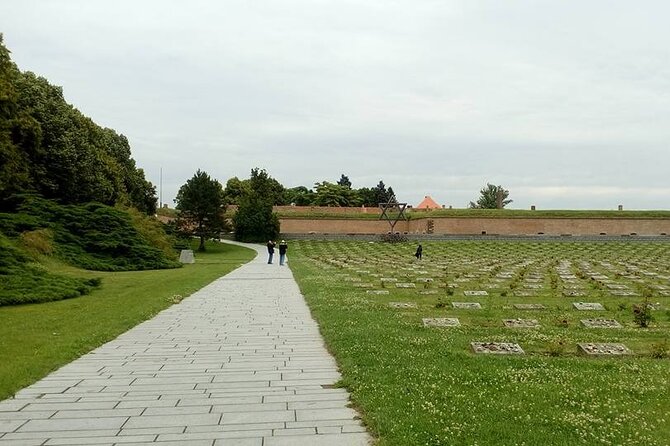
This cemetery was created artificially after liberation in 1945, driven by former prisoners and the heirs of those who died. At their request, physical remains were exhumed from six mass graves in the ramparts of the Small Fortress, graves used from March 1 to May 7, 1945. That includes prisoners who arrived at the Small Fortress from a death march in May 1945.
Here’s where a guide really helps: you are not just looking at markers. You are seeing how remembrance was organized after the war, how the living tried to restore dignity and identity where the system had erased it.
Because time is short, you might want to prepare mentally: arrive with your attention switched on, take a slow look, and then let the ride back do the rest.
A few other Prague options
- Prague Old Town: Private Tour
★ 5.0 · 1,223 reviews - Prague Airport Private Arrival Transfer
★ 4.5 · 991 reviews - Prague Airport Private Departure Transfer
★ 4.5 · 780 reviews - Discover Prague Private Tour – 3 hours
★ 5.0 · 705 reviews
Stop 3: The Ghetto Museum in the former school, where children’s voices survive
Next is the Ghetto Museum, about 45 minutes, with included admission. This museum opened in a former municipal school, which is a striking choice for telling the story of a ghetto.
The museum’s permanent exhibition, opened in 2001, is titled Terezín in the Final Solution of the Jewish Question 1941-1945. A strong guide helps you make sense of why the exhibition is structured the way it is, so you’re not just reading dates. You are learning how people experienced the machinery of persecution day by day.
Several parts tend to stay with you:
- A Memorial Hall dedicated to the children of the Terezín Ghetto
- Drawings made by children from inside the ghetto, which powerfully show imagination and fear at the same time
- A scale model of the ghetto, plus an electronic orientation system showing thematic units, which helps you place what you learn into physical space
- A reading room and a cinema where documentary films are shown
The private pacing matters here because museum sections can either wash over you or stick in your mind, depending on how you move through them. With a guide, you can focus on the elements most relevant to you.
A practical tip: if you tend to feel overwhelmed in museums, ask the guide to point out the best order to walk the rooms so you get your bearings fast.
Stop 4: The small Jewish prayer hall, faith preserved in secrecy
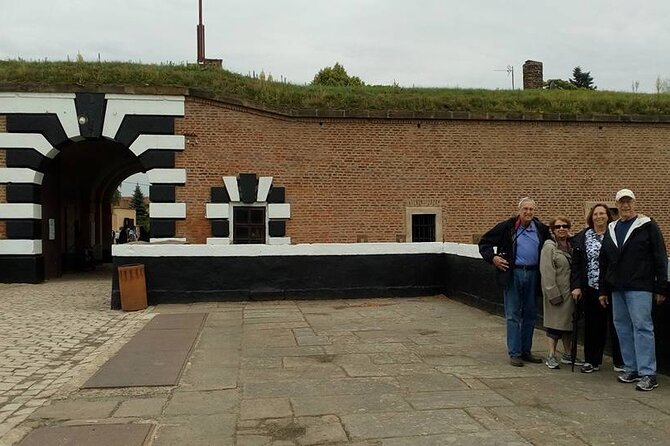
This stop is about 30 minutes and includes admission. It sounds small, but it carries a lot of weight.
The prayer hall was founded during the ghetto period and served spiritual needs of prisoners housed in neighboring houses. Its story shifts again through ownership and survival after the war.
It belonged to František Bubák, and the space served as part of a funeral parlor before World War II. Bubák was forced to leave Terezín during 1942. After the war, he reclaimed the property. But because his family feared repercussions under the Communist regime, they kept the prayer room’s existence secret while using it as storage.
His descendants did not notify authorities until after the 1989 Velvet Revolution. Visitors have been allowed to see the room since the late 1990s.
Why this stop matters: it reminds you that Terezín was not only about buildings and death. It was also about the insistence on human practice, belief, and identity, even when everything else was being stripped away.
Potential drawback: since it’s a smaller space, you may feel the emotion more intensely. If you want more distance, be ready to step out briefly and let the group slow down as needed.
Stop 5: Magdeburg Barracks, where ghetto culture gets documented
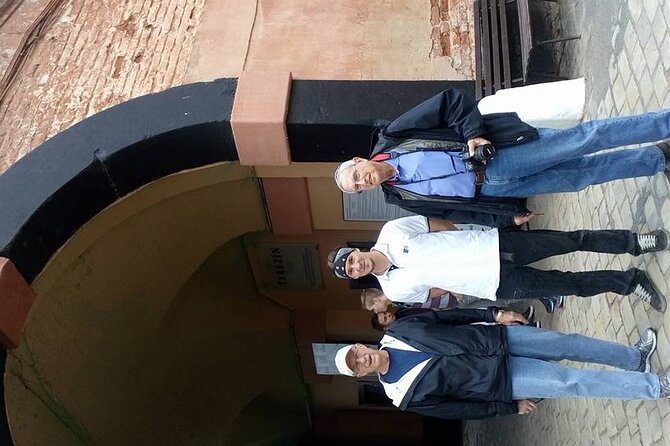
About 30 minutes here, with included admission. The Magdeburg Barracks building was the headquarters of the ghetto’s local government. Real control stayed with the camp SS command, but the building still functioned as a hub for internal administration.
Today, after renovations completed and opened in 1997, the barracks features a replica of prison barracks from the ghetto period and items from that time. Its main function is an exhibition on the ghetto’s artistic and cultural life.
This is one of the best stops for people who want to understand how culture and creativity continued even under impossible conditions. The exhibition includes artefacts connected to music, visual arts, literature, and theatre. The point is not to romanticize suffering. It’s to show the desire for humanity and hope inside concentration camp conditions.
The building also houses an educational Meeting Centre. If your guide is strong, they can help you connect those exhibits to what you saw earlier in the tour, especially how the ghetto system structured everyday life.
Stop 6: The Jewish Cemetery crematorium, the system behind the numbers
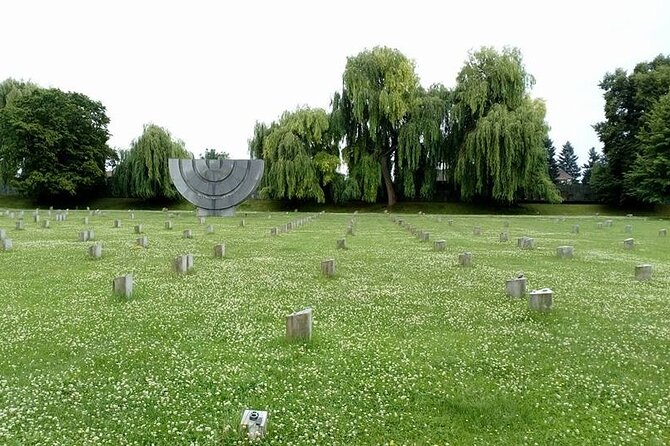
This final stop is about 30 minutes with included admission. It focuses on the crematorium at the Terezín Jewish Cemetery.
Here is what you’ll be told and what you might see:
- The crematorium was built by ghetto prisoners by order of the SS commanders
- Operation started in early October 1942
- The central part of the facility included four oil-powered incinerators, supplied by Ignis Hüttenbau from Teplice-Šanov
- The front section served for unloading corpses from coffins
- One side bordered with the autopsy room
- On the other side, an annex housed guards, including Czech police officers and prisoners working at the crematorium
- At the highest mortality rate, there could be up to 18 prisoner workers rotating in permanent shifts, dropping to four when mortality rates decreased
- Supervision included SS-Scharführer Heindl, described as one of the camp’s feared top officers, with routine checks also carried out by the camp commanders
This is the part where your guide’s tone matters. A good guide helps you handle the facts without turning them into something mechanical. Because the details are so specific, it can be easy to get mentally stuck on logistics unless the guide helps you connect them to human reality.
One emotional add-on you might want to ask about: one guest highlighted a quiet reflection stop at a nearby river connected to ashes, described as over 20,000, dumped as the war was nearing its end. That is not listed as its own official stop here, so don’t assume it’s guaranteed. But it’s worth asking your guide whether you will have any time for a reflective moment.
Price and value: does $356.42 per person make sense
At $356.42 per person, this tour is aimed at people who want to spend their time well, not just get “coverage.”
Here is what you get for your money based on what’s included:
- A private guide and group limited to your party
- Round trip transportation with hotel or Airbnb pickup
- Mobile ticketing
- Included entrance for multiple stops
- Skip-the-ticket-line benefit
- A planned route that covers major sites: Small Fortress, ghetto museum sites, prayer hall, barracks, and the cemetery crematorium area
If you were to do this yourself, the hidden costs are time and friction. Getting the timing right, buying separate admissions, and navigating between sites can turn into a day you manage instead of a day you experience. With a private guide, you hand off the planning and focus on the meaning.
The other value piece is emotional efficiency. You do not need to translate everything alone or ask basic questions that are better answered as part of a guided narrative. The reviews strongly emphasize that guides like Miss Eva are praised for deep, careful presentation and the ability to answer many questions with tact.
If you are traveling solo, you may feel the cost more sharply. If you have a small group, the private format can feel more reasonable per person, especially because transportation and admissions are built in.
Who this tour fits best
This is a good match if:
- You want a structured visit with a guide who can explain what you’re seeing
- You prefer a private experience over group pacing
- You are comfortable with serious, emotionally intense history
- You want an English-speaking guide option
- You want pickup from a central Prague address at a set time
It may be a less ideal match if:
- Your group wants a casual, low-effort outing. This isn’t that kind of day.
- You dislike walking and being indoors and outdoors around memorial spaces.
- You are trying to keep the whole day light and upbeat. This is bear witness work.
Kids need an adult with them. The tour runs 6 hours and includes sites that will be emotionally challenging, so you will want to judge carefully what your child can handle.
Should you book this private Terezin tour?
If you want one half-day that connects the sites into a coherent story, book it. The private guide, included entry across the key venues, and the fact that the day is planned around your pacing make it feel respectful and practical at the same time.
I’d especially recommend it if you are the type who notices details, asks questions, and wants to understand the “why” behind the buildings. Terezín is not a place you can responsibly rush. This tour gives you a way to slow down without getting stuck managing logistics.
If you tell me your group size and whether you prefer more museum time or more walking through the fort and cemetery spaces, I can suggest what to prioritize when you discuss the visit order with your guide.
FAQ
What is the duration of the Private Former Concentration Camp Terezin Tour from Prague?
The tour lasts about 6 hours.
What time does the tour start, and where is the meeting point?
The start time is 9:00 am. Pickup is at the Prague Marriott Hotel, V Celnici 8, Nové Město, 110 00 Praha-Praha 1, Czechia, and the tour ends back at the meeting point.
Is pickup offered from places other than the hotel?
Yes. Pickup is offered from the hotel or an Airbnb accommodation. You just need to provide the exact name and address.
Is this tour private, and will there be other participants?
This is a private tour/activity. Only your group will participate.
What language is the tour offered in?
The tour is offered in English.
Are entrance tickets included for the stops?
Admission ticket inclusion varies by stop. The tour lists included admissions for several venues, and the National Cemetery stop notes admission ticket free.
What are the main stops during the tour?
You visit Mala Pevnost (Small Fortress), the Terezín Memorial National Cemetery, the Ghetto Museum, the Terezin Memorial prayer hall, Magdeburg Barracks, and the Jewish Cemetery.
Is there a dress code?
The dress code is smart casual.
Added recently in Prague
- Half-day Private Tour of Prague’s Charming Jewish Quarter★ 5.0 · 4 reviews
- Karlstejn Castle Half Day Tour from Prague★ 3.5 · 4 reviews
- Private Full-Day Tour Karlstejn Castle and Crystal Glassworks from Prague★ 4.5 · 4 reviews
- Prague Castle and Charles Bridge Private Walking Tour★ 5.0 · 4 reviews
- Prague: Sports Cards & Artifacts Museum Tickets★ 4.6 · 4 reviews
- Prague: Target Gun Shooting Experience with Hotel Pickup★ 4.7 · 4 reviews
- Private tour to Cesky Krumlov★ 5.0 · 4 reviews
- Prague: Celebrity Chef’s Terrace Dining Experience★ 5.0 · 4 reviews