
Reviewed · GHOST & LEGEND TOURS
The Plague Doctor of Prague
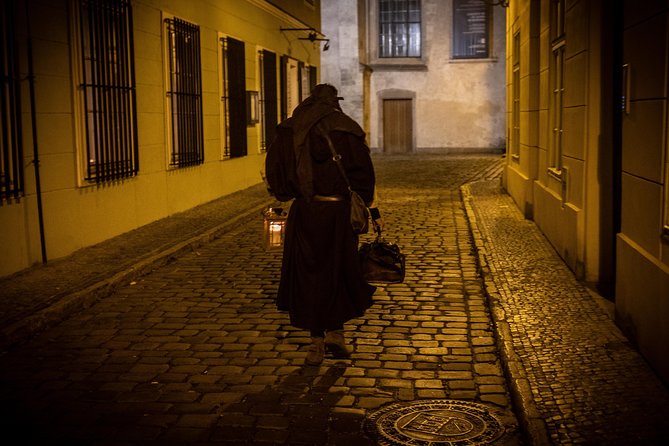
Prague has plenty of spooky options, but this one feels different because you travel straight into plague-era beliefs, right down to the character, costumes, and street-level details. I love the way it uses a performed plague doctor story to explain fear and medical thinking without turning it into a lecture. I also love the smart stop-by-stop route through the Old Town, the Jewish Quarter area, and even an old hospital site, so you connect ideas to real places fast.
The main tradeoff is that the mood is intentionally dark and theatrical, and it can lean more toward storytelling and everyday life than a strict timeline. If you want only history, you might wish for a bit more narrative depth.
Key highlights to watch for
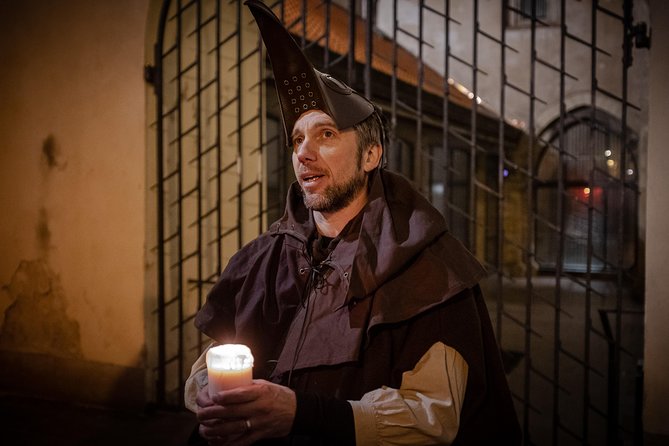
- 1715 character framing with plague doctor Alexander Schamsky guiding the walk
- Small group size (max 10) so it stays personal and interactive
- Jewish community focus during plague times in Prague and across Europe
- Quarantine life explained using what people believed about disease causes
- Old medical sites included, including the former Na Frantisku hospital
- A group photo at the end, with the plague doctor in full effect
A 90-minute walk where Prague turns into a plague-era stage
For the price of about $26.61, you get a guided, one hour 30 minute evening walk that mixes city sights with public health history. This is not a museum ticket where you sit and read. It is a moving story, and that matters in Prague, because the streets and squares do a lot of the work for you. You see how people traveled, worked, prayed, and worried, all in a compact route.
A big reason this is so popular is the performance element. The tour is led in English by a plague doctor character, and the guides who have played that role in the past include Thomas, David, Oscar, Oskar, and Maddie. Even when the material is heavy, the tone stays accessible, often with humor that keeps the evening from feeling like homework.
One more quality detail: the tour ends with a group photo. That is simple, but it also tells you the experience is designed to be memorable, not just educational.
More ghost and legend walks in Prague:
- Prague: Ghost Walking Tour Where Legends Come To Life
★ 4.4 · 5,253 reviews - Prague: Ghosts, Legends, Medieval Underground & Dungeon Tour
★ 4.3 · 5,104 reviews - Prague: Ghosts and Legends of the Old Town Evening Tour
★ 4.5 · 3,091 reviews
Where the tour starts, and how the pace feels on foot
You meet at Aurus Hotel Prague, Karlova 3, Praha 1, Staré Město. The route then finishes at a different location, specifically at National Gallery Prague, Convent of St. Agnes. The walking time is spread across multiple short stops, with most segments clocking in around 5 to 15 minutes.
The pace is built for evening strolling. It is long enough to feel like you actually saw several neighborhoods, but short enough that you are not dragging yourself across the city. Reviews also point out that it is a good fit for a range of ages and fitness levels, since the stops break up the time and you are never stuck in one place for too long.
Practical tip: bring comfortable shoes. The route is in central Prague, near major squares and historic areas, so even if the distances are manageable, the ground can be uneven.
Stop 1: Aurus Hotel Prague and the House of the Golden Well (1715 setup)
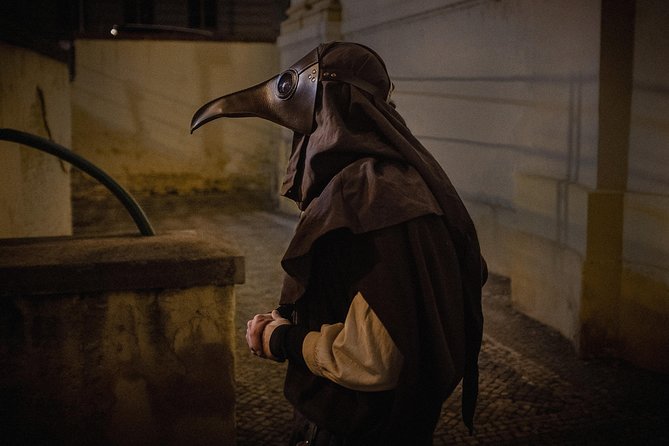
The evening starts with Alexander Schamsky, Prague’s plague doctor, and a time jump back to 1715. Right away, you are not just learning about the plague. You are learning how people tried to make sense of it using the beliefs they already had. That framing is one of the best parts for first time visitors, because it helps you understand why the responses were so varied, from prayer to quarantine to early medical theories.
At this first stop, the guide also introduces the building’s story as the House of the Golden Well, plus saints tied to plague protection: St. Sebastian and St. Rochus. That matters because you see that religion was not separate from health. People lived with both.
You also get the tour’s early answer to a core question: what were the root causes people believed in? Those explanations can sound strange today, but the point is not to judge. The point is to understand how fear turns into theories, and how those theories shape behavior.
Potential drawback to consider: because this opening is the setup for the character and the worldview, it can feel like a lot of concepts at once. If you like to ease in, just give it a minute, because the later stops keep building on what you heard here.
Stop 2: New Town Hall and Klementinum, with quarantine reality checks
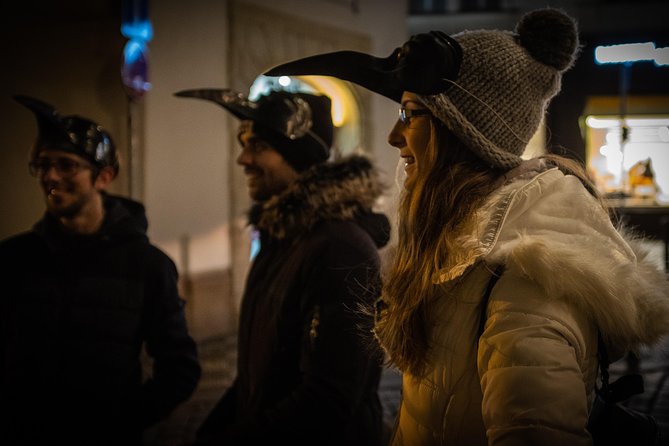
Next you head to the New Town Hall area, with key context connected to Klementinum and its library spaces. Here the tour shifts from beliefs to how those beliefs played out socially.
You learn about different types of the Black Death that people associated with plague outbreaks, and you hear how the wealthy and the common people in Prague experienced the crisis in different ways. That contrast is one of the strongest ways this tour avoids being generic. It does not treat the plague as only a medical event. It shows it as an event that changed daily life and social options.
The big theme at this stop is quarantine. You are not only told that quarantines happened. You get a sense of what daily life could feel like when movement is limited and people are trying to protect households while also trying to earn a living.
Practical note: this is still early in the evening, so if you want photos, this is a decent moment. But remember, the tour is structured around guided storytelling, so let the guide lead and you can still capture shots between key points.
Something different for an afternoon in Prague:
- Prague: 50-Minute Sightseeing Evening Cruise
★ 4.2 · 33,780 reviews - Prague: Medieval Dinner with Unlimited Drinks
★ 4.4 · 19,847 reviews - Prague: Skip-the-line Castle Ticket and Optional AudioGuide
★ 4.3 · 11,121 reviews - Prague: Castle Tour with Local Guide and Entry Ticket
★ 4.6 · 10,422 reviews
Stop 3: Staroměstské náměstí and the market square view of fear
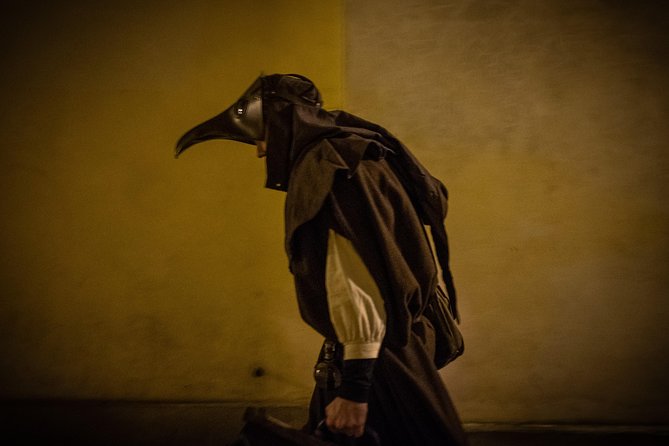
At Staroměstské náměstí you step into a place that usually feels like postcard Prague. In plague-era context, it becomes something else: a market space where merchants have to decide what risk is worth taking.
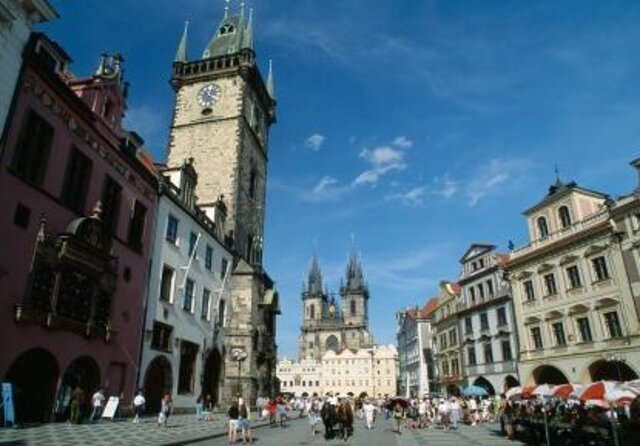
The tour connects this square with major landmarks like the Hussite Church, Týn Church, and the Old Town Hall. Then it brings those landmarks into a plague lens by focusing on merchants during plague times and what changes in the economy and crowd behavior can mean for everyday people.
This stop also includes an excursion into the 30-years-war period. That helps you understand something important for modern readers: epidemics do not land on a calm world. They show up alongside war, shortages, displacement, and political stress. The plague becomes part of a wider crisis environment.
Possible drawback: this stop can include more “context branching” than you might expect. If you want only the plague story, you may feel the war detour takes a slice of time. Still, it is a smart detour because it explains why plague life in Prague had so many layers.
Stop 4: The Franz Kafka statue and the Jewish Quarter connection
Then the tour pivots to Franz Kafka, using a statue stop as a doorway to plague-era Jewish history. You get an introduction to Kafka, and you also hear how the plague affected Jewish communities in Prague and across Europe.
This part of the route moves into the Jewish Quarter area, and it also brings in literature as a way to humanize the theme. The tour references Albert Camus’s novel La Peste, which is a useful bridge for English speakers who want something besides dates and facts.
What I like about this approach is that it does not treat Jewish history as an add-on. It frames it as part of how the city experienced plague, fear, and survival. You also get an easy way to connect the past to a modern cultural reference, without losing the real-world location value.
If you prefer a heavy historical focus, this is where you might want to pay extra attention to questions. The guide often handles audience questions well, and some guides (based on prior experiences with different plague doctors like Thomas and David) are known for answering follow-ups clearly.
Stop 5: Church of Saint Simon and Jude and the old hospital of Na Frantisku
Now you get to one of the most practical and eerie sections: old medicine.
At the Church of Saint Simon and Jude, the tour takes you to the former hospital Na Frantisku. The focus becomes healing methods, plus a clearer medical background about the disease that killed around 200 million people worldwide. That scale gives you perspective, especially when you are standing in a place tied to healthcare in the past.
The guide also points out unknown heroes of medicine who worked in this hospital. That is a subtle but meaningful choice. It shifts the story away from only famous figures and toward the people who did the daily hard work of caring, even with limited tools.
One thing to consider: this stop can feel more intense than the earlier square scenes. That is not a problem. Just know the tour is building toward a “medical reality” moment, and it may lean more serious than dramatic.
Also, if you are photos first, ask yourself what you want. This is a stop where the story matters more than the view, so let your attention stay on what the guide says and you can still capture images after.
Stop 6: National Gallery Prague, Convent of St. Agnes, and the closing scene
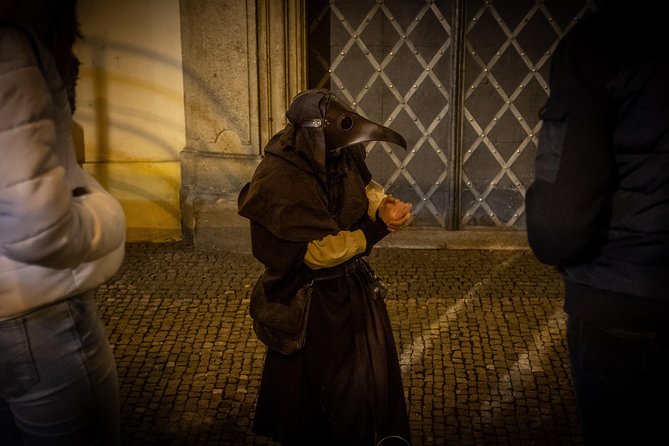
The tour concludes at National Gallery Prague, Convent of St. Agnes. This is a fitting end point because it returns you to a character theme while also shifting into a wider summary.
You hear about St. Agnes of Bohemia, including her life and work, and then the guide ties together what you learned across Prague and Europe. The ending also includes interesting notes about the current status of the disease, which is useful for modern travelers because it prevents the whole evening from becoming a purely historical costume walk.
Then you get the payoff moment: a group picture with the plague doctor.
Why this ending works: it gives closure. You start with myths and saints, move into quarantine life and neighborhood impacts, then land in old medical care. Finishing with a modern connection helps you process what you heard without leaving with only dread.
Cost and value: what $26.61 buys you in real terms
At $26.61 per person for about 90 minutes, you are paying for three things at once:
- A guided route across several central landmarks that would take you longer to stitch together alone.
- A performed, character-led format that turns public health into something you can remember.
- A small-group setting capped at 10 travelers, which helps the guide keep the tone interactive and answers more likely.
For some budget travelers, the biggest question is whether you are just paying for spooky theater. The good news is that the story uses real locations and stays grounded in what people believed, how quarantine worked socially, and how plague affected communities, including Jewish communities. That blend is why so many people rate it highly.
On the flip side, if you want a strictly academic lecture with heavy narrative density, you might feel the balance tilts toward entertainment. One person felt it could use a stronger historical narrative. I see that as a “pick your style” point, not a deal breaker.
Who should book this plague doctor tour
This tour is a great match if you:
- Want a night walk that feels like a story, not a slideshow
- Like history that connects to real places, including medical and community themes
- Enjoy a bit of humor with heavy subjects
- Travel with teens or mixed ages and want something that keeps attention
It is also a good fit if you are the kind of traveler who likes to understand how societies respond to crisis, not just who won wars or built buildings.
If you strongly prefer architecture-only sightseeing, you might find this tour less satisfying. It leans toward everyday life, medical ideas, and social impact more than pure sightseeing.
Quick tips to get the most from the evening
- Wear comfortable shoes. Old Town streets can be uneven.
- Bring a light layer. Even when the evening is pleasant, indoor to outdoor transitions can feel cool.
- If you care about the historical narrative, ask questions at stops. The guides have shown they can handle follow-ups well.
- If costumes bother you, take note of the one negative comment about costume smell. It did not stop most people from loving the experience, but it is a fair heads-up.
Should you book it? My practical take
If you want Prague to feel alive, and you like history with a theatrical edge, I think this is a strong yes. The guide performances have a reputation for being enthusiastic, funny in a natural way, and able to explain plague concepts clearly. The small group size keeps it from feeling rushed.
Book it especially if you care about public health history, medicine, quarantine life, or the Jewish community experience during plague times. If you want a strictly chronological, dense lecture, you may want to pair this with a more traditional history stop the next day. But for an evening that combines humor, creepy atmosphere, and real context, this is the kind of tour you will remember on your last Prague walk.
FAQ
How long is the Plague Doctor of Prague tour?
It lasts about 1 hour 30 minutes.
Is the tour offered in English?
Yes, it is offered in English.
Where does the tour start and where does it end?
It starts at Aurus Hotel Prague, Karlova 3, Praha 1, Staré Město. It ends in a different location, at the National Gallery Prague, Convent of St. Agnes.
How large is the group?
The tour has a maximum of 10 travelers.
Do I need a printed ticket?
You get a mobile ticket.
Is the tour recognized by major publications?
The tour is recognized by New York Times, Vogue, and Forbes.
What happens if the weather is poor?
The experience requires good weather. If it is canceled due to poor weather, you will be offered a different date or a full refund.
What is the cancellation policy?
You can cancel for a full refund if you cancel at least 24 hours in advance. If you cancel within 24 hours of the start time, you do not get a refund.
Added recently in Prague
- Half-day Private Tour of Prague’s Charming Jewish Quarter★ 5.0 · 4 reviews
- Karlstejn Castle Half Day Tour from Prague★ 3.5 · 4 reviews
- Private Full-Day Tour Karlstejn Castle and Crystal Glassworks from Prague★ 4.5 · 4 reviews
- Prague Castle and Charles Bridge Private Walking Tour★ 5.0 · 4 reviews
- Prague: Sports Cards & Artifacts Museum Tickets★ 4.6 · 4 reviews
- Prague: Target Gun Shooting Experience with Hotel Pickup★ 4.7 · 4 reviews
- Private tour to Cesky Krumlov★ 5.0 · 4 reviews
- Prague Airport Transfers, Praga Aeropuerto Traslados, ESPAŇOL-ENG★ 5.0 · 4 reviews
Ghost & Legend Tours, compared.
Ghost Walking Tour Where Legends Come To Life
Read our review →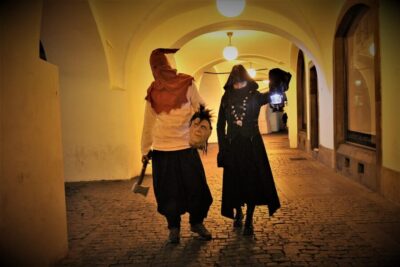
Ghosts, Legends, Medieval Underground & Dungeon Tour
Read our review →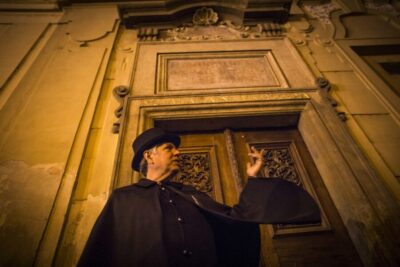
Ghosts and Legends of the Old Town Evening Tour
Read our review →
Prague Ghost and Legend of Old Town Walking Tour
Read our review →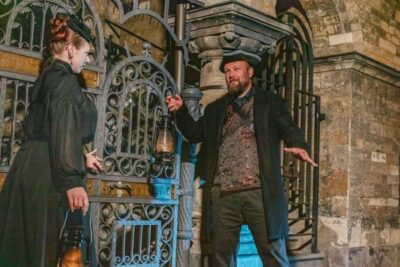
Ghosts and Legends Nighttime Guided Walking Tour
Read our review →
Prague Ghosts, Legends, Medieval Underground and Dungeon Tour
Read our review →
Walking Night Tour Ghost Stories and Legends of Prague’s Old Town
Read our review →
Browse the lists this tour appears in