
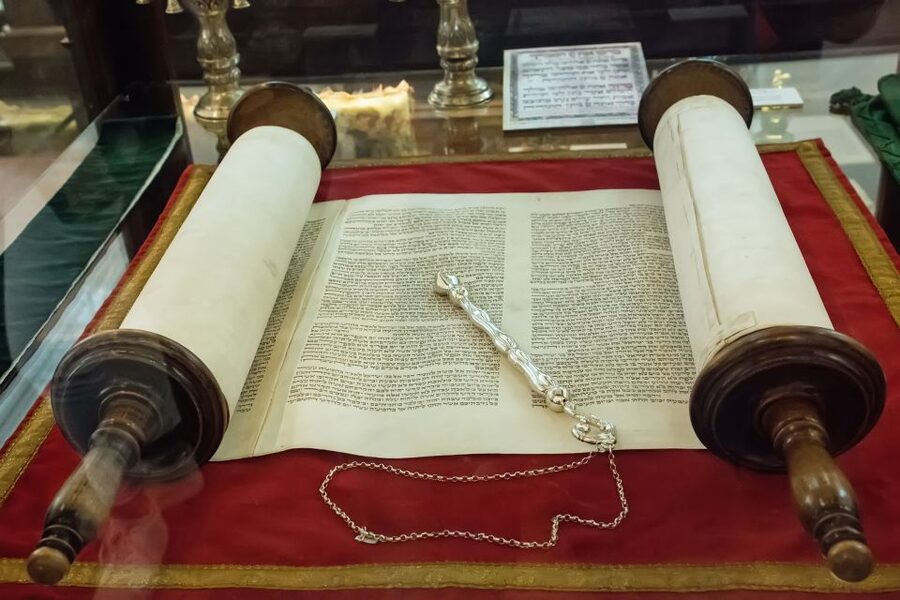
Reviewed · JEWISH QUARTER
Prague Synagogues and Jewish Quarter Private Walking Tour
If you want Prague that feels specific, human, and layered, the Jewish Quarter (Josefov) is a strong choice. You start at one of the city’s best-known landmarks, then you move into a neighborhood where Jewish life shaped buildings, art, and memory, right up to the modern era.
I like that this tour is private and designed to give you time to ask questions. You’re not herded through a checklist, and the route is planned so you can pause where the story gets heavy or personal.
One possible drawback is pacing. It’s a stop-and-talk walking tour, and at least one guest noted it felt slow, with lots of repeated explanation and long breaks between movements. If you prefer a tour where people talk while walking, this format may feel a bit less efficient.
Key highlights you will feel on the ground
- Private, licensed guide with a track record of careful pacing and strong humor
- Astronomical Clock to Josefov route that gets your bearings fast
- Multiple synagogues that show different styles, eras, and Jewish community needs
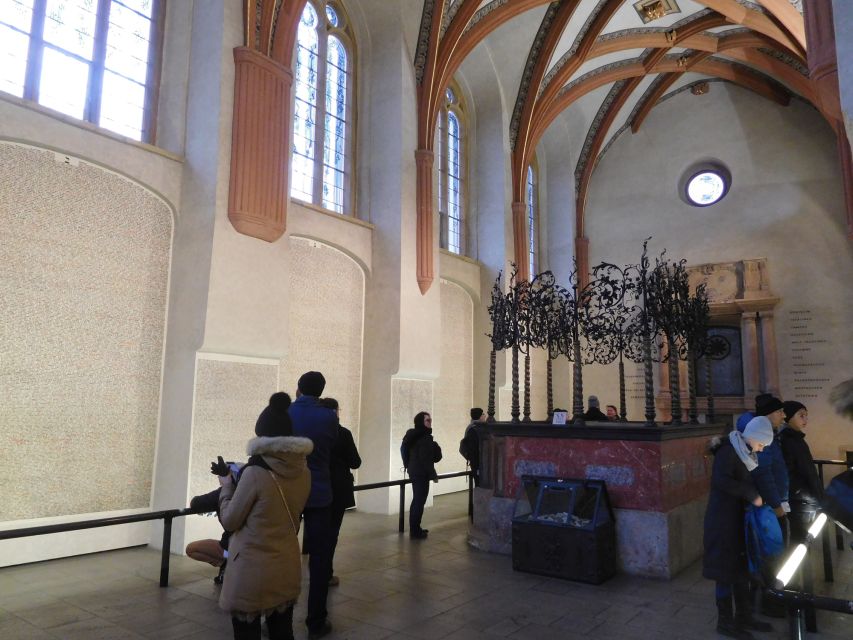
- Pinkas Synagogue memorial with a very direct Holocaust remembrance focus
- Old Jewish Cemetery with layered burial history and golem legend context
- Jewish Museum tickets included, but double-check which synagogue admissions apply to your day
Why Josefov and its synagogues feel different from a standard city tour
Prague can look like postcard perfection from far away. But Josefov tells a different truth up close. The buildings are not just pretty facades. They are evidence. Evidence of how a community lived, studied, prayed, recovered, and remembered, especially after periods of major disruption.
What I like most is that the tour doesn’t treat the Jewish Quarter as one single museum room. It treats it like a living sequence. You go from the Ottoman-influenced and Reform-era synagogue story, back through older Gothic and Baroque styles, and then into the cemetery where time stacks literally on top of itself.
You’ll also notice how the guide connects architecture to history in practical ways. For example, synagogue size and style often track what the community needed at the moment, and what was possible after events like fires or wars. That gives you a more grounded understanding than a quick photo stop.
The tour is about 2 hours 30 minutes, so it’s long enough to matter, but not so long you lose the thread.
More of the Jewish Quarter:
- Prague: Jewish Quarter Walking Tour with Admission Tickets
★ 4.7 · 3,729 reviews - Prague: Old Town and Jewish Quarter Guided Tour in German
★ 4.8 · 3,143 reviews - Prague: Old Town and Jewish Quarter Guided Walking Tour
★ 4.6 · 2,847 reviews
Price and what you are really paying for ($175.24 per person)
At $175.24 per person, this is not a budget group deal. It’s priced like a private walking experience with real guide time and planned admissions.
Here’s how I think about value:
- You get a licensed, experienced guide and the advantage of a private group, which usually means fewer distractions and more room for questions.
- You get Jewish Museum tickets included, and that can add up quickly in a city where synagogue admissions can be separate.
- The itinerary includes several major stops, including the Old Jewish Cemetery and multiple named synagogues tied to different chapters of Josefov.
Two small notes you should keep in mind. First, the tour schedule marks some synagogue admissions as not included. Second, the included package says Jewish Museum tickets are included. In practice, parts of Josefov are connected through museum management, but coverage can vary by day and ticket type. When you book, ask for a clear statement of what your ticket covers for Stops like Maisel, Pinkas, Klausen, Old-New, and Spanish.
The charity component is small but meaningful: the operator says they regularly support local children’s homes. It does not change your day on-site, but it’s nice to know the company ties part of the experience to something local.
Meeting on foot, then stepping into Josefov in a compact route
This tour is set up for easy city-center logistics. Pickup is offered from your hotel reception or another location in the city center, but on foot only. That means no car pickup. It also means you’ll want to plan to meet the guide at a place that is walkable to the Old Town area.
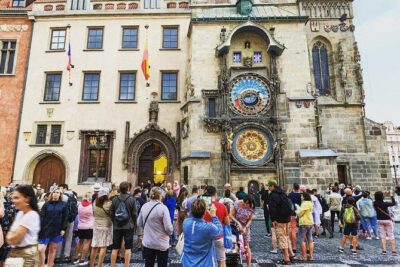
The tour’s flow typically starts right under the Astronomical Clock. From there you enter Josefov. That matters because it turns the Jewish Quarter from an isolated destination into part of your Prague orientation. You get your bearings using a landmark most people know, then you move into the streets that give Josefov its identity.
The walking is not the main challenge. The main challenge is attention. You’ll pause often. That includes time in and around the synagogues, time in memorial spaces, and time at the cemetery where the story is unavoidable and the details matter.
If you like a fast-moving tour with constant motion, this will feel different. If you prefer calm pace and chances to absorb what you are seeing, the format fits well.
Also, you’ll be in English, and the tour uses a mobile ticket, which is convenient when you are juggling museum entries and timed moments.
Stop by stop: from the Astronomical Clock into the Jewish Museum world
The itinerary is built like a guided walk through time. You start with Prague’s famous civic centerpiece, then you move into Josefov, where the Jewish Museum and major synagogues anchor the story.
More walks in Prague:
- Prague: 3-Hour Walking Tour of Old Town & Prague Castle
★ 4.7 · 5,696 reviews - Prague: Ghost Walking Tour Where Legends Come To Life
★ 4.4 · 5,253 reviews - Prague Guided Walking Tour and Cruise with Authentic Czech Lunch
★ 5.0 · 3,627 reviews - Prague Ghost and Legend of Old Town Walking Tour
★ 4.5 · 2,630 reviews
Stop 1: Astronomical Clock area, then into Josefov
You meet the guide right under the Astronomical Clock, then the walk transitions into Josefov. This opening works because it gives you an easy reference point. You are still in the Old Town, then suddenly you are in a neighborhood whose streets and buildings carry a different kind of meaning.
You don’t spend a lot of time here. It’s more of a launchpad, then you’re off.
Stop 2: Josefov and the Jewish Museum complex
Once inside Josefov, you get a structured introduction to why this area matters. Josefov is described as one of the world’s most important Jewish sights because it was not destroyed during World War II. That single line sets expectations for your visit. You are not looking at a reconstruction. You are looking at continuity, and at layers that survived.
The Jewish Museum is described as including an old Jewish cemetery and several synagogues that cover different aspects of Jewish heritage, including traditions, art, and history.
What I like about this stop is that it prevents the rest of the tour from feeling like random buildings. You start with a framework, then each synagogue stop lands with more clarity.
You may find the most effective way to enjoy this segment is to ask your guide a quick question early. If you do, your later stops will click faster.
Stop 3: Maisel Synagogue, built in 1592
The Maisel Synagogue, built in 1592, is connected to Mordecai Maisel, described as a philanthropist and mayor of the Jewish town. The guide’s emphasis here is not only on the synagogue itself, but on the larger civic support system that made communal projects possible.
You get details about Maisel sponsoring Jewish organizations, funding ritual baths and an almshouse, and even donating toward the Jewish town hall and multiple synagogues.
This is one of the stops where I think architecture and social history come together nicely. When you hear about the people behind the building, the synagogue becomes more than a room. It becomes a community tool.
Stop 4: Pinkas Synagogue, the Holocaust memorial space
The Pinkas Synagogue dates to 1535. In this tour, it stands out because it is used as a memorial to nearly 80,000 Jewish victims of the Holocaust from the Czech lands.
That detail changes how you should experience the space. This is not a place to skim. Plan to slow down, look closely, and let the guide’s context give you a way to understand what you are seeing. Even if you already know Holocaust history, a specific memorial inscription space always hits differently.
The time here is long enough to take it in without feeling rushed.
Stop 5: The Old Jewish Cemetery and the story of layered graves
The Old Jewish Cemetery is described as one of the largest Jewish cemeteries in Europe and one of the world’s surviving ancient Jewish burial grounds still operating from the 15th century to the late 18th century.
This stop is where the tour becomes physically intense, in a calm way. You learn that about 80,000 residents of the Prague ghetto were buried there. Because the cemetery could not hold that volume in a straightforward way, tombs are layered on top of each other, reaching 12 layers in one section.
If you want to understand why memorial spaces feel heavier than other sights, this is your answer. The history isn’t just told. It is built into the ground.
You’ll also hear about Rabbi Judah Loew ben Bezalel and the golem legend, described as a mud figure said to have been summoned to life for protection against anti-Semitic attacks. Even if you treat the golem story as legend, it still tells you something useful about how communities coped emotionally and symbolically.
Stop 6: Klausen Synagogue and the Baroque rebound after the ghetto fire
The Klausen Synagogue is described as the biggest synagogue in the Prague Jewish Town.
The word Klausen originally referred to three smaller buildings from the 16th century that used to be on the site, including a yeshivah (Talmudic school) founded by Rabbi Loew. Then after the ghetto fire of 1689, the Klausen Synagogue was erected in 1694 in the early Baroque style.
This is a great stop for noticing “rebuilding” as an architectural theme. You see how tragedy can lead to a different style, different scale, and a renewed central role in the neighborhood.
Stop 7: Old-New Synagogue, Franz Kafka link, and a golem attic legend
The Old-New Synagogue is described as Gothic Cistercian, built in the latter part of the 13th century, and as the oldest building in the Jewish Town. It’s also said to be one of Europe’s oldest synagogues still in use.
This is the stop where the tour connects literature to daily religious life. The guide notes that Franz Kafka attended services here. That detail helps you picture what it might have meant to be present in a place that had already served generations.
You’ll also hear the golem legend again, this time with the suggestion that the golem is hidden in the attic. Whether you fully believe it or treat it as folklore, it reinforces that the story of protection and fear sits alongside the story of prayer and survival.
Stop 8: Spanish Synagogue with its Moorish interior
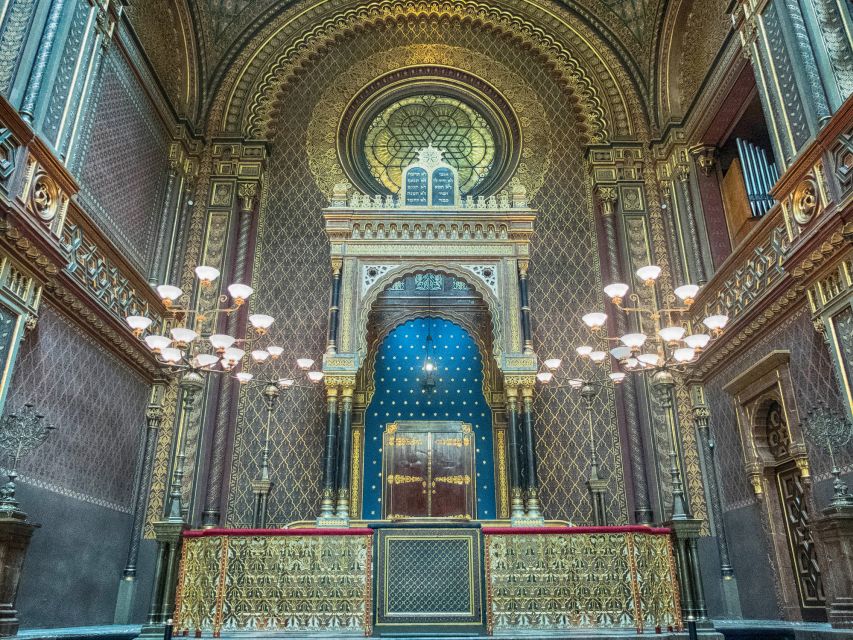
The last synagogue stop is the Spanish Synagogue, built in 1868 for the local Reform congregation. It sits on the site of the 12th-century Altschul, described as the oldest synagogue in the Prague ghetto.
The name Spanish comes from its Moorish interior design, said to be influenced by the Alhambra. This is the tour’s “visual contrast” moment. Earlier synagogues connect you to older styles and older eras. Spanish Synagogue swings you into 19th-century tastes and religious reform currents.
If you love interior details, this is the place to slow down and just look.
The guide is the product: private, funny, and tuned to pacing
This tour stands or falls with the guide. The best part, based on the experience you are likely to have, is how the guide manages tempo and clarity.
Names you might see in this tour include Gabriela, Janna, and Hana. In the feedback style that comes with this operator, guides are consistently described as caring about the subject, giving time at each stop, and not rushing you out the door.
One standout pattern is pacing. Guides are praised for keeping a pace that feels right, letting you ask questions, and guiding you so you leave with a clear understanding of how the Jewish Quarter evolved over time.
Another pattern is personality. Multiple mentions point to humor and a relaxed feel, which matters because some of the content, like the cemetery and Holocaust memorial, can get heavy fast. Humor is not the point of those rooms, but it helps you breathe and stay present.
Now, the balanced note: a minority of feedback flags stop-and-talk pacing and repeated explanation. In other words, if you want constant movement and lots of new info delivered without pauses, you might find the tour slower than you expected.
My advice is simple: if you like this style, it will feel thoughtful and unrushed. If you dislike it, ask yourself whether you prefer a long museum session or an efficient, photo-focused loop.
Tickets, admissions, and how to avoid confusion before you go
You should plan your expectations around admissions. The included info says Jewish Museum tickets are included. The detailed schedule also marks some synagogue admissions as not included.
That could mean a few things, like certain entries being covered through the Jewish Museum ticket type, while other synagogues might be separate. Since the data is mixed, you should not guess.
When you confirm your booking, ask the operator to list what admissions are covered for your date, especially for:
- Maisel Synagogue
- Pinkas Synagogue
- Old Jewish Cemetery
- Klausen Synagogue
- Old-New Synagogue
- Spanish Synagogue
This one email saves you from surprise fees on the day.
Who should book this Prague Jewish Quarter private walking tour
I think this is a strong match if you:
- Want a private guide who can pace the day around your questions
- Care about the meaning of places, not just photos
- Like architectural and social history connections, especially across centuries
- Prefer a structured route through major Josefov highlights in about 2.5 hours
It also suits people who are comfortable walking in a compact area with frequent stops.
If you are short on time but still want the key synagogues and the cemetery in one coherent visit, this tour’s length hits a practical sweet spot.
If you are very mobility-limited, you might find the stop-and-start format tiring. The walking distance is not described in detail here, but the tour is clearly stop-heavy.
Should you book this Prague Synagogues and Jewish Quarter tour?
Book it if you want a guided, respectful, place-based look at Josefov, with a guide who manages time well and gives you space to ask questions. The combination of synagogues plus the Old Jewish Cemetery plus the Holocaust memorial focus makes this more than a sightseeing loop.
Skip it or reconsider if you strongly prefer constant movement, or if long stops feel like wasted time to you. Also, send a quick message before you go to confirm synagogue admission coverage, since the schedule labels some stops as not included even while Jewish Museum tickets are listed as included.
If you do book, prepare for a day that is part history lesson and part memory walk. Bring comfortable shoes, keep your phone charged for maps only, and be ready to pause when the story asks you to.
FAQ
How long is the Prague Synagogues and Jewish Quarter Private Walking Tour?
The tour runs about 2 hours 30 minutes.
Is this a private tour?
Yes. It is private, and only your group participates.
Does the tour include hotel pickup?
Pickup is offered at your hotel reception or another location in the city center, but only on foot, not by car. You can provide your preferred Prague address.
What language is the tour offered in?
The tour is offered in English.
Are tickets included?
Jewish Museum tickets are included. The tour description also notes that admission ticket coverage varies for specific synagogue stops, so it’s smart to confirm what is covered for your date.
What synagogues and sites does the tour visit?
It visits Josefov and the Jewish Museum areas, plus Maisel Synagogue, Pinkas Synagogue, the Old Jewish Cemetery, Klausen Synagogue, the Old-New Synagogue, and the Spanish Synagogue.
Is tipping included in the price?
No. Tip is not included.
How far in advance do people typically book this tour?
On average, it is booked about 72 days in advance.
What is the price per person?
The price is $175.24 per person.
Added recently in Prague
- Half-day Private Tour of Prague’s Charming Jewish Quarter★ 5.0 · 4 reviews
- Karlstejn Castle Half Day Tour from Prague★ 3.5 · 4 reviews
- Private Full-Day Tour Karlstejn Castle and Crystal Glassworks from Prague★ 4.5 · 4 reviews
- Prague Castle and Charles Bridge Private Walking Tour★ 5.0 · 4 reviews
- Prague: Sports Cards & Artifacts Museum Tickets★ 4.6 · 4 reviews
- Prague: Target Gun Shooting Experience with Hotel Pickup★ 4.7 · 4 reviews
- Private tour to Cesky Krumlov★ 5.0 · 4 reviews
- Prague Airport Transfers, Praga Aeropuerto Traslados, ESPAŇOL-ENG★ 5.0 · 4 reviews
Jewish Quarter, compared.
Jewish Quarter Walking Tour with Admission Tickets
Read our review →
Old Town and Jewish Quarter Guided Tour in German
Read our review →
Old Town and Jewish Quarter Guided Walking Tour
Read our review →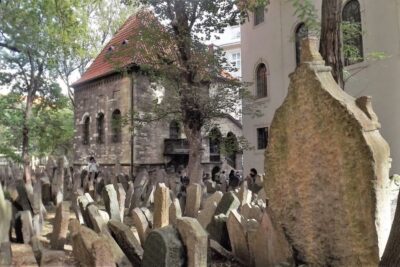
Jewish Quarter Ticket with optional Audio Guide
Read our review →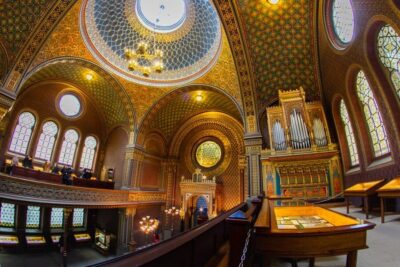
Prague’s TOP Sights – Old Town, Jewish Quarter, Charles Bridge (Tip-based tour)
Read our review →
Prague Old Town New Town and Jewish Quarter Morning Tour
Read our review →
Old Town, Jewish Quarter & Astro Clock Walking Tour
Read our review →Browse the lists this tour appears in