
Reviewed · WALKING TOURS
Prague Renaissance and Baroque Gardens Walking Tour
Prague’s Renaissance and Baroque gardens are interesting because they are not just pretty plants. They are political messages, religious ideas, and power shown in stone, water, and carefully planned views. I love the way this tour connects that big story to specific places you can stand in, like the Singing Fountain and the Wallenstein Garden grotto wall. I also like that you get a historian guide telling you why each design choice mattered, not just what you are looking at.
The only real consideration is the walking. You will go up and down stairs, and some can be narrow or steep, especially around Prague Castle. If that is a problem for you, consider a private tour so the route can be adjusted.
Quick takeaways
- Italian Renaissance planning at Prague Castle with Ferdinand I’s push for classicism north of the Alps
- The Singing Fountain and a relief showing Ferdinand presenting a flower to his wife, Queen Anne
- Fig House and Orangery where figs, almonds, oranges, and lemons were grown in Central Europe
- Baroque garden drama at Wallenstein including albino peacocks and mythical fountains
- Vrtba Garden from 1720 with a walled-in feel plus a marine-themed grotto and wide city views
- A relaxed, well-explained pace led by an English historian guide (one guide named Miriam has stood out for being both informative and easygoing)
Meeting Point and a realistic 3-hour walking plan
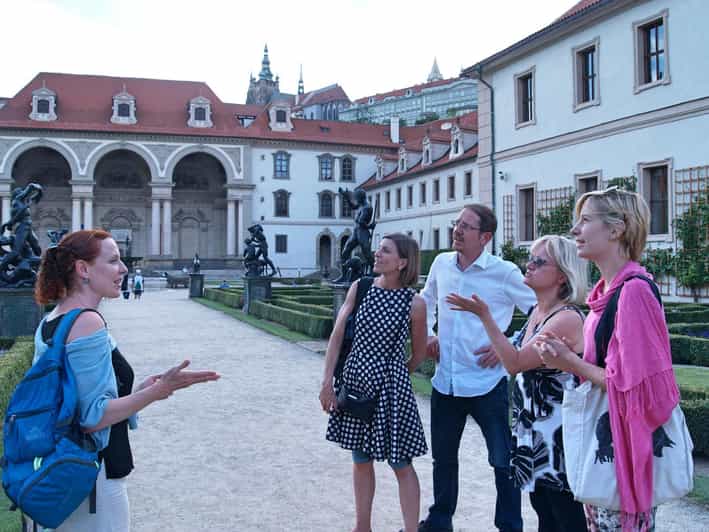
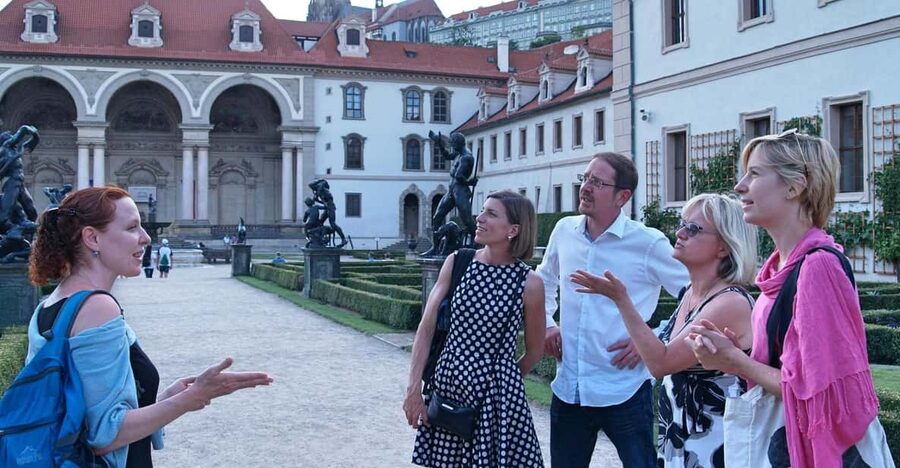
You meet at the door of Bagel Lounge Malostranska. It is a good anchor point for this route because you start on the Lesser Town side, then work your way through the Castle Gardens area and down toward major garden stops.
This is a 3-hour walking history tour, and the time is used to connect architecture, water features, statues, and plantings to the people who paid for them. You should expect continuous movement with frequent look-and-explain moments. The pace is not a hard workout, but it is steady, and you will be climbing and descending.
Big practical note: some stairs are narrow or steep. That does not mean you have to skip the tour, but it does mean you should be honest with yourself about footing and stamina. If you choose a private or small-group format, your guide can tailor the route and leave out some sites so you stay comfortable.
More walks in Prague:
- Prague: 3-Hour Walking Tour of Old Town & Prague Castle
★ 4.7 · 5,696 reviews - Prague: Ghost Walking Tour Where Legends Come To Life
★ 4.4 · 5,253 reviews - Prague: Jewish Quarter Walking Tour with Admission Tickets
★ 4.7 · 3,729 reviews
Prague Castle Gardens: Ferdinand I and the Italian Renaissance switch
A key idea behind this tour is that gardens reflect the social, political, and religious outlook of the era. You begin with that framework, then apply it right away to Prague.
Early medieval gardens were mostly for herbs, used for medicine and cooking. In Prague, surviving examples are more limited, but the tour points you toward what that means: gardens were functional first. Then you move into the Renaissance moment when the goals shift toward display, pleasure, and controlled beauty.
The turning point is Emperor Ferdinand I. He wanted large palace gardens and was especially interested in lush Mediterranean styles inspired by the Italian Renaissance. The tour highlights how Ferdinand brought in Italian gardeners and architects, helping introduce classicism north of the Alps.
As you walk, you will hear why this matters visually. It is not just about having plants. It is about geometry, sightlines, and “designed nature” that signals taste and status. You also get a sense of how Renaissance ideas gradually set the stage for later Baroque thinking, where gardens become more theatrical and emotionally loaded.
Belvedere Summer Palace, the Singing Fountain, and Mediterranean fruit in Central Europe
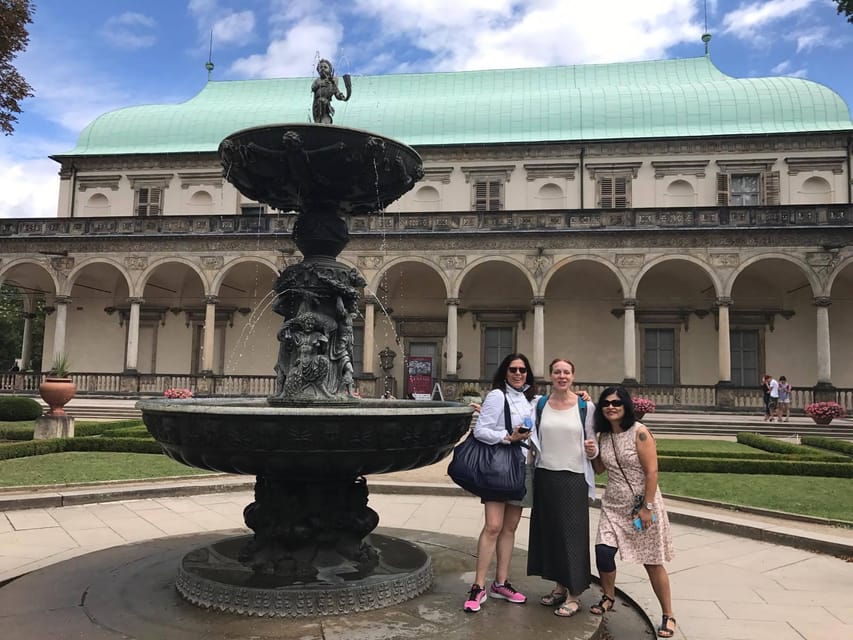
One of the most rewarding parts is the stop around Belvedere Summer Palace. This pleasure palace was commissioned by Ferdinand I as a gift for his wife, Queen Anne. The timing is sad, because she did not live to see it finished, but the palace was still meant to show affection and influence through art.
Look for the relief that depicts Ferdinand presenting Queen Anne with a flower from the Royal Gardens surrounding the palace. That little visual story is the kind of detail that makes the whole garden theme click.
Belvedere is designed by the Italian Paola della Stella. It is often described as the most beautiful Renaissance structure outside Italy, and even if you do not care about rankings, it gives you a clear benchmark for how seriously Ferdinand’s court took design.
In front of the palace is the Giardinetto and the Singing Fountain, cast in bell bronze in 1564. The idea is clever and very specific: the water dripping into the bowl causes the sound to resonate, so the fountain “sings.” It is the kind of feature you would miss if you only walked fast past it.
From there, the tour moves into the Fig House and Orangery. This is where you get the practical, surprising side of Renaissance gardens in Prague. Figs, almonds, oranges, and lemons were grown here for the first time in Central Europe. You also learn how tulips, previously unknown in Europe, were introduced to the Royal gardens as an exotic gift from the Sultan of Constantinople. This is a good reminder that these gardens were global in their supply chains, even when they were locally powerful.
Bull Stairs to paradise terracing: gardens as designed theater
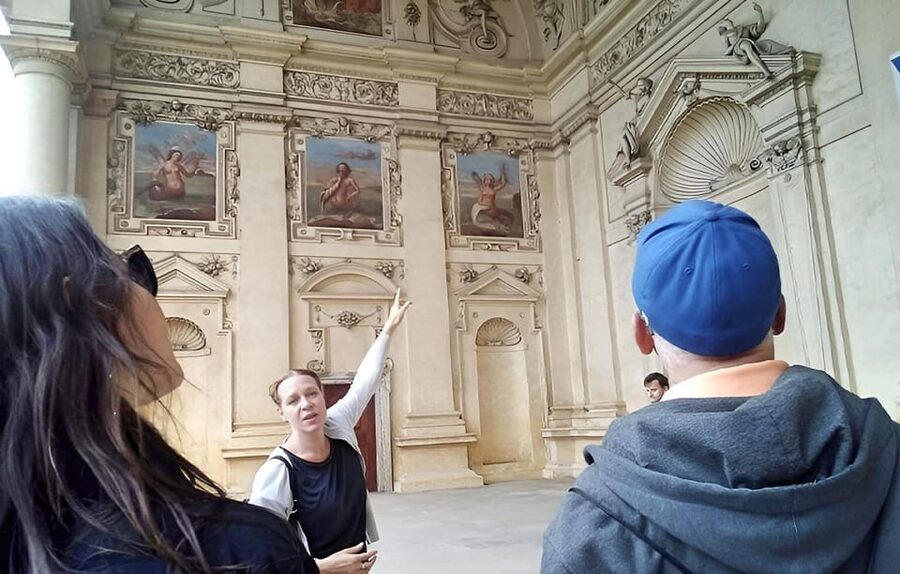
After the palace area, you will pass by the stag moat and then cross through the castle courtyard. The route then drops down via the Bull Stairs into the South Gardens, which is where the experience turns from palace highlight to garden choreography.
The Bull Stairs descent is part of why the tour works. You start high, then you feel the terrain change. That matters because Renaissance and Baroque gardens were built to be read like a sequence, not viewed like a single postcard.
You visit the Garden of Paradise and the Garden on the Bulwark. Again, the names are not just poetic. They hint at the mindset of the designer and patron. The Renaissance approach leans toward order and balance, while the later Baroque mood shifts toward drama, movement, and controlled surprise.
As you keep walking down the hill, you go through a series of terraced gardens. Terraces do two jobs at once. They make steep ground usable, and they create “chapters” in your walk, where each level frames different views and features. If you like garden design, you will start noticing how the sightlines are managed, and how water, stone, and plantings work together as one composition.
This portion of the walk also sets up what comes next. By the time you reach Wallenstein, you will understand that the style shift is not random. It is connected to changing philosophies and the stories of the people behind the projects.
Something different for an afternoon in Prague:
- Prague: 50-Minute Sightseeing Evening Cruise
★ 4.2 · 33,780 reviews - Prague: Medieval Dinner with Unlimited Drinks
★ 4.4 · 19,847 reviews - Prague: Skip-the-line Castle Ticket and Optional AudioGuide
★ 4.3 · 11,121 reviews - Prague: Castle Tour with Local Guide and Entry Ticket
★ 4.6 · 10,422 reviews
Wallenstein Garden: albino peacocks and mythical fountains in action
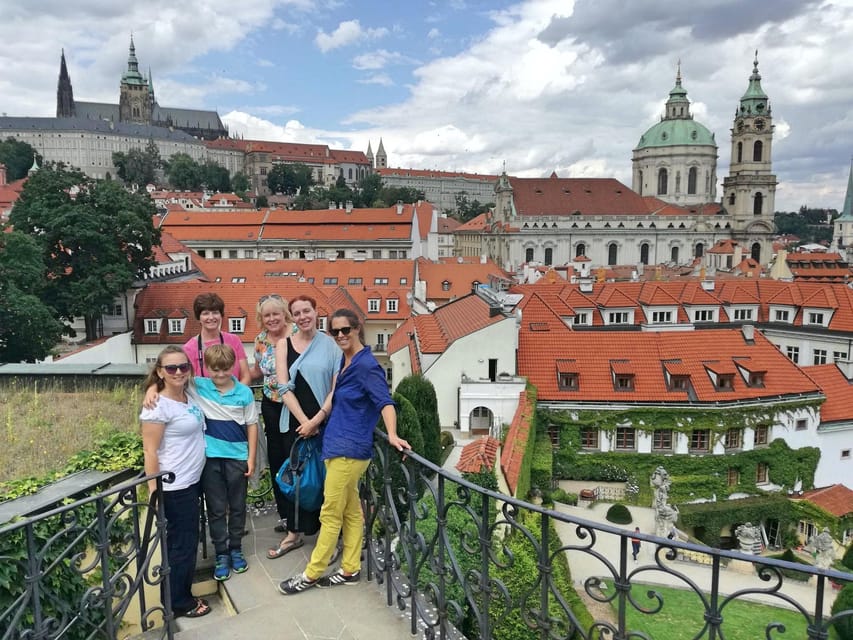
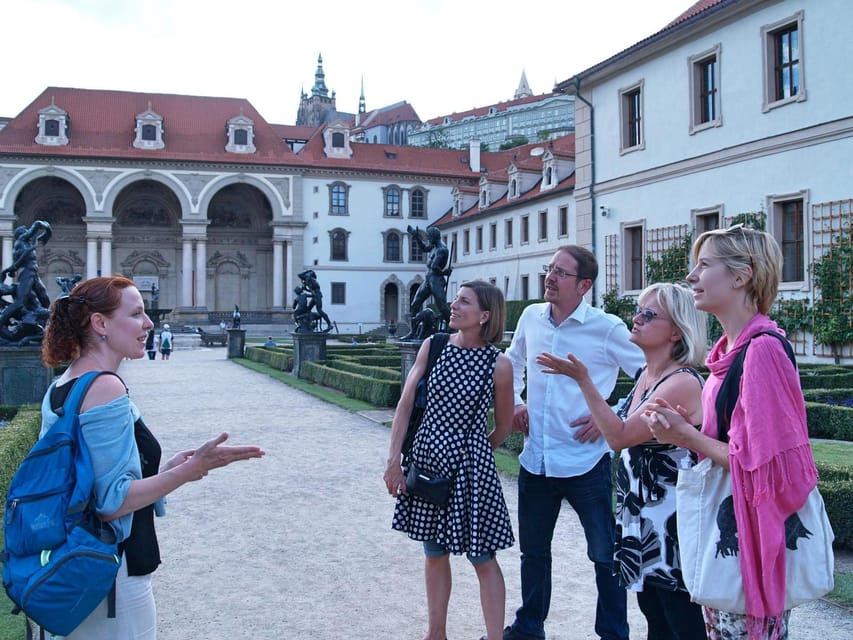
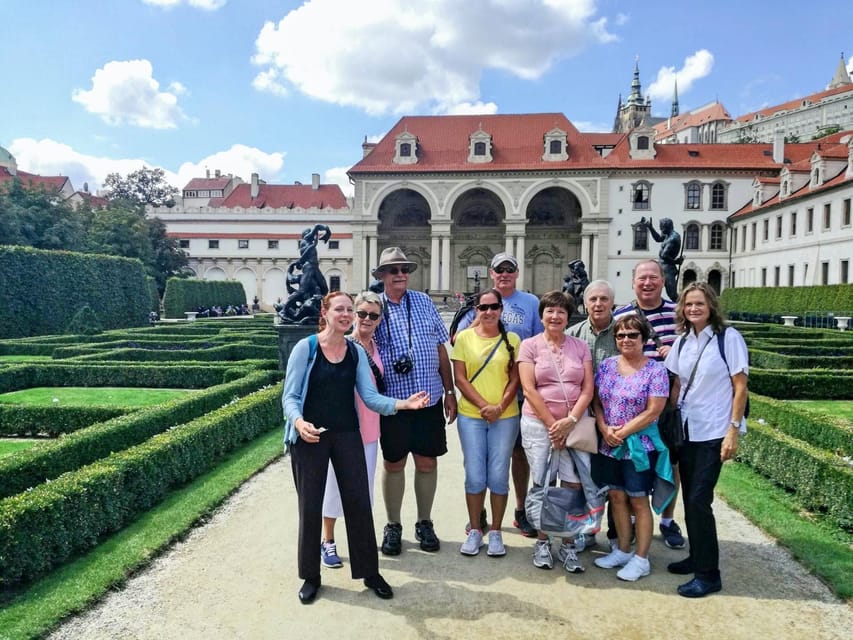
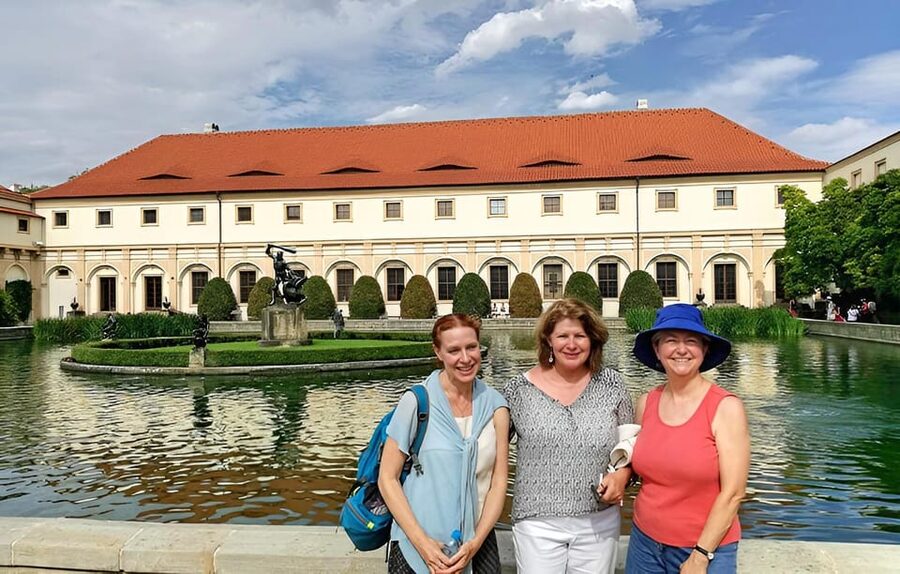
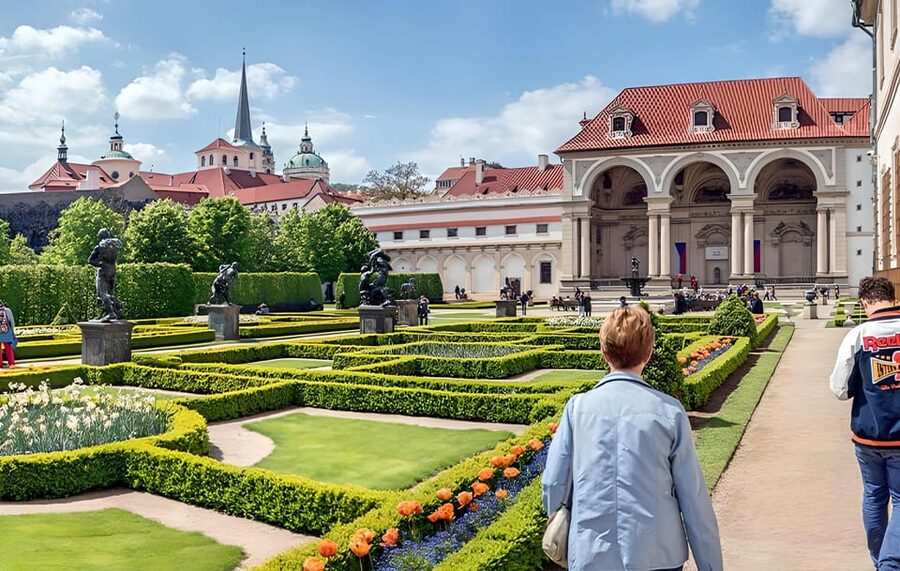
Wallenstein Garden is the big emotional payoff. It is grand in scale, and it also feels theatrical in the details. The tour describes it through both design elements and the life of its commissioner, Albrecht von Wallenstein.
You will notice the albino peacocks, which instantly become the “talking point” birds of the garden. They also underline the same idea you have seen in the palace sections: status and spectacle. If you came for scenery only, you can still enjoy it. If you came for stories, this is where those stories turn visual.
Other features to watch for include Mannerist statues, a grotto wall, and mythical fountains. The grotto wall is especially important because it fits the Baroque taste for illusion and atmosphere. Instead of just displaying objects, the garden seems to create worlds.
This is also where the tour connects Renaissance classicism to Baroque philosophies. The shift is less about flowers and more about attitude. Renaissance gardens often emphasize proportion and composure. Baroque gardens lean into transformation, theatrical effects, and an almost narrative flow.
If you are the type who likes to photograph, this is one of your best windows for capturing the mix of stonework, water, and statuary. And if you are more into quiet time, the garden still delivers because it gives you “pause points” where you can slow down and take it in.
Vrtba Garden from 1720: the walled-in pause you will remember

As the tour finishes, you visit Vrtba Garden, located in the Lesser Town (Mala Strana). This is a walled Baroque garden dating from 1720, and it is rarely seen compared with the headline sites.
That is exactly why it works. When you step into Vrtba, it feels like you are getting a more intimate look at noble life and Baroque garden design. You are not just seeing a decorated public square. You are seeing how a private world could be shaped through the layout of walls, courtyards, and views.
One highlight comes at the top courtyard, where there is a marine-themed grotto. The theme is vivid, and it adds a playful layer to the otherwise structured Baroque aesthetic.
You also get rewarding cityscape vistas from this higher point. That makes Vrtba more than a design lesson. It becomes a visual reward for the walking and the stair work, because you finish with a sense of how Prague’s city fabric looks when you are above it.
Price and value, plus tickets to plan for
The price is $123 per person for a 3-hour guided history walk with an English historian guide. Whether that is a good deal depends on what you want from your Prague day.
If you like garden history and you enjoy design details like fountains, reliefs, and how Italian Renaissance ideas landed in Central Europe, the value can be strong. The guide does the heavy lifting of connecting Ferdinand I’s ambitions, Paola della Stella’s palace design, the Singing Fountain’s 1564 bell bronze sound concept, and Wallenstein Garden’s Baroque drama into one story you can follow on your feet.
Two things are not included: Prague Castle Gardens admission fees and Vrtba Garden admission fees. If you are budgeting, factor those ticket costs separately, so the total spend does not surprise you at the gate.
Finally, remember the tour includes walking up and down stairs. That means the experience is best when you treat it as a guided walking plan, not just a light stroll. If you need flexibility, private tours can help the route match your pace.
Should you book this Prague Renaissance and Baroque Gardens Walking Tour?
I think you should book it if you want Prague to feel less like a checklist and more like a lived story. This tour is at its best when you enjoy connections, like how Ferdinand I’s Mediterranean inspiration helped reshape Castle gardens, or how Wallenstein Garden turns Baroque ideas into atmosphere through grottoes, statues, and fountains.
It is also ideal if you like specific garden details. The Singing Fountain, the Fig House and Orangery fruits, the tulip introduction story, and the albino peacocks are the kind of facts that stick, and the route gives you time to see them in context.
You might skip it or choose a private version if stairs will limit you. Since the route includes narrow and steep steps at times, do not gamble on comfort. If you can handle the walking, this tour is a satisfying way to spend a half morning or early afternoon in Prague with real depth.
FAQ
How long is the Prague Renaissance and Baroque Gardens walking tour?
It lasts 3 hours.
Where do I meet the guide?
Meet at the door of Bagel Lounge Malostranska.
Is the tour offered in English?
Yes, the live tour guide speaks English.
What is included in the price?
You get a 3-hour guided history walk and a historian guide.
Are Prague Castle Gardens admission fees included?
No. Gardens under Prague Castle admission fee is not included.
Is Vrtba Garden admission included?
No. Vrtba Garden admission fee is not included.
What if I need flexibility with cancellation or payment?
You can cancel up to 24 hours in advance for a full refund. You can also reserve now and pay later.
Does the tour work well for mobility issues?
The tour includes walking up and down stairs that can be narrow and/or steep. If you think that will be difficult, it is recommended to book a private tour so the guide can tailor the route and leave out some sites if needed.
Added recently in Prague
- Half-day Private Tour of Prague’s Charming Jewish Quarter★ 5.0 · 4 reviews
- Karlstejn Castle Half Day Tour from Prague★ 3.5 · 4 reviews
- Private Full-Day Tour Karlstejn Castle and Crystal Glassworks from Prague★ 4.5 · 4 reviews
- Prague Castle and Charles Bridge Private Walking Tour★ 5.0 · 4 reviews
- Prague: Sports Cards & Artifacts Museum Tickets★ 4.6 · 4 reviews
- Prague: Target Gun Shooting Experience with Hotel Pickup★ 4.7 · 4 reviews
- Private tour to Cesky Krumlov★ 5.0 · 4 reviews
- Prague Airport Transfers, Praga Aeropuerto Traslados, ESPAŇOL-ENG★ 5.0 · 4 reviews
Walking Tours, compared.

3-Hour Walking Tour of Old Town & Prague Castle
Read our review →
Ghost Walking Tour Where Legends Come To Life
Read our review →
Jewish Quarter Walking Tour with Admission Tickets
Read our review →
Prague Guided Walking Tour and Cruise with Authentic Czech Lunch
Read our review →
Old Town and Jewish Quarter Guided Walking Tour
Read our review →
Prague Ghost and Legend of Old Town Walking Tour
Read our review →
Prague 3-hour Afternoon Walking Tour including Prague Castle
Read our review →
Ghosts and Legends Nighttime Guided Walking Tour
Read our review →Browse the lists this tour appears in