
Czechia
Prague: 2-Hour Old Town and Jewish Ghetto Walking Tour
2 hours
Prague is fascinating when the streets explain the people, not just the buildings. I love how this Old Town route hits the big monuments you came for, and I love that you also get the Josefov Jewish Quarter context in just two hours.
If you want museum-style time inside churches or synagogues, this is a tradeoff. You’ll walk a lot, and interior visits aren’t included, so plan on mostly seeing what’s visible from the streets and squares.
The best part is the guide, and names like Krystoff, Allen, Radek, Dana, and Martin show up in the small-group mix, with lively explanations and a clear focus on what matters. With a maximum group size of 15, it’s easier to ask questions and keep the pace comfortable.
Key things you should notice on this Prague Old Town and Jewish Ghetto tour
- Astronomical Clock symbols explained in plain language, so you know what you’re looking at
- Jan Hus as a real character, not just a statue on a postcard
- Karolinum complex and Charles University framed as Prague’s long-running education hub
- Old Josefov synagogues exteriors plus the story of life in the ghetto before it was erased
- Franz Kafka stops connected to the city streets you’ll actually be standing on
- A small-group feel that helps the guide keep details clear and useful
A 2-Hour Prague Old Town and Josefov Walk That Actually Connects the Dots
This is the kind of tour that helps you understand Prague faster. In two hours you bounce between the spectacle of Old Town Square and the quieter, heavier weight of Josefov, the former Jewish ghetto. You don’t just collect photos. You learn the “why” behind the places.
At $23 per person for a guided, English-language walk, the value is in the mix. You get major Old Town landmarks, a solid introduction to Bohemia’s wider story, and a focused look at the remaining synagogue buildings in Josefov. It’s not a long, slow history lecture, and it’s not a deep museum itinerary either. It’s a smart first-pass route.
The other reason it works is pacing. With a maximum group size of 15 and a tight two-hour format, the guide can keep you moving without turning the tour into a blur. You’ll still have time to look around, especially around the places that pull you in visually, like Old Town Square and the Jewish Quarter streets.
More walks in Prague:
- Prague: 3-Hour Walking Tour of Old Town & Prague Castle
★ 4.7 · 5,696 reviews - Prague: Ghost Walking Tour Where Legends Come To Life
★ 4.4 · 5,253 reviews - Prague: Jewish Quarter Walking Tour with Admission Tickets
★ 4.7 · 3,729 reviews
Meeting Behind Týn Cathedral, then the Route Starts in Old Town’s “Real Streets”
You’ll meet at 7 Týnská 627/7, right behind Týn Cathedral. The meetup point is easy to find once you’re there: look for the big wooden door on the building number 7.
This starting choice matters. Instead of beginning in some remote plaza, you start where the medieval Old Town street texture still shapes the experience. That’s also why the first stretch feels like orientation. You get a sense of how Prague’s historic core is layered and how different eras overlap.
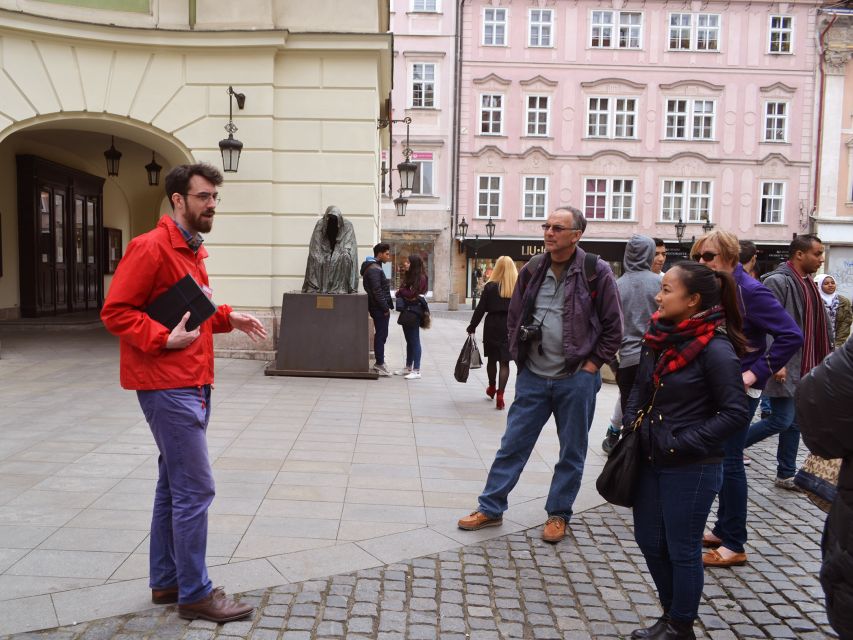
From there, the walk begins with Dům U Kamenného zvonu, a guided stop that sets tone right away. Expect the guide to connect architecture and street layout to broader Czech history. It’s the kind of “context first” approach that makes later landmarks easier to decode.
If you like asking questions, this is also a good tour format. The group stays small, and the guide has enough control of the pace to answer without cutting you off.
Dům U Kamenného zvonu, then Jan Hus and the Old Town Square Moment
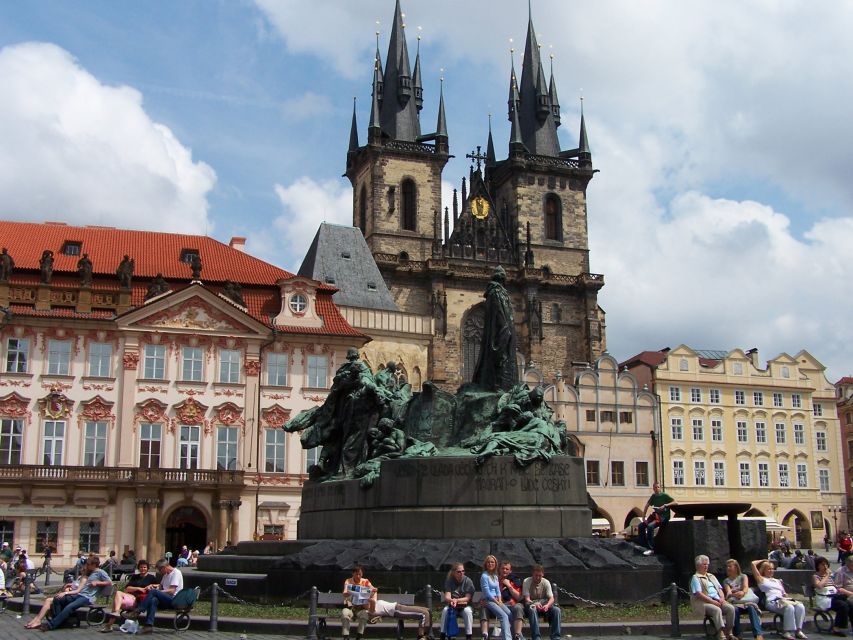
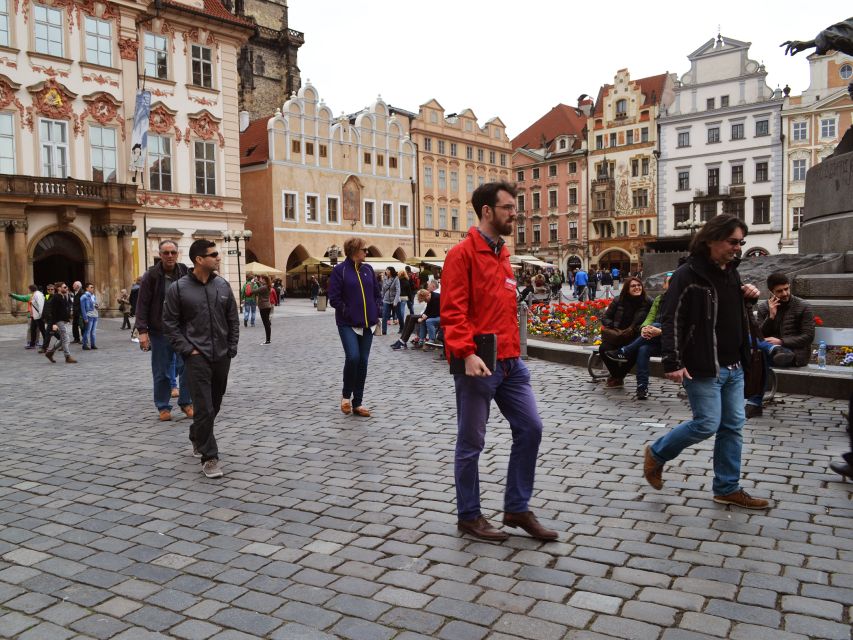
Old Town in Prague is built for drama. The guide leans into that, but in a practical way. When you hit the Jan Hus Monument, you’re not just looking at a famous name. You learn about Jan Hus as a beloved figure for the Czechs, and you understand why his story became tied to Prague’s cultural identity.
Hus matters because he represents ideas that have long outlived the man himself. The guide uses the monument as a reference point, then links it to the wider history of Bohemia and the Czech Republic. If you’ve ever wondered why Prague can feel politically and culturally intense even when you’re just walking for fun, this is where it starts to make sense.
Then comes one of the most memorable Old Town moments: the Prague Astronomical Clock. The guide calls out the curious symbols and explains them so they don’t feel like random decorations. You’ll look at the clock differently after this, because you’ll know what the different elements are meant to communicate.
One thing I’d watch for: the clock area can be busy in general, so being attentive while your guide talks helps you “hear” the details before the crowd noise takes over.
Charles University (Karolinum Complex) and Prague’s Education Story
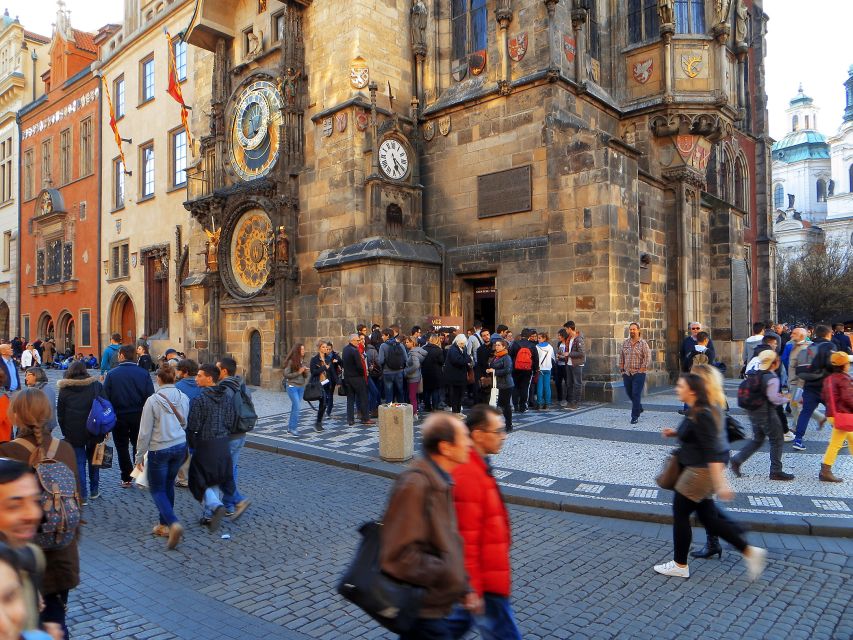
Not every Old Town tour spends time on learning history, not just royalty and wars. This one does, and it does it through Charles University and the nearby Karolinum complex, buildings tied to the 15th century.
You’ll see the character of the place right away. Universities in historic cities are more than campuses. They’re social engines, places where ideas spread and where the city’s future gets trained into existence.
The guide uses these stops to explain why Prague became important for culture and education in Central Europe. That connection is a big part of the tour’s payoff. When you understand Prague’s role as a center for learning, you also understand why the city’s architecture and public spaces feel so purposeful.
This is also a nice break from the most iconic photo stops. It’s still Old Town, still walkable, but it shifts your focus from “wow” to “why.”
A few other Prague options
- Prague: Pub Crawl with 2-Hour Open Bar at Drunken Monkey
★ 4.1 · 861 reviews - Prague Castle & Castle District: 2-Hour Guided Tour
★ 4.6 · 622 reviews - Prague Boats 2-hour Lunch Cruise
★ 4.0 · 352 reviews - 2-Hour Old Town and Jewish Quarter Tour in Prague
★ 5.0 · 310 reviews
Estates Theatre and the Old Town Theater District Fronts
After the education stop, you’ll move to the Estates Theatre (Stavovské divadlo), a key part of Prague’s historic theater district. The guide points out the façade of this venue and frames it as part of Prague’s long relationship with performance and public culture.
The practical part here is expectations. Interiors are not included, so you’re there for what you can see from the outside and what the guide explains about the building’s cultural role. If you’re the type who likes architecture details, you’ll likely find this stop satisfying because it’s tied to a story, not just a label.
This section also keeps the tour lively. It adds variety after squares and clocks, and it helps you move from the medieval core to the cultural street energy that still defines the Old Town area.
House of the Black Madonna and St. James Church Stops for Meaning, Not Just Photos
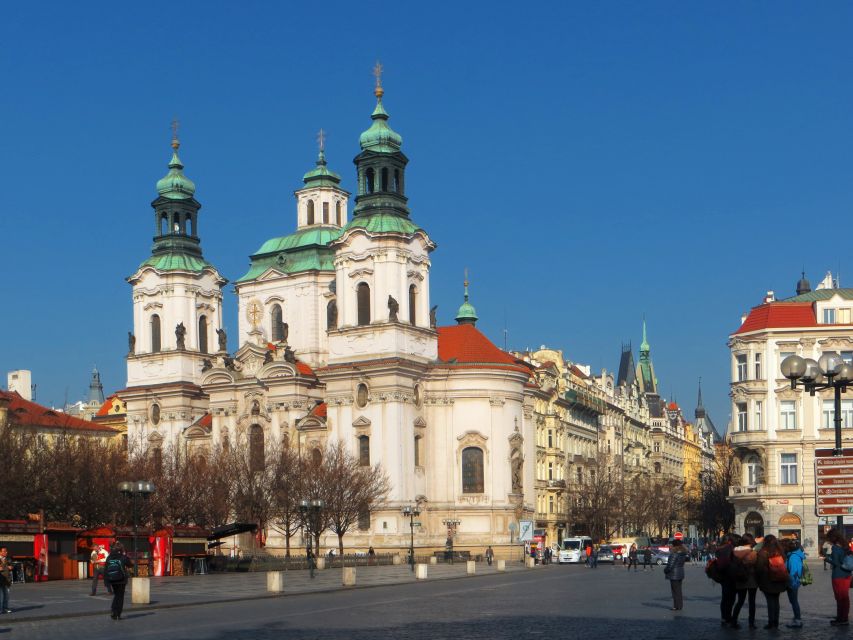
Next you’ll pass by the House of the Black Madonna, followed by a church stop at St. James, Prague. These are quick but meaningful stops, and the guide’s job is to keep them from becoming “check the box” moments.
The tour’s style is to explain why these sites mattered to Prague’s people. That’s important in a city like Prague, where so much is old that it’s easy to forget it once had living significance.
What I like about including these church and building stops in a two-hour walk is that they round out the story. You don’t only learn about one religious tradition or one political theme. You get the city’s Christian symbols and structures, then you transition to Josefov’s Jewish heritage.
Entering Josefov: The Former Jewish Ghetto and Its Synagogue Quarter
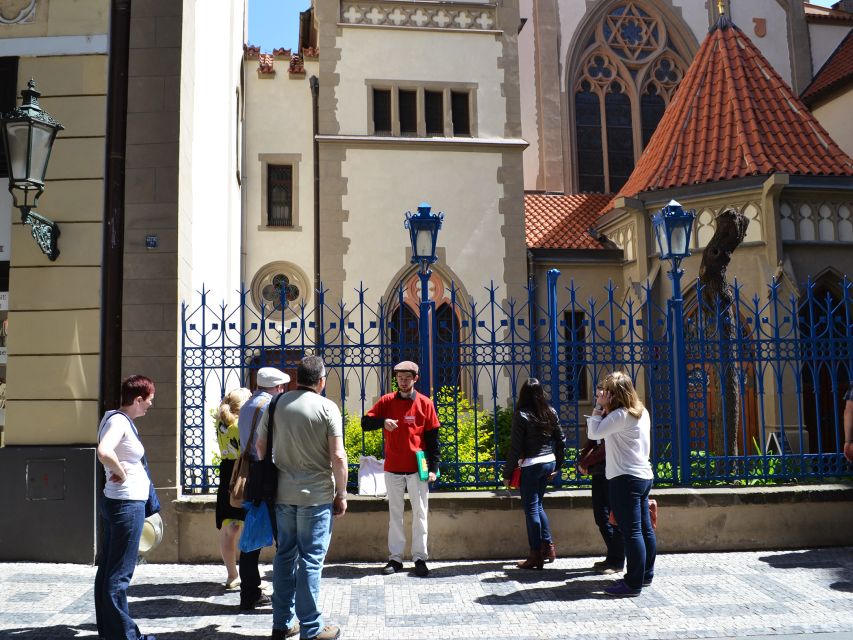
Josefov is the emotional center of this tour. You’ll move into the former Jewish ghetto, a tight quarter that was surrounded by the Old Town. The guide explains the cramped conditions before the ghetto was destroyed in the early 20th century.
That historical setup changes how you read everything you see afterward. The streets feel narrower when you know the context. The buildings feel older and more fragile when you understand what was taken away.
Even though interiors are not included, you still get meaningful access to history through the remaining synagogue buildings. The guide helps you understand what makes these structures important, and you’ll likely notice exterior details more carefully because you’ll know they are part of a larger community story.
If you’re sensitive to heavy history, this part can feel intense. It’s not sensationalized. It’s presented as a factual, grounded chapter of Prague’s past.
Maisel, Klausen, Old-New, and Spanish Synagogues, What to Look At When You Cannot Go Inside
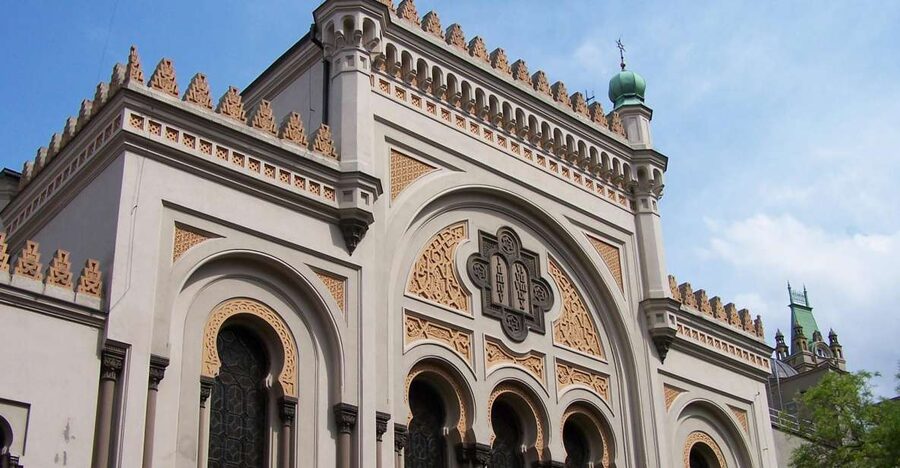
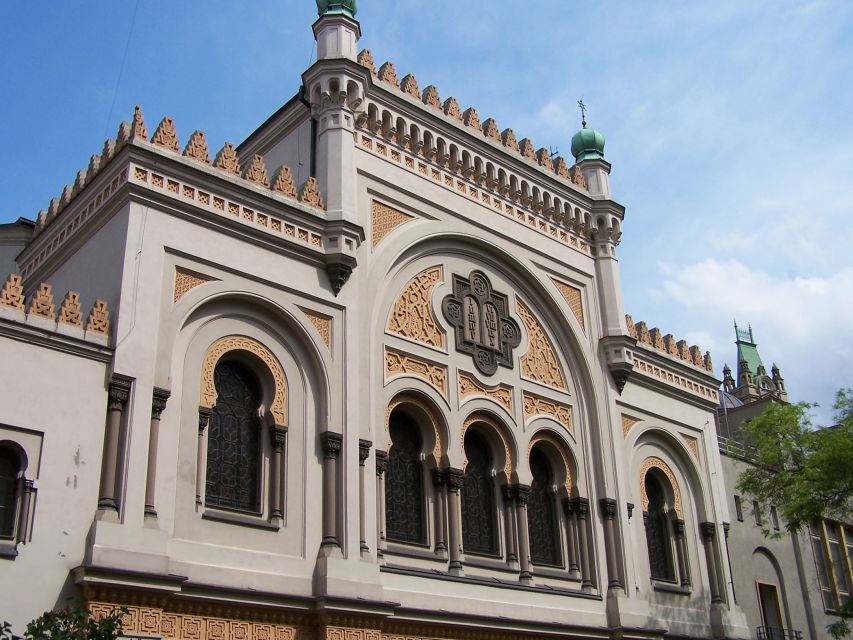
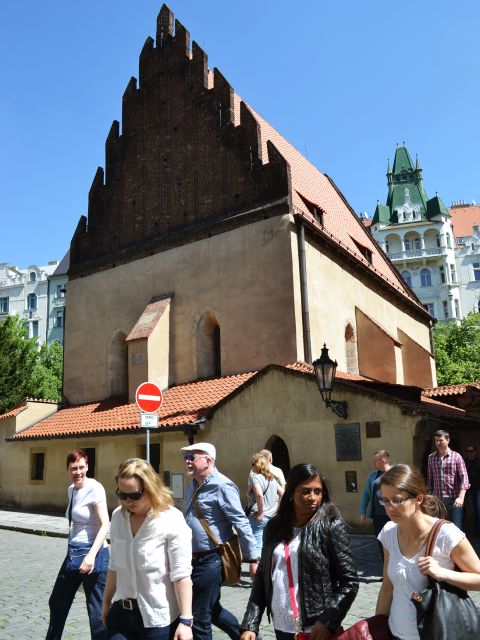
This is where the tour earns its “Jewish Ghetto” promise. You’ll see several remaining synagogues in Josefov, including the Maisel Synagogue, Klausen Synagogue, the Old-New Synagogue, and the Spanish Synagogue.
Because interior visits aren’t part of the package, I recommend treating each synagogue as an exterior reading exercise. Look at how the buildings sit in the street, how they separate a sacred space from the surrounding city life, and how the guide explains why they remain standing.
You’ll also visit the Old Jewish Cemetery. That stop gives the tour weight. A cemetery is not a monument for spectacle, and it changes the mood immediately, especially after the walking pace of earlier Old Town squares.
You might hear some Prague folklore connected to the Jewish Quarter, depending on the guide, but the core focus stays on the real historical timeline and the community that existed there. The strongest effect is how everything feels connected, not random stops.
Franz Kafka Stops: From Streets to the Kafka Monument
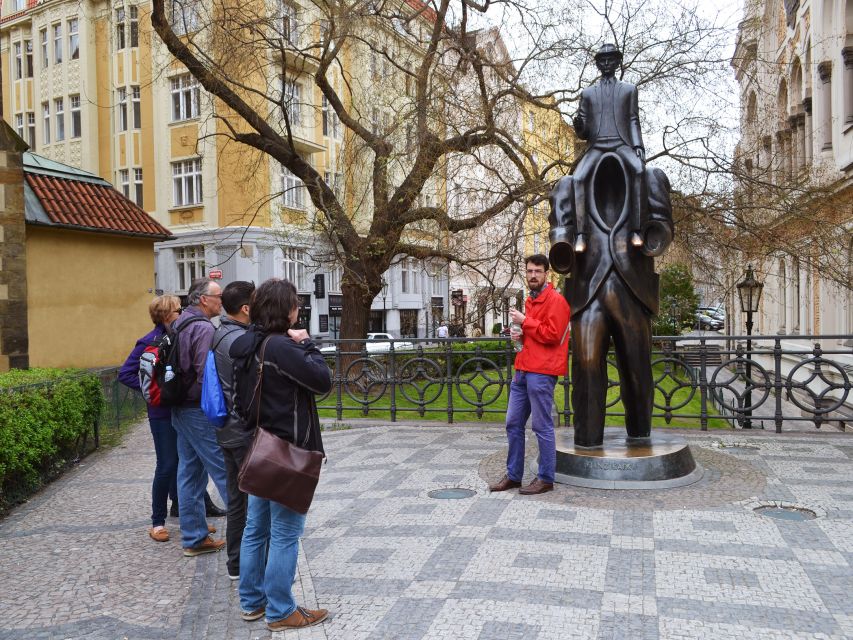
Kafka in Prague is more than a name in a book. In this tour, you’ll encounter Franz Kafka’s birthplace area and also the Franz Kafka Monument.
The guide connects Kafka to the city you’re seeing. That helps, because Prague can otherwise feel like a set of pretty postcards, even when you’re in the historic center. When you place Kafka into the street-level geography, the city becomes personal, not just picturesque.
This Kafka segment also balances the tour’s tone. After Josefov’s heavier context, Kafka gives you a link to Prague’s literary identity and creative life in a way that feels human and immediate.
Logistics That Matter: 2 Hours, Small Group, and Comfortable Walking Shoes
This tour runs for 2 hours, and it’s a walking format through the Old Town and Josefov area. You’ll cover a lot of ground, so comfortable shoes matter. You’ll also spend most of your time outside, since interior visits aren’t included, and you’ll rely on the guide’s explanations to bring details into focus.
The group stays small, with a maximum of 15 people, and the tour runs with a live English guide. There’s also a private group option, which can be a strong choice if you want a quieter pace or a more tailored focus.
Price-wise, $23 for two hours is a fair value when you consider the number of major stops and the guide coverage. This isn’t just a “stand here, take a picture” walk. You’re paying for interpretation: the clock symbols, Jan Hus context, and the Josefov historical framing.
Who Should Book This Prague Old Town and Jewish Ghetto Tour?
This is a great fit if:
- You’re on a tight schedule and want a smart orientation tour
- You want Old Town highlights like the Astronomical Clock and Old Town Square area with real context
- You want to understand Josefov and Kafka without committing to a full-day program
It may not be ideal if:
- You mainly care about interior access to churches or synagogues
- You want a long, slow history experience that takes deep dives into museums
If you’re a first-time visitor, I think this tour is especially useful because it gives you a framework. Afterward, you can wander Old Town on your own with better instincts, and the city feels more coherent.
Should You Book This Tour or Choose Something Else?
I’d book this if you want a high-impact Prague Old Town walking tour that respects both the iconic sights and the harder history of Josefov. The two-hour length is a sweet spot, and the small group size keeps it from becoming a rushed funnel.
Pick it over longer options when you want your first or second day to be efficient, not exhausting. Choose a different format if you know you want lots of time inside buildings or guided museum-style access.
If you do book, show up ready to walk and pay attention during the clock and Josefov parts. Those are the moments where the guide’s storytelling turns Prague from pretty to personal, fast.
FAQ
How long is the Prague Old Town and Jewish Ghetto walking tour?
The tour duration is 2 hours.
Where does the tour start?
The meeting point is at 7 Týnská 627/7. It is behind Týn Cathedral, at the big wooden door of building number 7.
What group size should I expect?
The tour is a small group with a maximum of 15 people.
Is the tour in English?
Yes, it is a live tour with an English guide.
Are interior visits included?
No. Interior visits are not included.
What is included in the price?
The tour includes a guide. Hotel pickup is not included.
Added recently in Prague
- Half-day Private Tour of Prague’s Charming Jewish Quarter★ 5.0 · 4 reviews
- Karlstejn Castle Half Day Tour from Prague★ 3.5 · 4 reviews
- Private Full-Day Tour Karlstejn Castle and Crystal Glassworks from Prague★ 4.5 · 4 reviews
- Prague Castle and Charles Bridge Private Walking Tour★ 5.0 · 4 reviews
- Prague: Sports Cards & Artifacts Museum Tickets★ 4.6 · 4 reviews
- Prague: Target Gun Shooting Experience with Hotel Pickup★ 4.7 · 4 reviews
- Private tour to Cesky Krumlov★ 5.0 · 4 reviews
- Prague Airport Transfers, Praga Aeropuerto Traslados, ESPAŇOL-ENG★ 5.0 · 4 reviews