
Reviewed · JEWISH QUARTER
2-Hour Old Town and Jewish Quarter Tour in Prague
Prague is one of those cities where the street corners carry the plot, and this 2-hour Old Town and Jewish Quarter tour is a fast way to get the story behind the scenery. I like the focus on licensed guide storytelling and the fact it stays manageable, with a max of 20 people. One thing to plan for: you do not enter the Astronomical Clock or the synagogues, so your experience is mainly exterior views and context.
I also like that it is priced as a walk-and-learn experience rather than a ticket-swap outing. You get an English tour, a mobile ticket, and a route that hits major landmarks across Old Town and Josefov in about 2 hours. Just note there is a fair amount of walking, so dress for cold wind in winter, and keep your stamina in mind.
If you want Prague highlights without getting stuck in lines or juggling museum hours, this is a smart pick. You will get your bearings fast, and you will learn what to look for as you move. The route starts right by Staroměstská radnice and ends at Jan Palach Square, both in the heart of things.
Key highlights at a glance
- Small group size (max 20) so the guide can keep the pace human
- Exterior-only viewing of major sights, with strong narration to fill in the gaps
- Astronomical Clock story, plus Old Town squares and historic lanes
- Josefov synagogue sights from the outside, including Old-New and Spanish
- Ungelt background that explains a name you will keep seeing in Old Prague
- Luxury-facing stop on Pařížská Street for a shift from old stones to modern fashion
Old Town Hall and the Astronomical Clock, explained from street level
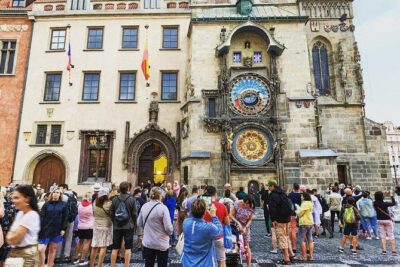
You start by Staroměstská radnice, at Staroměstské náměstí, the kind of place that makes you stop even when you did not plan to. The big draw here is the Astronomical Clock. You will have time to admire it up close and take in the details as the guide connects what you are seeing to older Prague life. The clock is not just a clock. It is a public statement, built to be read and remembered in the middle of the city’s busiest square.
Important reality check: you do not go inside the attraction. That does not make the stop weaker, it just changes what kind of value you get. Instead of trading time for ticketing and entry, you spend your energy looking, listening, and understanding why the clock matters in Prague’s civic identity.
I find this approach great for first-timers who feel overwhelmed. When the guide frames what you are looking at, the clock becomes less like a photo op and more like a story you can replay later when you walk away.
More of the Jewish Quarter:
- Prague: Jewish Quarter Walking Tour with Admission Tickets
★ 4.7 · 3,729 reviews - Prague: Old Town and Jewish Quarter Guided Tour in German
★ 4.8 · 3,143 reviews - Prague: Old Town and Jewish Quarter Guided Walking Tour
★ 4.6 · 2,847 reviews
Staroměstské náměstí: the square where Prague history gathers
From the Old Town Hall area, the route moves into Staroměstské náměstí, the “main square” feeling that you would expect from a historic center. This is one of those places that keeps layering different eras on top of each other. The guide gives you the key events and why this spot kept mattering across centuries.
The practical bonus is that this is a free, easy stop. You can spend your time just watching the square breathe, without worrying about admission. It also helps you transition. After the clock, you need a moment to absorb the wider space and understand how Old Town is arranged. A guided pause here does that job.
If you are the type who likes to connect buildings to dates, this part gives you a base map in your head. Even if you do not remember every year afterward, you will start to recognize the types of power that shaped the city: civic, commercial, religious.
Ungelt and the meaning behind street-name history
Next comes Týnský dvůr, often associated with Ungelt, and this is where the tour gets delightfully specific. You will learn where the name Ungelt comes from, and the idea is simple: this block of buildings was linked to merchants and customs duties. The guide explains that this is the kind of place where taxes were collected, which makes the city feel real in a daily-life way, not just postcard architecture.
This stop is short, but it is exactly the kind of detail that makes a guided walk worth paying for. If you walked past Ungelt on your own, you would probably see old stone and maybe miss the functional purpose. With context, you can picture a working district: goods moving, payments handled, and merchants doing business.
You also get a sense of how Prague’s Old Town used to work at street level. It is a reminder that old cities are not only museums. They are older versions of commerce, bureaucracy, and everyday movement.
Josefov from the outside: Spanish, Old-New, Pinkas, and Maisel
Josefov is where this tour turns from civic and commercial Prague into Jewish Quarter stories. You will see several synagogue exteriors, and while you do not enter any of them, you still get strong orientation.
A few other Prague options
- Prague: Pub Crawl with 2-Hour Open Bar at Drunken Monkey
★ 4.1 · 861 reviews - Prague Castle & Castle District: 2-Hour Guided Tour
★ 4.6 · 622 reviews - Prague Boats 2-hour Lunch Cruise
★ 4.0 · 352 reviews - From Old Town: 2-Hour Prague Bus Tour with Top Sights
★ 4.2 · 219 reviews
Spanish Synagogue area
You will look toward the Spanish Synagogue, described as the youngest and most beautiful synagogue of the Jewish Town. Even if you have never been to this district, the guide helps you notice what makes each place distinct. This stop is a quick reset: you switch from squares and streets to a more focused religious and community landscape.
The Old-New Synagogue (the oldest in Central Europe)
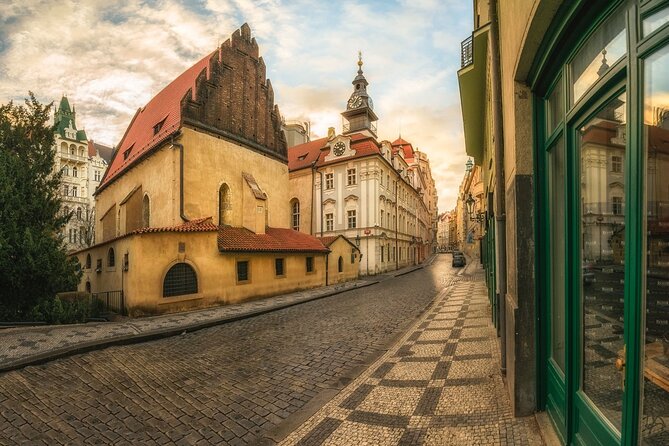
Then you reach the Old-New Synagogue, one of the most valuable Jewish monuments in Europe, and the oldest synagogue in Central Europe. The guide tells you what happened inside, so you are not left wondering what is behind the doors. You just do not physically go in.
I like exterior-only synagogue stops when your goal is understanding and context, not collecting inside exhibits. You still see the setting and architecture from the street, and the guide gives you the missing interior narrative without asking you to spend extra time ticketing.
Pinkas Synagogue
Next is the Pinkas Synagogue, with the guide encouraging you to let the entire Jewish Quarter land in your mind. Even though you remain outside, you will be directed to take in the sights in a way that makes the district feel connected, not like isolated landmarks.
Maisel Synagogue
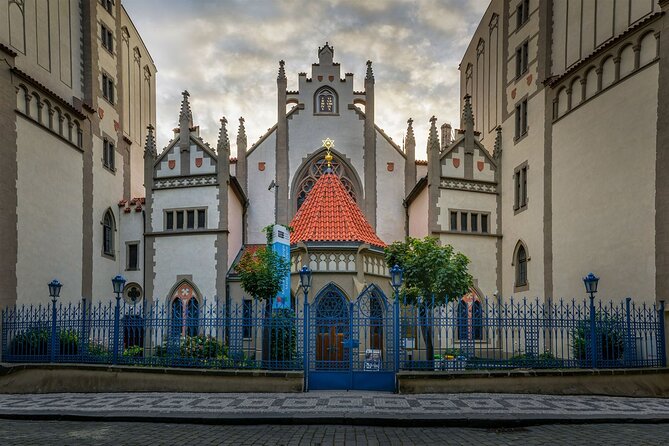
Finally, you will see the Maisel Synagogue, built from 1590 to 1592, funded by Mordechai Maisel. The guide links it to the Renaissance reconstruction of the ghetto. That matters, because it explains why Jewish Quarter architecture feels like it does, and why patrons and politics shaped the physical district.
For me, the value here is timing. This tour is only about 2 hours, so it cannot cover everything. But it gives you a focused “greatest hits” path through Josefov that you can build on later with a longer visit where you choose which synagogue interior you want to see.
Parizská Street: a quick contrast with luxury boutiques
After the weightier Josefov stops, the walk reaches Pařížská Street, Prague’s prestigious boulevard. The vibe shifts. You go from historic religious spaces to a modern shopping street lined with luxury boutiques and fashion brands.
This stop lasts briefly, but it is a smart palate cleanser. It also shows that Prague is not stuck in the past. You can be in the center of Old Town and still feel the city’s modern side a few streets away.
If you love photography, this is a nice chance for wide street views that do not feel like you are only shooting churches and clocks. Just be aware it is more visual than educational here, so keep listening for the guide’s transitions rather than expecting a deep museum-style explanation.
Rudolfinum: the Czech Philharmonic landmark on your route
Near the end, you pass by Rudolfinum, Prague’s prestigious concert hall and home of the Czech Philharmonic. The guide points out the Neo-Renaissance building and mentions a key cultural milestone, including that the Czech Philharmonic performed here for the first time in 1896 under Antonín Dvořák.
This stop is exterior-only as well, but it adds an arts angle to what might otherwise be a heavy history-focused walk. Prague has always used performance, music, and public culture to shape identity, and Rudolfinum is one of the visible modern anchors for that idea.
If you already care about classical music, you will enjoy seeing how this building is positioned in the city. If you do not, it still works as an iconic architectural break.
What the price gets you, and how it compares to paid entry
At $30.25 per person for about 2 hours, this tour is priced like a guide-led narrative route, not like an attractions package. That is important. Several of the main sites you see are explicitly not entered, so you are paying for interpretation and route design, not for museum tickets.
The smart part of this model is time. You avoid the friction of ticket lines and the uncertainty of time windows. You also get a tight geographic loop through Old Town and Josefov, which is exactly what you want early in a Prague visit.
The tradeoff is simple: if your dream is to spend inside the synagogues or inside the clock attraction, you will need to book those separately. This tour is about understanding what you are looking at while you are standing on the pavement, and it can make those future visits feel much more meaningful.
If you enjoy learning while walking, and you like being told what to notice, the value is strong for the price. If you prefer slow pacing and inside stops every time, you might feel a bit shortchanged by the exterior-only format.
Pace, comfort, and group size: how the experience feels
This is a maximum 20-person group, which keeps things from turning into a long conga line. The walk is still a walk, with multiple stops. Plan for that by wearing comfortable shoes and keeping your layers easy to adjust.
One review note that matters for your comfort: in colder months, the route will have you outside longer than you might expect, so bring a warm layer and protect your ears and hands. Another practical note is about guide volume. If your hearing is picky, position yourself where you can hear clearly, not off to the side or behind someone tall.
The time breakdown is also a helpful guide for expectations. Each major stop is around 10 to 15 minutes, so you are getting quick, dense context rather than long reflection at one spot.
If you want a manageable first orientation plus story, this pacing works. If you prefer lingering and taking lots of unhurried photos, you may want to add extra solo time after the tour ends at Jan Palach Square.
Where you meet and where you end, in real-world terms
You start at Staroměstská radnice at Staroměstské náměstí, and you finish at Jan Palach Square. Both are central and easy to connect with the rest of your day. Since the tour is near public transportation, you are not stuck planning a complicated route just to get to the meeting spot.
This ending location is also convenient for continuing on your own. Jan Palach Square sits in an area that makes it easier to branch into other parts of Prague without feeling like you are retracing your steps.
A tip: arrive a few minutes early. Even when the meeting place is obvious, crowd flow around historic squares can be slow, and you want your group to assemble smoothly so the guide can start on time.
Should you book this Prague Old Town and Jewish Quarter tour?
Yes, if you want a focused, story-first intro to Prague’s Old Town and Josefov in about 2 hours. This tour is especially worth it for you if you like learning as you walk, and if you appreciate exterior views that come with strong context. The Astronomical Clock stop and the Josefov synagogue sights, all in one route, make it a good “first pass” before you choose deeper independent visits later.
I would skip or rethink it if your priority is going inside the clock attraction or spending time inside synagogues. This experience is built around looking from the outside and getting the guide narrative to connect the dots. It is also best for travelers who can handle short-but-multiple outdoor stops, so pack warm layers in winter.
If your goal is to leave Prague with a clearer sense of what you saw, why it mattered, and what to notice next, this is a solid booking.
Added recently in Prague
- Half-day Private Tour of Prague’s Charming Jewish Quarter★ 5.0 · 4 reviews
- Karlstejn Castle Half Day Tour from Prague★ 3.5 · 4 reviews
- Private Full-Day Tour Karlstejn Castle and Crystal Glassworks from Prague★ 4.5 · 4 reviews
- Prague Castle and Charles Bridge Private Walking Tour★ 5.0 · 4 reviews
- Prague: Sports Cards & Artifacts Museum Tickets★ 4.6 · 4 reviews
- Prague: Target Gun Shooting Experience with Hotel Pickup★ 4.7 · 4 reviews
- Private tour to Cesky Krumlov★ 5.0 · 4 reviews
- Prague Airport Transfers, Praga Aeropuerto Traslados, ESPAŇOL-ENG★ 5.0 · 4 reviews
Jewish Quarter, compared.
Jewish Quarter Walking Tour with Admission Tickets
Read our review →
Old Town and Jewish Quarter Guided Tour in German
Read our review →
Old Town and Jewish Quarter Guided Walking Tour
Read our review →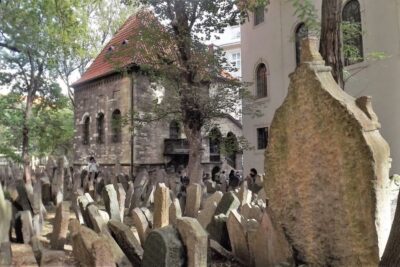
Jewish Quarter Ticket with optional Audio Guide
Read our review →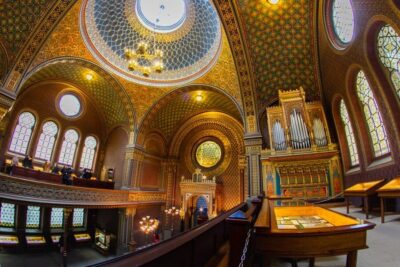
Prague’s TOP Sights – Old Town, Jewish Quarter, Charles Bridge (Tip-based tour)
Read our review →
Prague Old Town New Town and Jewish Quarter Morning Tour
Read our review →
Old Town, Jewish Quarter & Astro Clock Walking Tour
Read our review →Browse the lists this tour appears in