
Reviewed · PRAGUE CASTLE
Prague Castle Walking Tour
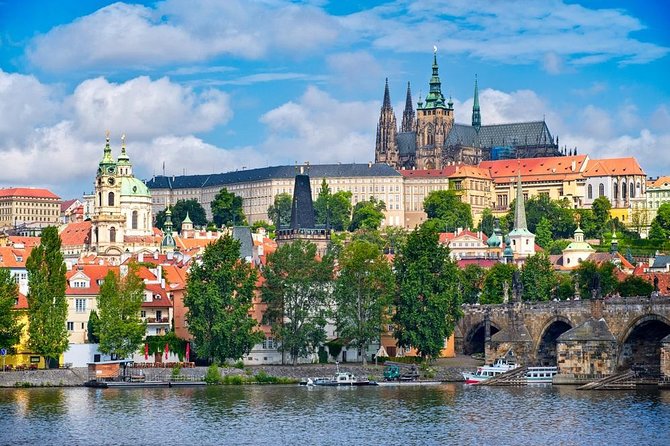
Prague Castle is the kind of place where every turn asks you to look closer, because Romanesque, Gothic, Baroque, and Renaissance all share the same hill. I like that this is a true small-group walk with a guide you can actually hear, and I like the architecture-focused storytelling that connects buildings to the people who built and fought for them. One thing to consider is that key interior visits cost extra, including the Prague Castle entrance.
This tour also pays off if you are the curious type who wants the “why” behind what you see, not just a photo stop. It runs about 3 hours, with morning or afternoon timing, and the route covers major landmarks along the Royal District without turning into a race.
The only real drawback is the time and ticket reality. You will walk a lot uphill to Hradčany Hill, and not everything inside is included, so your final spend depends on which buildings you choose to enter.
Key highlights worth your attention
- Max 8 people keeps the pace human and your questions welcome
- Historian guide links architecture styles to Czech politics and big European conflicts
- Hradčany Hill to Prague Castle in one smooth walking route, not hop-on hop-off chaos
- Royal Garden stops like Ball Game Hall and Queen Anne’s Summer Palace help you read the Renaissance
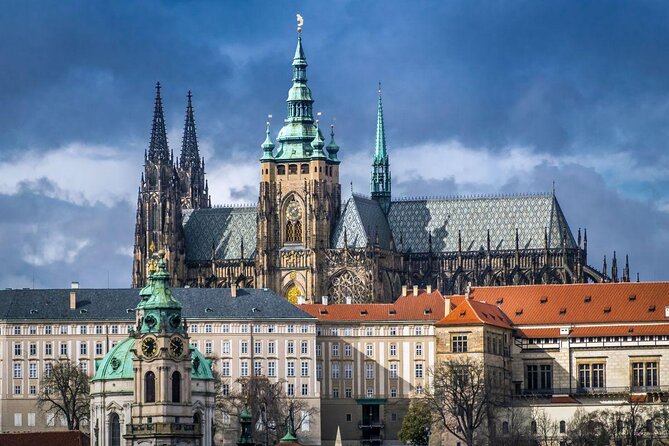
- St. Vitus Cathedral and Old Royal Palace add major inside sights if you buy the entry tickets
- After the castle, you pass Domeček (Gestapo prison) and Strahov Monastery, so the story keeps moving
Why a small-group Prague Castle walk beats the big crowds
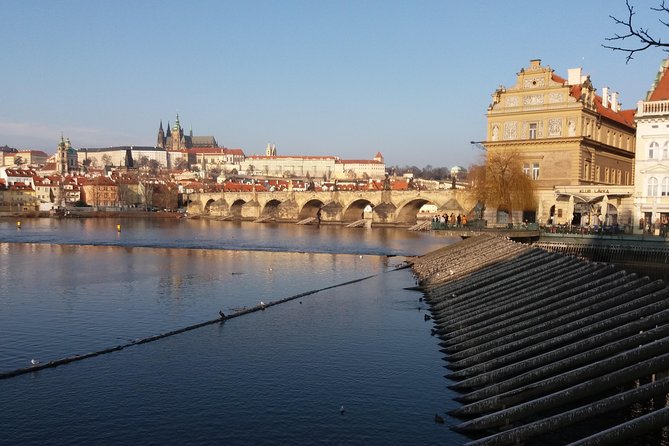
Prague Castle can feel like an endless maze if you show up with no plan. This format helps because you are not wandering alone with a map and vague expectations. Instead, you get a guided route that focuses on what matters most: the architecture styles, the royal and religious power behind them, and the political drama that shaped what still stands today.
The most praised part here is the guide experience. In one review, a guide named Robert was described as entertaining and very strong at presenting the regional story. That matters, because at the Castle, it is easy to lose the thread. A good guide turns details into a clear picture, like why certain wings, halls, and chapels look the way they do, and what historical events tied to them.
And yes, the group size is the quiet advantage. With a maximum of 8 people, you tend to hear instructions and explanations without craning your neck. It also feels easier to keep up, which matters when you are walking from Malá Strana up toward the hilltop complex.
More of Prague Castle and the castle district:
- Prague Castle 2.5-Hour Tour Including Admission Ticket
★ 4.7 · 8,927 reviews - Prague: 3-Hour Walking Tour of Old Town & Prague Castle
★ 4.7 · 5,696 reviews - Prague: 3-Hour Old Town and Prague Castle Tour in German
★ 4.8 · 5,671 reviews
Price and tickets: what you pay for, what you still need to buy
The tour price is $126.16 per person for a walking experience of about 3 hours. The included part is the historic guide. That is a big piece of the value, because you are paying for expertise and a planned route, not just time outdoors.
Not included are major entrances. The Prague Castle entrance is listed separately (adults CZK 450, students and seniors CZK 300). Also, the St. Vitus Cathedral stop and the Old Royal Palace stop note that their admission tickets are not included. In practice, this means you should budget for at least the Castle entry, and possibly more if you want to go inside several buildings along the route.
Here is the smart way to think about it: you are paying for the guidance and the structure. If you love interiors, you will likely spend more on tickets at the sites. If you only want some highlights from the outside, your total cost can stay closer to the advertised price.
Meeting in Malá Strana, then heading up to Hradčany Hill
Your starting point is Bagel Lounge Malostranská Letenská, at Malá Strana address 118 00 Praha 1-Malá Strana. It is described as easy to find, and the area is near public transportation, which is convenient because Prague transit can save you from parking stress.
From there, you follow the guide upward to Hradčany Hill and into the Prague Castle area. That climb is not optional, it is part of the experience. It also means you should dress and plan like you are doing real walking, not a flat sightseeing stroll.
If you travel with a young child, one review mentioned a two-year-old riding in a stroller, and the family still had a great time. That suggests the pacing can work for families, but you will still be dealing with hilltop walking and the general Castle terrain. Comfortable shoes for you and a plan for stroller maneuvering are your best friends.
Stop 1: Prague Castle and the Royal District architecture timeline
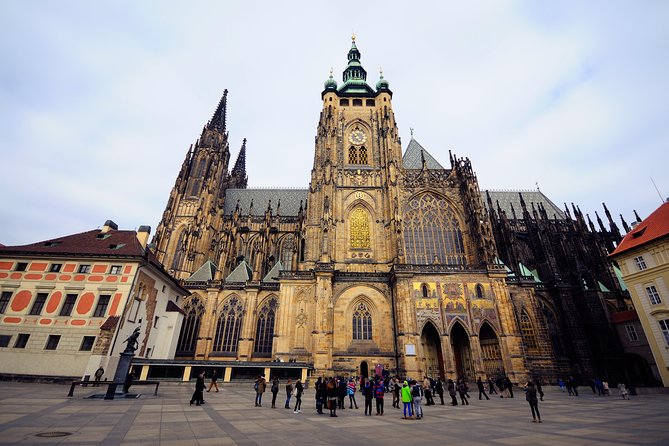
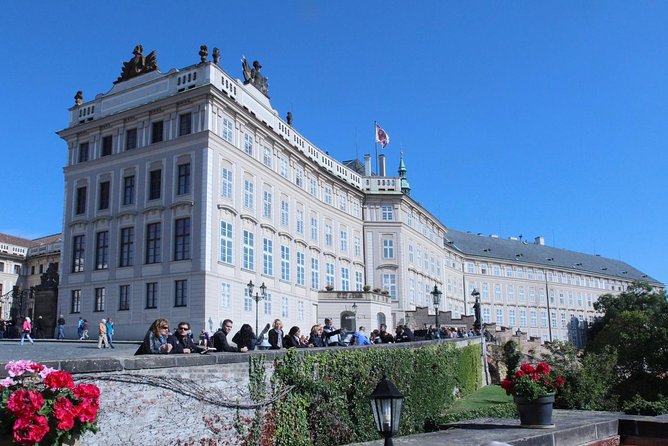
The big draw is the Prague Castle complex itself, described as about 1,100 years of history. The walking tour takes you through the Royal Garden and across the Stag Moat, then into the Royal District. The promise here is not just landmarks, it is the logic of how they fit together.
What I find valuable is the architectural range you get in one sweep. The route is framed around Romanesque, Gothic, Baroque, Rococo, Renaissance, and Neoclassical monuments. Instead of feeling like you saw “a lot of buildings,” you start to read them as a timeline of rulers, tastes, and power shifts.
The guide also connects the visible walls to what happened to them. The tour highlights that the Castle endured artillery attacks, plunder by marauding armies, and neglect during the period when Austrian emperors let parts deteriorate. That kind of context changes how you see repairs, renovations, and mixed styles. You stop thinking of it as one building and start thinking of it as something constantly rebuilt under pressure.
You also do get a short interior moment, with a reminder that Castle entrance is an extra cost. That entry time matters because it lets you look at the scale firsthand, not just from the outside edges.
One practical timing tip: if your schedule allows, the info encourages an afternoon tour, since the castle complex is often less crowded then. If you have the choice between morning and afternoon, that simple detail can make a real difference in how comfortable the experience feels.
More walks in Prague:
- Prague: Ghost Walking Tour Where Legends Come To Life
★ 4.4 · 5,253 reviews - Prague: Jewish Quarter Walking Tour with Admission Tickets
★ 4.7 · 3,729 reviews - Prague Guided Walking Tour and Cruise with Authentic Czech Lunch
★ 5.0 · 3,627 reviews - Prague: Old Town and Jewish Quarter Guided Walking Tour
★ 4.6 · 2,847 reviews
Stop 2: Ball Game Hall in the Royal Garden (ten minutes of Renaissance detail)
In the Royal Garden, you pass the Renaissance Ball Game Hall, a stop designed to make Renaissance art feel more specific than “pretty buildings.” The tour describes sporty aristocrats playing tennis with the Emperor, and that quick human detail does a lot. It keeps the scene from becoming a museum label.
You also get a mention of the Renaissance sgraffito showing allegories of virtues, arts, and sciences. Sgraffito is the kind of word that can sound intimidating until you actually stand there and realize it is decorative surface storytelling. It is a short stop, but it is the sort of moment that makes architecture feel personal.
If you are rushing, do not. This is not a “blink-and-go” segment. It is short by design, but the guide’s framing helps you notice what you would otherwise miss.
Stop 3: Queen Anne’s Summer Palace and the astronomy angle
Next up is Queen Anne’s Summer Palace, described as the purest Renaissance architecture outside Italy. That is a bold claim, but in terms of how the stop is handled, it makes sense: you are there to see a specific Renaissance structure and then learn what it became later.
The tour notes that it was commissioned by Ferdinand I in the mid-1500s, then converted into an astronomical observatory by Rudolf II. It even connects the scientific guests, including Tycho de Brahe and Johannes Kepler, and adds the detail that the emperor himself died there after losing the royal title.
This stop works well if you like the intersection of art and power. You see that these are not “just pretty buildings.” They were tools for court life and, later, for scientific observation under imperial patronage.
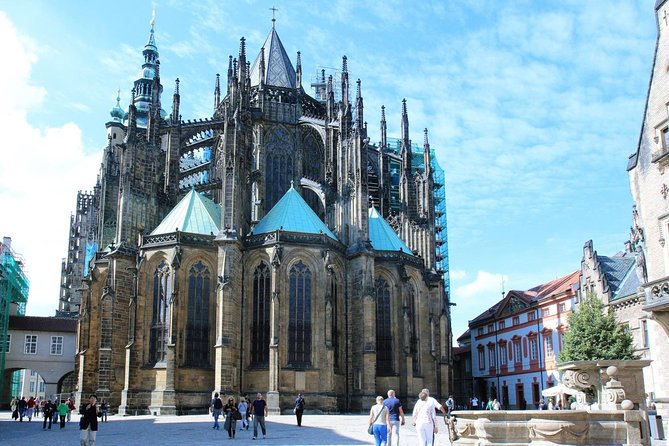
Stop 4: St. Vitus Cathedral, Gothic ambition, and the royal crypt
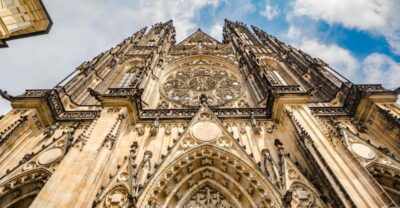
St. Vitus Cathedral is where the tour leans into scale and faith. The cathedral is described as one of the most monumental cathedrals in Central Europe and a prominent example of Gothic architecture.
The timeline is part of the explanation: it is founded in the first half of the 14th century and finally completed roughly 600 years later in the first half of the 19th century. That long span tells you something big about the region and the building process, including how architectural styles can change even when the project continues.
Inside highlights are called out clearly:
- The royal crypt of Czech sovereigns and patron saints
- The baroque tomb of St. John of Nepomuk, cast in silver
- The Gothic St. Wenceslas Chapel housing relics of St. Wenceslas
This is also one stop where extra admission applies. If you are deciding whether to add time inside, I would base it on your interest in Gothic churches and royal religious symbolism. If those themes grab you, this is worth the ticket.
Stop 5: Old Royal Palace, Vladislav Hall, and the defenestration story
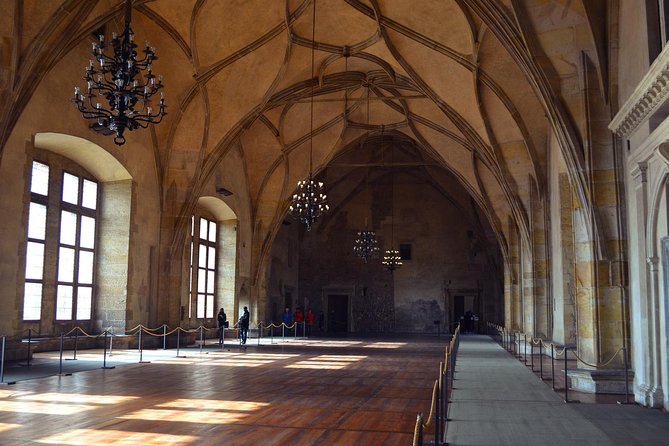
After the cathedral, the tour moves into royal power and political drama with the Old Royal Palace and Vladislav Hall. The highlight described here is Vladislav Hall, built at the end of the 15th century and combining Late Gothic with new Renaissance style.
You also get a vivid look at how the space was used. The hall was the setting for coronation festivities and banquets, and it even hosted knights’ tournaments. The detail about knights entering in full armor and on horseback through the Riders’ Staircase is one of those “only at a place like this” scenes. It helps you understand why the architecture was built to support spectacle.
The tour also points out the Ludwig Wing window tied to the defenestration that sparked the Thirty Years’ War. That is a heavy historical note, but the stop frames it so you see it as a chain reaction, not a random legend.
Like the cathedral, admission for the Old Royal Palace interior is not included. If you do not buy entry here, you still learn the narrative, but you will miss the chance to see the space that made the story possible.
Stop 6: St. George’s Basilica as the Romanesque counterpoint
St. George’s Basilica is used as a smart architectural comparison. The tour describes it as austere and monumental, built in the 1100 hundreds. That puts it earlier than the Gothic cathedral you just visited.
The key idea is the contrast. You compare the Romanesque feel and interior logic with what you saw at St. Vitus Cathedral. Even if you are not an architecture expert, this type of side-by-side comparison helps your brain do the sorting. Romanesque and Gothic can blur when you bounce between photos. On foot, with a guide explaining what to notice, it clicks faster.
The stop is short, and admission is not included. Plan to use your time well. Look for the feel of the space, not just decorations.
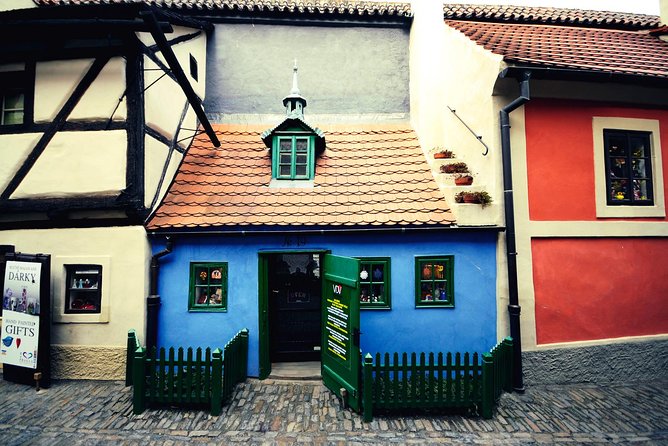
Stop 7: Golden Lane, Dalibor Tower, and the “small rooms” effect
Golden Lane is one of the stops where the atmosphere changes instantly. It is described as a quaint, diminutive street originally built in the 16th century to house Rudolf II’s castle guards.
Then you get the reality check. The tiny rooms today largely hold souvenir shops, but there is still an accessible museum of medieval armory within a former 14th-century fortification connected with Dalibor Tower. The tour notes that Dalibor Tower used to function as a dungeon.
This is a short stop, but it gives you a different angle on castle life. Not the grand ceremonies, not the cathedral symbolism, but the lived-in, small-scale existence inside the fortress.
If you want to leave time for armory viewing, your best move is to keep Golden Lane from becoming a quick walk-through. The guide can help you decide what is worth stepping into based on your interests.
After the castle: Domeček and Strahov Monastery in the wider Hradčany story
Once your time inside ends, the tour continues across Hradčany with stops that shift the story from imperial spectacle to modern political pain and cultural memory.
You pass Domeček, described as the former prison where political opponents were imprisoned by the Gestapo. That is a heavy stop, but it matters because it connects the Castle hill to 20th century history, not just medieval and Renaissance eras.
Then you pass Strahov Monastery, where an ancient library is housed. It is a quieter ending than the cathedral or hall stops, which is a good thing after several intense interiors and big historical notes.
Even if these moments are shorter on details than the major palace interiors, they keep the overall experience from feeling stuck in a single century.
Timing, pacing, and what to wear for a comfortable 3 hours
This is listed as about 3 hours, which is a realistic length for a hilltop walking tour with multiple stops. The pacing will not feel like a speed run, because the group is capped at 8, and the format is designed for hearing and questions.
Go with an afternoon slot if you can, since the Castle complex is often less crowded then. Even if you do not have perfect timing, arriving with the right expectations helps: Prague Castle is popular, so some level of crowding is normal.
Wear comfortable shoes. You will be climbing to Hradčany Hill and moving between sites along the complex. Also bring water if you tend to get thirsty on walks, because the tour includes walking time and you will be on your feet for most of the three hours.
Who should book this Prague Castle walking tour
Book this if:
- You want an architecture-and-history route instead of random sightseeing
- You like explanations that connect buildings to rulers, faith, and conflict
- You prefer small-group tours where you can ask questions and actually hear the guide
- You enjoy major stops like St. Vitus Cathedral, Vladislav Hall, and Golden Lane enough to pay entry tickets for interiors
You might skip it if:
- You only want outside views and do not want to add ticket costs at multiple sites
- You are trying to fit dozens of sights into a very tight schedule, since the hilltop walking takes time
Should you book it?
Yes, I would book it if you want Prague Castle to make sense. The best part is the pairing of a planned walking route with a historian guide who can turn architecture styles into a clear story. The small group size is not a marketing line here, it is the reason this feels personal instead of chaotic.
Factor in the practical part too. The guide is included, but the Castle entrance and several interior sites are not. If you are comfortable adding those ticket costs, this tour delivers a lot of landmark coverage in a focused, readable route.
FAQ
FAQ
How long is the Prague Castle Walking Tour?
The tour lasts about 3 hours.
Where does the tour meet?
You meet at Bagel Lounge Malostranská Letenská 118/1, Praha 1-Malá Strana, Czechia.
Is this tour small-group or large-group?
It is a small group with a maximum of 8 travelers.
What language is the tour offered in?
The tour is offered in English.
What is included in the tour price?
The included item is a historic guide. The tour does not include Prague Castle entrance or other site admissions listed as not included.
Is the Prague Castle entrance fee included?
No. The Prague Castle entrance is listed separately, with adult CZK 450 and student or senior CZK 300.
Which major sites are part of the walking route?
The route includes Prague Castle and the Royal District, plus stops such as Ball Game Hall, Queen Anne’s Summer Palace, St. Vitus Cathedral, Old Royal Palace (Vladislav Hall), St. George’s Basilica, and Golden Lane. After the castle time, you pass Domeček and Strahov Monastery.
Can I cancel for a full refund?
Yes. You can cancel up to 24 hours in advance for a full refund.
Added recently in Prague
- Half-day Private Tour of Prague’s Charming Jewish Quarter★ 5.0 · 4 reviews
- Karlstejn Castle Half Day Tour from Prague★ 3.5 · 4 reviews
- Private Full-Day Tour Karlstejn Castle and Crystal Glassworks from Prague★ 4.5 · 4 reviews
- Prague Castle and Charles Bridge Private Walking Tour★ 5.0 · 4 reviews
- Prague: Sports Cards & Artifacts Museum Tickets★ 4.6 · 4 reviews
- Private tour to Cesky Krumlov★ 5.0 · 4 reviews
- Prague: Target Gun Shooting Experience with Hotel Pickup★ 4.7 · 4 reviews
- Prague Airport Transfers, Praga Aeropuerto Traslados, ESPAŇOL-ENG★ 5.0 · 4 reviews
Prague Castle, compared.
Prague Castle 2.5-Hour Tour Including Admission Ticket
Read our review →
3-Hour Walking Tour of Old Town & Prague Castle
Read our review →
3-Hour Old Town and Prague Castle Tour in German
Read our review →
Prague Castle and Lobkowicz Palace Entry Tickets
Read our review →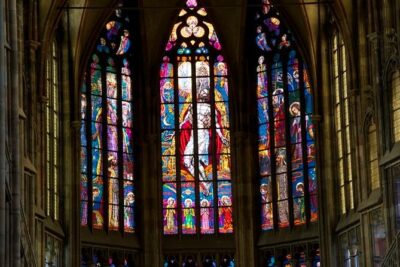
Prague 3-hour Afternoon Walking Tour including Prague Castle
Read our review →
Prague Castle Tour Including Admission Ticket – 2.5 Hour
Read our review →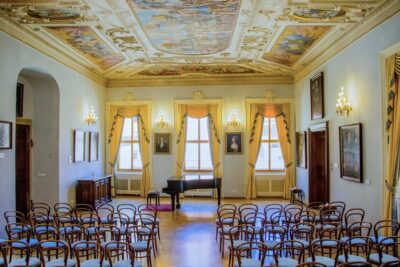
Prague Castle: Midday Classical Concert at Lobkowicz Palace
Read our review →
Full-Day Prague Tour with Prague Castle, Lunch and Vltava Cruise
Read our review →Browse the lists this tour appears in